
Cultural and creative industry shapes Indonesia's future: Minister
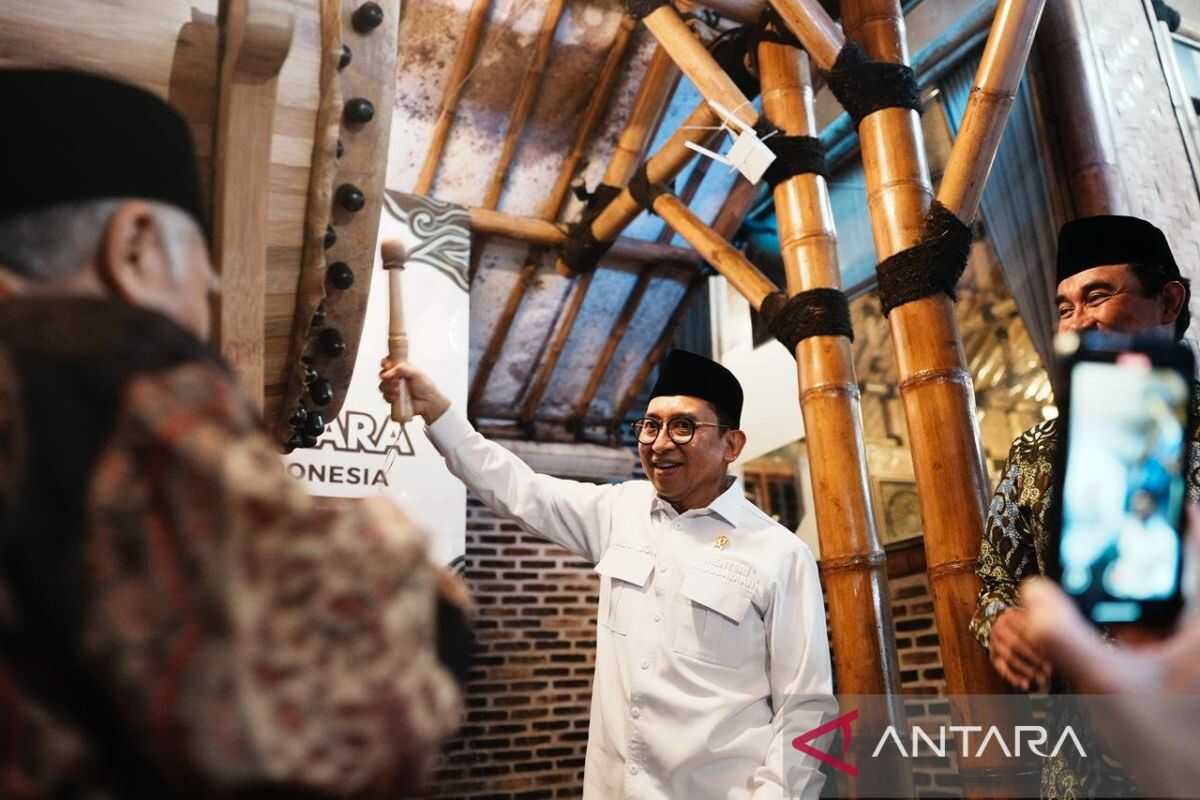
“Culture is both a strategic resource and a form of soft power diplomacy. In the cultural field, we have a very solid foundation,” Zon said in a statement received on Monday.
In the national context, he affirmed that Pancasila reflects the nation’s cultural values as formulated by the founding fathers.
He said Pancasila is not merely a set of five principles, but the result of deep reflection rooted in Indonesia’s long civilizational history.
The minister underscored that Indonesia possesses extraordinary cultural wealth, both in scope and historical depth.
He noted that Indonesia currently has 2,727 registered Intangible Cultural Heritage elements, with tens of thousands more undergoing registration and verification.
“We have intangible cultural heritage and cultural assets spread from Sabang to Merauke, from Miangas to Rote Island. Our culture is not only rich, but also ancient,” he said.
The minister also cited a recent publication in the journal Nature dated January 22, 2026, which reported the discovery of what is believed to be the world’s oldest known cave painting, estimated to be 67,800 years old, in Muna, Southeast Sulawesi.
The finding, he added, reinforces Indonesia’s position as a nation with a civilization dating back tens of thousands of years.
Meanwhile, East Kalimantan Deputy Governor Seno Aji said the provincial government continues to position culture as a unifying force within its development vision.
He noted that East Kalimantan has established a Cultural Park that is used by various ethnic groups as a space for cultural expression and interaction.
He added that 56 cultural heritage elements from East Kalimantan, both tangible and intangible, including traditional cuisine, have been officially recognized by the Culture Ministry.
Related news: Indonesia revitalizes 152 cultural heritage sites, museums in 2025
Related news: Indonesia’s cultural industry seen as key to future economic growth
Translator: Sinta, Kenzu