
CSIS: Through Board of Peace, Indonesia Could Play Role in Advancing Two-State Solution
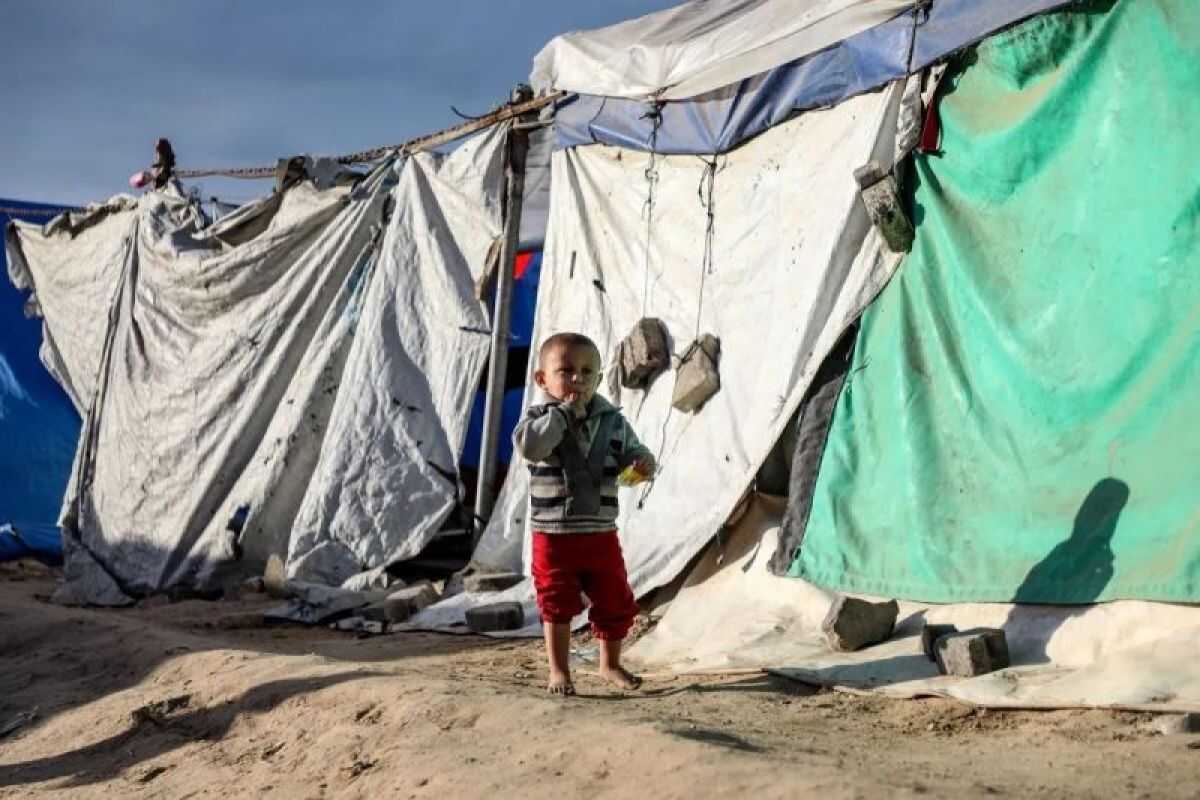
Jakarta (ANTARA) - The Head of the International Relations Department at the Centre for Strategic and International Studies (CSIS), Lina Alexandra, has said that Indonesia should have a greater role in advancing the two-state solution for Palestine through its membership in the Board of Peace (BoP).
“Because our troops are the largest contingent, because we have boots on the ground, we should have a bigger say — we should be able to exert influence,” Lina told ANTARA in Jakarta on Sunday.
Her comments come as Indonesia plans to deploy 8,000 military personnel as part of the International Stabilisation Force (ISF) to the Gaza Strip under the direction of the Peace Council.
With Indonesia’s substantial presence within the stabilisation force, the country should have a greater role in influencing decisions at the Peace Council led by US President Donald Trump.
“If this Board of Peace established by the United States, by Donald Trump, can indeed lead us to achieving that aspiration of a two-state solution, fine. But if not, what then?” she said.
To that end, Indonesia needs to clarify its rules of engagement for the troop deployment to the Gaza Strip, she argued.
Although Indonesia’s mission in the deployment is humanitarian — helping to rebuild various facilities in the enclave — the rules of engagement are critically important, particularly should Indonesian forces come into armed contact.
The possibility of armed contact could arise given that Indonesia may also be tasked with carrying out a disarmament mandate against one of the conflicting parties, namely Hamas.
Hamas, meanwhile, has warned Indonesia against involvement in the mission, as it would regard ISF troops as equivalent to the Israeli Defence Forces (IDF).
“When we are compelled to carry out a mandate to disarm one of the conflicting forces, we should not be executing that mandate,” she said.
Furthermore, clarity in the rules of engagement is also vital to anticipate the possibility that Indonesia may need to withdraw from the BoP should the council’s decisions ultimately not align with Indonesia’s interest in championing a two-state solution for Palestine.
“The President always says that if it doesn’t align with what we want, we can withdraw. But how exactly would that withdrawal work? That has never been discussed,” she said.
She assessed that Indonesia needs to devise an appropriate strategy for exiting the council so as not to invite legal claims or other problems in the future.
“I’m not saying that the BoP cannot be an alternative. I think, fine, let’s see how it goes. But there are a great many questions that remain unanswered,” she said.
Indonesia’s hopes of advancing the two-state solution through its BoP membership, according to Lina, need to be reaffirmed through a firm commitment from the United States, particularly Donald Trump, that the council can align with Indonesia’s interests and struggle to realise peace in Palestine.