
CSIS Assesses Only 2 Per Cent of Indonesian Market Access to US Secured via ART
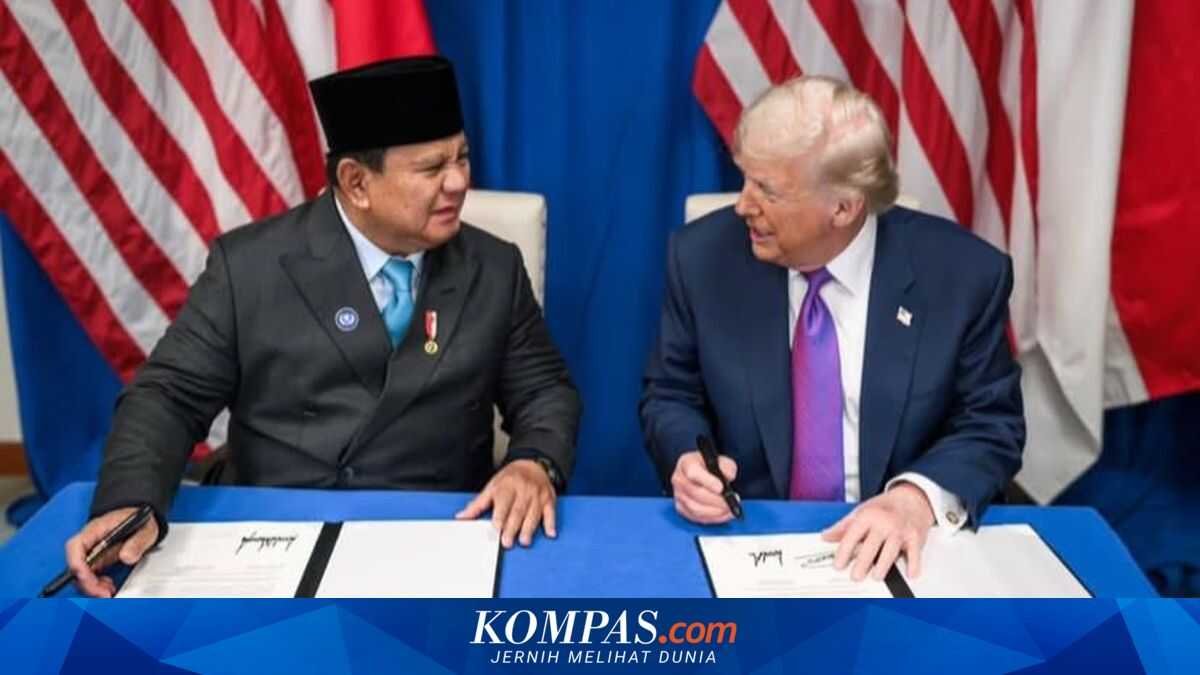
JAKARTA – Riandy Laksono, a researcher at the Economics Department of the Centre for Strategic and International Studies (CSIS), has assessed that the reciprocal tariff agreement under the Agreement on Reciprocal Tariff (ART) secures only approximately 2 per cent of Indonesia’s total trade.
Laksono explained that only about 24 per cent of Indonesian exports to the United States are covered by the additional 0 per cent tariff. Indonesian exports to the United States also constitute only approximately 10 per cent of total national exports.
“So, from all our exports to America, only 24 per cent are covered and receive the additional 0 per cent tariff. Bear in mind, our exports to America represent only 10 per cent [of total exports]. Therefore, the total market access we have secured from our total trade is only 2 per cent,” he said at a Media Discussion entitled “Reciprocal Trade Agreement: Red Carpet or Trade Trap?” in central Jakarta on Friday, 27 February 2026.
This figure is higher than Malaysia’s achievement, which obtained tariff exemptions for approximately 1,700 products. Laksono assessed that this achievement does not justify the trade governance reforms that Indonesia needs to undertake, particularly regarding products from the United States.
In various other trade agreements, Indonesia has typically managed to secure 90 to 99 per cent of total national trade.
Laksono also expressed suspicion that the tariff exemption for 1,819 products was already a predetermined scenario. He assessed that the policy was not the result of intensive negotiations by the Indonesian government over several months since April 2025.
The ART agreement provides zero-per-cent tariff facilities for 1,819 tariff lines of Indonesian products in the American market. These products include palm oil, coffee, cocoa, spices, rubber, semiconductors, and aircraft components.
The textile and apparel sector also obtained zero-per-cent tariffs through the Tariff Rate Quota (TRQ) mechanism. The government stated that this policy has a direct impact on approximately 4 million workers in the textile sector and its derivatives and affects up to 20 million people when accounting for workers’ families.
The policy aims to maintain domestic food price stability. Derivative products such as noodles, tofu, and tempeh are expected not to experience cost increases as a result of import tariffs.