
CSIS: A Militaristic Culture in Polri Education is the Root of Apparatus Violence
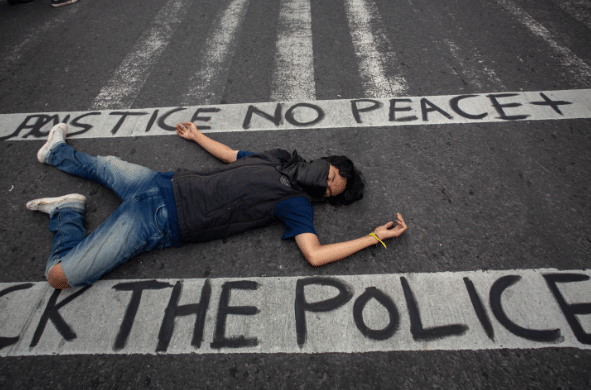
Researcher from the Department of Politics and Social Change at the Centre for Strategic and International Studies (CSIS), Nicky Fahrizal, believes that the culture of violence that still permeates the Polri is rooted in the police force’s formal education system, which has yet to move away from militaristic principles.
Nicky asserts that Polri’s vision of becoming a civilian police force oriented towards citizens is still far from reality. According to him, the primary step that must be taken is to completely overhaul the Polri education curriculum.
“The curriculum must address the remaining militaristic and patronising elements within police education so that modern, humane, and democratic policing can occur. First, deconstruct the curriculum, then revitalise its educators,” said Nicky during a discussion in Jakarta, Wednesday (25/2/2026).
Regarding the incident of violence by a member of the Mobile Brigade (Brimob) in Tual involving Bripda MS, Nicky highlighted the perpetrator’s background as a graduate of the State Police School (SPN). He emphasised that the quality of education at SPN is crucial because it is the transitional phase from high school student to law enforcement officer.
“If we talk about the Tual case, the perpetrator is Bripda, meaning he is an SPN graduate. He was originally a high school student. So, education is a strategic issue. Without changing the mindset of the educators, this change will never be able to begin,” he added.
In addition to educational issues, Nicky also criticised the meritocracy within Polri, which he says has been in place for the last five cohorts. This condition is considered to be damaging career paths and hindering potential actors from holding strategic positions.
Nicky argues that police reform is impossible without the right quality of leadership in key positions.
“There must be good career development, so that actors who are indeed competent can hold strategic positions and bring about change. Reform without the right quality of leadership will not work,” he emphasised.
(P-4)
The Labour Party together with the Confederation of Indonesian Trade Unions (KSPI) initiated almost 5 million workers spread across 15,000 factories in Indonesia.
Indonesia Corruption Watch criticised the Corruption Eradication Commission (KPK) for referring the report of alleged extortion of 43 Polri members to the Deputy for Supervision.
The provisions of the KPK Law, which are considered to open up opportunities for active TNI and Polri members to serve as leaders of the KPK, were challenged in the Constitutional Court because they were considered open to multiple interpretations.
Usman Hamid, stated that the case of Brimob violence in Tual reflects the weakness of accountability and supervision within Polri.
Polri acknowledged the weaknesses and promised to evaluate the role of Brimob in civilian security following pressure from YLBHI. This follows the case of Bripda MS who killed a student in Tual.
Polri handed over the case file of Brimob member Bripda MS, the suspect in the assault on a student in Tual, to the Prosecutor’s Office. The suspect has been officially dismissed (PTDH) and faces 15 years in prison.