
Crystal guava becomes popular choice for travellers on the South Coast route
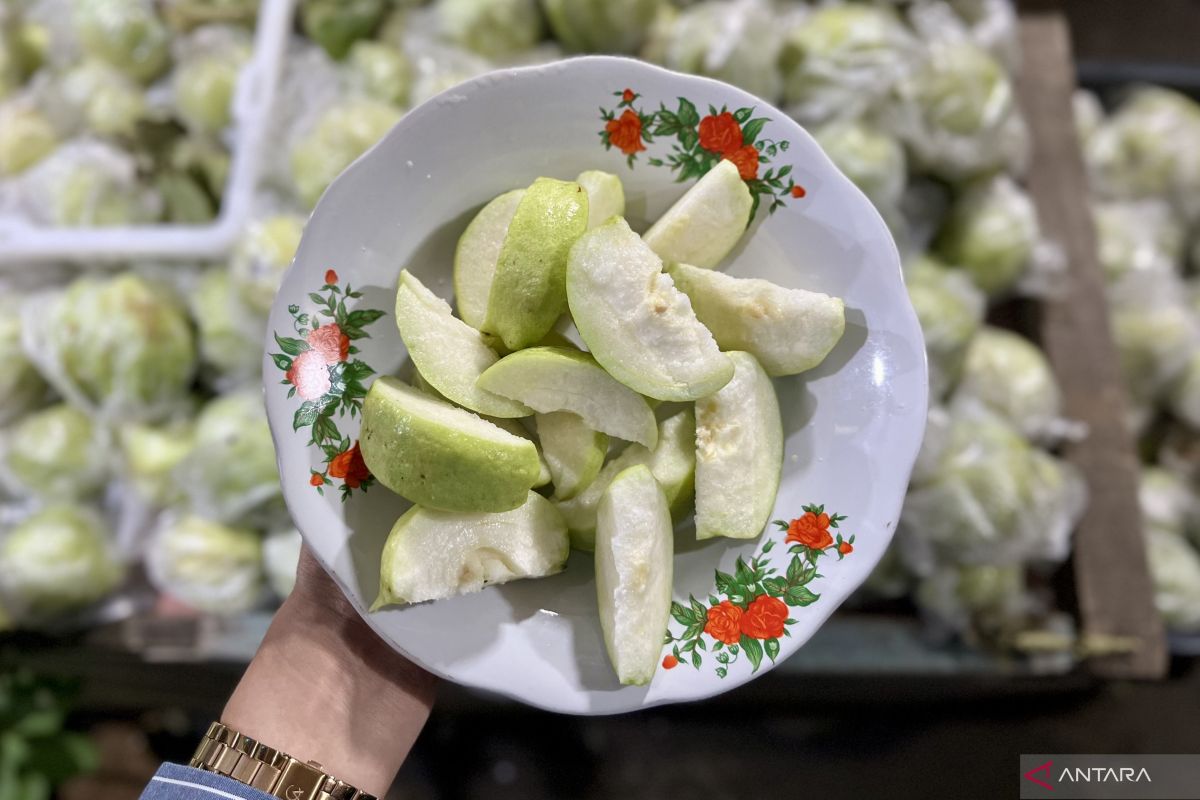
Rows of fruit stalls line the South Coast route towards Yogyakarta during the holiday travel season, and among the various fruits on display, crystal guava has become one of the most sought-after by travellers.
Neatly stacked piles of light green crystal guava sit at the roadside. Some motorists slow their vehicles, whilst others choose to stop and purchase fresh fruit before continuing their journey.
Crystal guava is known for its thick and crispy fruit texture and very few seeds—comprising less than three per cent of the fruit. According to information from the Directorate General of Horticulture at the Ministry of Agriculture, these characteristics are among the main advantages of crystal guava compared to other varieties. Its sweet taste and high water content make the fruit practical to consume whilst travelling, particularly along the long South Coast route, which tends to be hot.
One fruit vendor on the South Coast route, Nariya, noted that crystal guava sales depend heavily on the flow of passing vehicles.
“When sales are good, we shift 50 kilogrammes; when it’s quiet, perhaps just 10 kilogrammes,” she told ANTARA on Tuesday (17 March).
She noted that the majority of buyers are migrants from outside the region, particularly from Jakarta heading to Yogyakarta or East Java.
“Most are from Jakarta, heading home for the holidays, mostly to Jogja or East Java,” she said.
The stall typically operates from morning until late evening, following the movement of travellers.
In terms of price, crystal guava is relatively affordable. One kilogramme sells for approximately IDR 15,000, although buyers often negotiate if purchasing in larger quantities.
“The price is IDR 15,000, but usually some customers haggle, so two kilogrammes for IDR 25,000,” she said.
In addition to selling fresh fruit, the vendor also offers crystal guava saplings to buyers interested in planting them at home. The saplings sell for around IDR 20,000 per stem. According to Nariya, quite a few buyers purchase saplings as additional souvenirs alongside the fruit. Other options are available as well, including honeyed starfruit, which can serve as an alternative to guava. She also mentioned that during the daytime, rujak (traditional fruit salad) is typically available.
Although the peak travel season has not yet begun, sales remain steady with reasonable volume.
“Currently the maximum is 50 kilogrammes. The minimum is around 15 kilogrammes daily,” she said.
The period from Ramadan through Eid remains the most profitable for vendors.
“The difference can be twice as much,” she said.