
Crude Oil Prices Plummet; Is Trump Stepping Back from Conflict?
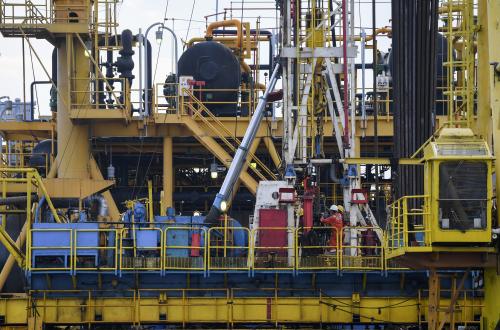
Crude oil prices have collapsed after touching levels above 110 dollars per barrel. On Monday, 9 March 2026, Brent crude oil, the international benchmark, briefly reached 119.50 dollars per barrel. Meanwhile, West Texas Intermediate (WTI) crude oil from the United States also surged to 119.48 dollars per barrel. However, prices subsequently fell back to below 90 dollars per barrel at market close.
In a CBS News interview on Monday, 9 March 2026, US President Donald Trump stated that he viewed the conflict with Iran as “very complete”. Crude oil prices below 90 dollars per barrel remain elevated compared to pre-attack levels, before Israeli and US strikes on Iran on 28 February 2026.
The spike in oil prices was driven by disruptions to global oil production and supply. The United States has attacked several vital Iranian infrastructure facilities, including civilian and oil production facilities, specifically disrupting energy supplies. Iran has closed the Strait of Hormuz shipping route and has not signalled its reopening. Major regional oil-producing nations including Iraq, Kuwait, and the United Arab Emirates have also reduced production due to export constraints and increasingly full storage capacity.
Nicholas Mulder, an economist studying the economic impacts of conflict at Cornell University, stated that current disruptions could represent the largest oil supply shock in modern history. He noted that the volume of oil lost from the global market is now three to four times greater than the 1973 and 1979 oil crises.
Energy research firm Rystad Energy stated that approximately 15 million barrels of oil, or roughly 20% of global supply, normally pass through the Strait of Hormuz daily. Jim Burkhard from S&P Global Energy stated that this crisis is no longer simply about energy transport. Recovery of production, he said, will be a major technical operation that could take weeks or longer. Some analysts estimate oil prices could reach 150 dollars per barrel if the Strait of Hormuz remains closed for several more weeks.
This figure would exceed the previous record of around 147 dollars per barrel that occurred ahead of the 2008 global financial crisis. Such a price surge could trigger fuel price increases across multiple countries. Higher energy costs could increase global inflation and reduce household purchasing power. The impact extends across many sectors, from aircraft fuel costs, vehicle petrol prices, to household electricity bills.
Asian economies are estimated to be most vulnerable due to their dependence on energy imports from the Middle East. Iran itself exports approximately 1.6 million barrels of oil daily, much of which goes to China.