
Critical Notes from Amphuri on the Proposal for 'Ticket War' for Indonesian Hajj Pilgrims
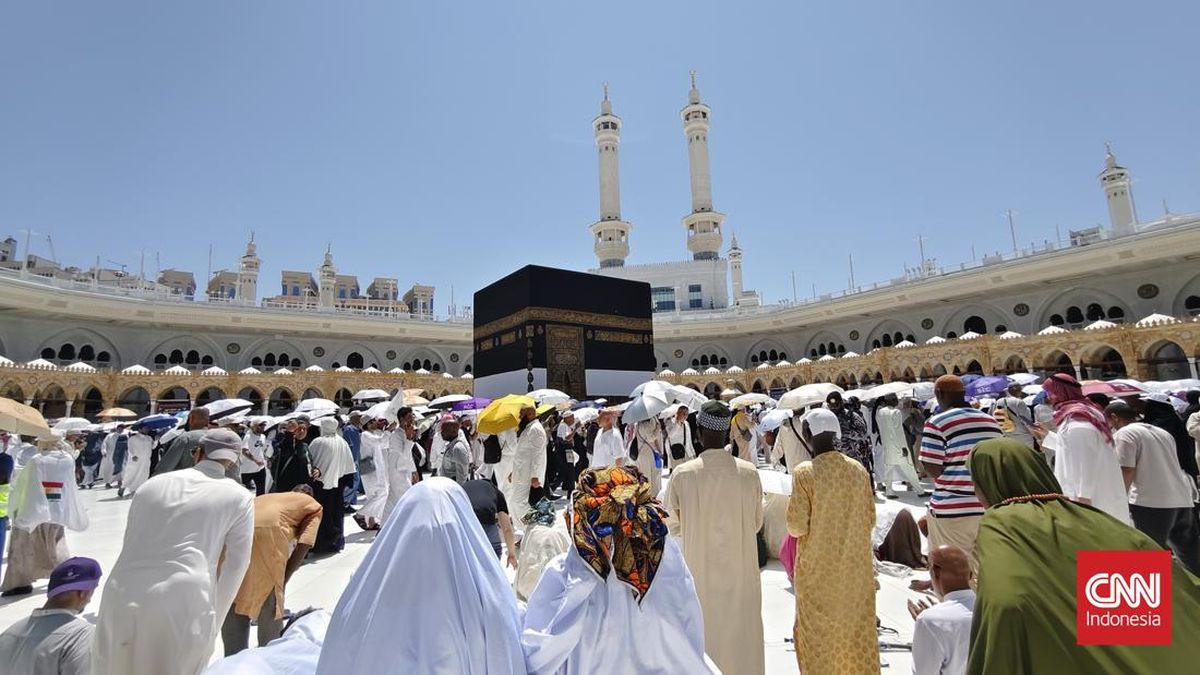
The Indonesian Ministry of Hajj and Umrah (Kemenhaj) is examining a proposal for ‘Ticket War’ as a means to tackle the queuing issue for Hajj pilgrimages to the Holy Land of Mecca in Saudi Arabia, which has extended to several decades.
In response, the Association of Muslim Hajj and Umrah Organisers of the Republic of Indonesia (Amphuri) has offered critical notes to the government.
Amphuri’s Secretary General, Zaky Zakaria Anshary, stated that Amphuri fundamentally supports efforts to enhance the quality of Hajj pilgrimage services.
According to him, the government, as the regulator, must seek breakthroughs, which is part of the shared responsibility to provide the best service to Muslims in Indonesia.
“However, every public policy, especially those concerning worship and millions of people, needs to be thoroughly examined to ensure it aligns with the principles of justice, legal certainty, and the welfare of the ummah,” Zaky said in his statement on Monday (13/4).
Zaky included several critical notes from his side regarding the ‘Ticket War’ Hajj proposal.
First, they highlighted the potential loss of a sense of justice because millions of prospective pilgrims have been waiting for decades.
Second, they opined that less affluent prospective pilgrims would struggle to compete, and the potential rise in prices for regular subsidised Hajj packages—without subsidies from the queuing benefits—could reach around Rp90-100 million or more.
Furthermore, Zaky opined that implementing this proposal would also impact Hajj funds. He noted that if the queue is eliminated, the consequence would be the removal of the current initial deposit system.
Then, the Hajj funds managed by the Hajj Financial Management Agency (BPKH) would also need to be questioned—whether they would be returned or handled otherwise.
Solution Suggestions
Zaky also provided several solution notes from his side if the government still wishes to implement the ‘ticket war’ Hajj proposal.
First, they proposed an alternative to the ticket war by utilising the annual unused quota. Zaky mentioned that around 1,000 to 3,000 of the annual quota go unused for various reasons, such as prospective pilgrims passing away or falling ill and thus unable to go to the Holy Land.
“This quota could be used as a pilot project for ‘ticket war’ Hajj, managed transparently and accountably,” he said.
The second scheme is by using additional quotas. He stated that if Indonesia receives additional quotas, this programme could be implemented without disrupting the existing queue.
He mentioned that this scheme has been applied in countries like Turkey, which has a queuing programme and an alternative programme (via lottery).
Finally, Zaky also proposed a dual system scheme, namely regular Hajj that still uses queuing and is based on social justice, and non-queued regular Hajj based on ability (without subsidies).
“With the condition: it does not disrupt the rights of existing pilgrims and remains within the framework of national regulations,” he said.
Three Main Principles of Ijtihad in Hajj Management
Zaky admitted that his side believes this proposal is a policy ijtihad from the government in perfecting Indonesia’s Hajj system. He stated that Hajj management is complex, thus requiring room for innovation.
However, he emphasised that the ijtihad must fulfil three main principles: justice, transparency, and broad welfare for the ummah.
“As mandated by Law No. 14 of 2025 on the Organisation of Hajj and Umrah Worship, the points are: the state is obliged to guarantee services, guidance, independence, and to realise the civilisation and propriety of Hajj and Umrah Worship by internalising orderly and just Sharia values,” he said.
The ‘ticket war’ proposal in Hajj implementation has recently emerged. Kemenhaj is examining the proposal to address the decades-long Hajj queuing problem.
In the ‘ticket war’ scheme, the government would later announce the Hajj costs for the current year and open registration on a specific date. Anyone who is financially and physically ready can register directly and depart in the same year.
“Like a ticket war. Should we consider something like that again? Of course, this is not an easy decision, but as a discourse, it’s certainly valid to think about,” said Irfan on Wednesday (8/4), quoted from Detik.
Irfan made that statement during the National Work Meeting (Rakernas) for the Consolidation of Hajj Worship Organisation for 1447 H/2025 AD at the Grand El Hajj Hajj Dormitory or Cipondoh Hajj Dormitory, Tangerang, on Wednesday (8/4).
Further, Irfan said the idea stems from progressive thinking within the Ministry, including the Deputy Minister of Hajj and Umrah. The aim is to find a solution so that prospective pilgrims do not have to wait long to perform Hajj.
According to him, this discourse aligns with President Prabowo Subianto’s ambition to transform Hajj organisation in the Red and White Cabinet era.
He said the government is committed to shortening the Hajj waiting period, which has long been a major challenge for Muslims in Indonesia. This effort has apparently yielded results.