
Critical Mineral Investment: Indonesia Reaffirms Downstreaming Commitment Amid Global Partnerships
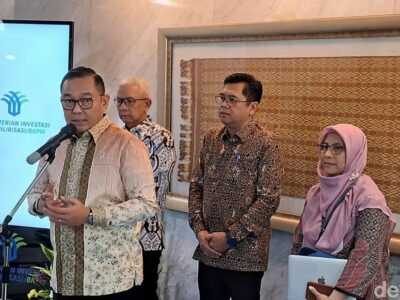
Jakarta – Indonesia has reaffirmed its commitment to downstreaming critical minerals amid efforts to forge global partnerships. The Ministry of Investment and Downstreaming/Capital Investment Coordinating Board (BKPM) has stated that the government will not relax its policy of banning the export of raw critical minerals, even with trade agreements with other countries, including the United States. This reaffirmation comes in response to public concerns about potential policy changes following the signing of Agreements on Reciprocal Trade (ART) some time ago.
Deputy Minister of Investment and Downstreaming/BKPM, Todotua Pasaribu, emphasised that the trade agreement would not compromise Indonesia’s primary goal of building a strong and sustainable downstream industry. He explained that access for foreign companies, including US companies, to invest and manage Indonesia’s critical mineral sector is wide open, but with clear conditions: investment within the country and participation in the downstreaming process.
“In essence, the request from the United States for their business actors to be given access to our mineral sector, including rare earths, is not a problem. The principle is that all countries are treated equally. As long as they follow the applicable rules, namely investing in Indonesia, we are open to cooperation,” said Todotua in a press statement at the Ministry of Investment and Downstreaming/BKPM.
This statement underscores Indonesia’s cautious and strategic approach to managing its natural resources. The government recognises the great potential of critical minerals in driving economic growth and creating added value, but also understands the importance of maintaining state sovereignty and ensuring that the economic benefits of these resources are enjoyed by all Indonesian people.
Furthermore, Todotua Pasaribu affirmed that the trade agreement with the US does not automatically open the door to the export of raw mineral materials. The ban on the export of raw minerals is clearly regulated in law, and the government is committed to enforcing this rule without compromise.
“Our law clearly prohibits the export of raw materials. The downstreaming process and investment must be the main priority. Foreign companies can enter, but must go through a process that complies with applicable regulations. This is just a normal business-to-business matter,” he added.
This reaffirmation is important to alleviate concerns that may arise among the public and domestic industrial actors. The government wants to ensure that the downstreaming policy remains a top priority, and that trade agreements with other countries will not threaten Indonesia’s efforts to build a more independent and competitive industry.
Previously, Coordinating Minister for Economic Affairs, Airlangga Hartarto, also made a similar statement. He affirmed that Indonesia is very open to cooperating with the US in managing the critical mineral sector, with a focus on investment and technology transfer.
“Our critical minerals, including industrial minerals and rare earths, require a secondary process. Indonesia is open to investment and technology cooperation, both for critical minerals and rare earths,” said Airlangga in a press conference regarding the signing of the Indonesia-United States Reciprocal Trade Agreement.
These statements by the two high-ranking state officials reaffirm the consistency of the government’s policy in managing critical mineral resources. Indonesia does not only want to be an exporter of raw materials, but also wants to be a centre for processing and refining minerals, thereby creating significant added value and creating new jobs.
The downstreaming policy of critical minerals is an integral part of Indonesia’s long-term economic development strategy. The government recognises that critical minerals play an important role in supporting the global energy transition and the development of high technology. By building a strong downstream industry, Indonesia can leverage this potential to improve economic competitiveness and reduce dependence on imports.
However, the challenges in realising the downstreaming of critical minerals are not small. It requires large investments, advanced technology, and competent human resources. In addition, the government also needs to create a conducive investment climate and ensure that existing regulations support the growth of the downstream industry.
To overcome these challenges, the government has taken various strategic steps, including providing fiscal and non-fiscal incentives to investors, simplifying the licensing process, and improving the quality of human resources through training and education programs. The government is also actively forging cooperation with other countries to gain access to technology and markets.
In addition, the government is also working to increase transparency and accountability in the management of the mineral sector. This is important to build investor and public trust, and to prevent corruption and abuse of power.
With a strong commitment and the right strategic steps, Indonesia has great potential to become a major player in the global critical mineral industry. However, the success of downstreaming critical minerals requires support from all parties, including the government, industry players, academics, and the public.
The government recognises that the downstreaming policy of critical minerals has a broad impact, not only on the economy, but also on the environment and society. Therefore, the government is committed to implementing the principles of sustainable development in the management of the mineral sector. This means that mining and mineral processing activities must be carried out with due regard for environmental sustainability, respect for the rights of indigenous communities, and provide fair benefits for all people.
In the context of partnership,