
Cries of Food Vendors Near Offices During Civil Servants' Work from Home: It Makes a Huge Difference, Everything's Dead!
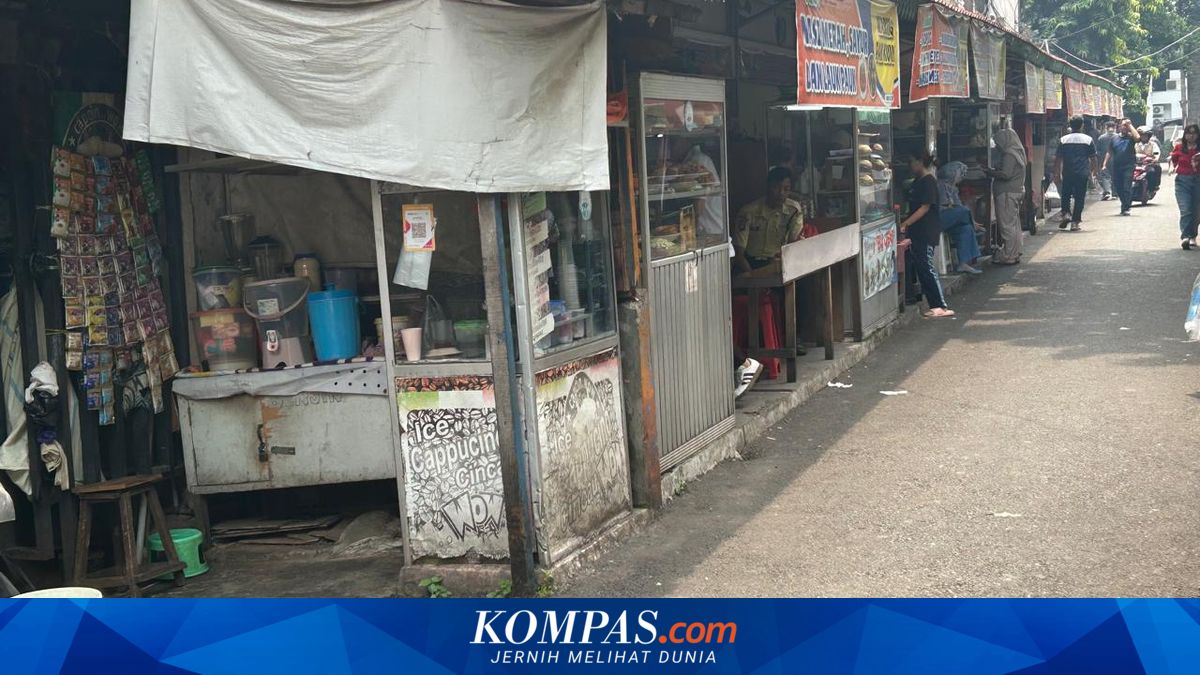
The government’s policy of applying a work from home (WFH) pattern for civil servants (ASN) every Friday not only changes the rhythm of office activities but also affects the economic vitality of vendors around office districts. The difference in atmosphere is clearly felt in the Kebun Sirih Barat II area, Central Jakarta, which is usually filled with office workers, including employees of the DKI Jakarta Provincial Government. When Kompas.com visited on Thursday (7/5/2026), the atmosphere felt so lively and crowded. Approaching lunchtime around 11.50 WIB, this narrow alley turned into a sea of shirts and uniforms. Not far from there, another customer ordered from a different stall. “Is there still any value, bro?” he asked while looking at the row of side dishes in the glass display. “Want rice?” the vendor replied. “Yes, separate the sambal, okay,” he responded. That brief conversation between vendor and customer could be heard echoing in almost every stall. Workers appeared one after another to order lunch, while vendors busily served the continuous stream of customers. One of the busiest spots, crowded with visitors, was the Pak Hadi stall selling fried rice, fried noodles, and kwetiau. The lively atmosphere, filled with the low sound of frying and the fragrant aroma of fried rice spices, became a magnet for workers in the surrounding area. One officer in a uniform reading “Lemhannas RI” blended in with other office workers, patiently waiting his turn in batik shirts or official attire. The vendors appeared agile in serving the endless orders, whether for eating in or takeaway. The scene was markedly different when Kompas.com returned the next day, on Friday (8/5/2026), at the same time. The previously full atmosphere now felt much more spacious and quiet. There were no more long queues blocking part of the road. Several vendors sat resting, chatting softly with fellow vendors, or simply tidying their wares. Beverage stalls like Teh Manis Solo, offering refreshment starting from Rp 3,000, appeared deserted. The stock of fresh orange juice remained neatly arranged in the display. “It affects us a lot, already 85 per cent, honestly. This has been going on for about a month and a half. Yeah, just this month alone, it’s really felt,” said Hani when met by Kompas.com on Monday (11/5/2026). According to Hani, income that was previously quite stable has now dropped by around 70 to 80 per cent. The earnings obtained are said to be only enough for daily needs. Hani said the area conditions on normal working days are very different from Fridays when many ASN work from home. If usually the area is filled with office workers from morning to evening, now the atmosphere is far quieter. She even assessed the current situation as more pronounced than during the COVID-19 pandemic because the number of customers continues to decrease. “The saddest part is that during COVID-19, we could still smile a bit. Because during COVID-19, there was odd-even [restrictions], right. But this one is really felt,” she said. The drop in customers has forced Hani to reduce the amount of food prepared and stock each day to avoid leftovers. According to Hani, she usually uses up to three rice thermoses in a day. But now, even two thermoses are hard to finish by evening.