
Crewing New Defence Equipment: A Challenge for Indonesia
Indonesia’s drastically increased foreign loan allocations to the Defence Ministry during 2020–2024, reaching nearly five times those of 2015–2019, have enabled the acquisition of several advanced weapons systems recognised globally for their quality. With a budget of US$34.7 billion, Indonesia intends to procure defence equipment that remains untested and make purchases as a first export customer, including fighter jets with only a single prototype.
Using these foreign loans, Jakarta plans to acquire second-hand single-engine fighter jets, despite rejecting a United States offer of F-16 Vipers several years ago. In essence, there are significant contradictions in defence procurement even as the country enjoys increased defence spending.
During 2025–2029, military equipment acquisitions enter a period of severe turbulence due to immature planning processes, if not outright absence of planning. The reduction in foreign loan allocations to the Defence Ministry to US$28 billion is accompanied by uncertainty, lacking any accompanying list of planned expenditures.
Additional uncertainties stem from deliberate neglect of interoperability and commonality aspects in weapons systems procurement, resulting in programmes such as planned purchases from China and Pakistan. There is also a tendency to prioritise private foreign creditor schemes over export credit guarantee mechanisms, despite higher debt risks, as private creditors typically do not impose strict compliance requirements on borrowers.
The US$34.7 billion defence procurement budget has created excesses for end-users, given that not all planned expenditures have been properly prepared or involve active participation from all stakeholders.
The arrival of new weapons systems must be supported by infrastructure preparation and human resources to crew these defence systems, particularly for the Indonesian Navy and Indonesian Air Force. Infrastructure provision is not merely a matter of budget allocation but is also connected to the time required to build such infrastructure.
Similarly, large-scale personnel increases remain relevant to the capacity of education and training facilities, budget support, and the timeframe required to conduct training activities.
The Indonesian Air Force faces substantial work until the end of this decade to prepare pilots and technicians to crew 42 Rafale aircraft, scheduled for delivery between 2026 and 2029. This is undoubtedly challenging, as producing combat pilots is inherently difficult, and new pilots require diverse routine training to enhance proficiency over extended periods.
Although Rafale pilots are drawn from F-16 and Hawk 100/200 pilots, new pilots are still needed to fill vacancies left at the American and British fighters. Moreover, existing Rafale pilots with previous F-16 and Hawk 100/200 experience still require tactical training in operating the French fighter, given that each aircraft has different characteristics.
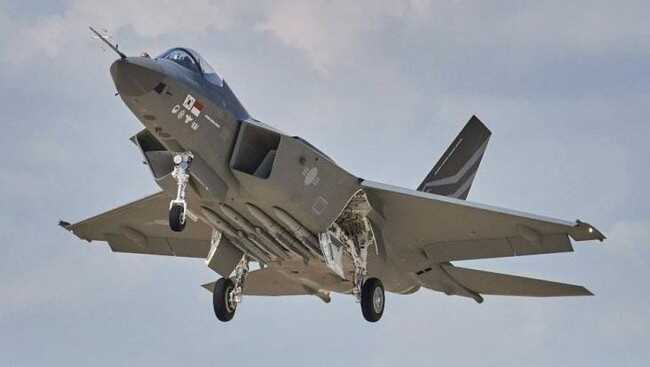
Even as challenges remain regarding crewing 42 Rafale aircraft, the Defence Ministry plans to import second-hand J-10 fighters from China and is considering Pakistan’s offer of JF-17 fighters. Meanwhile, Indonesia will almost certainly become an operator of the KF-21, a South Korean-made 4.5-generation fighter resulting from Indonesia’s contribution to the KFX/IFX programme.
Morally and politically, KF-21 procurement is far more important to Indonesia than J-10 or JF-17 acquisition, partly because the KF-21’s design accommodates several Indonesian Air Force operational requirements. The Air Force must certainly prepare potential KF-21 crews within the next two years, both pilots and technicians.
The challenges faced by the Indonesian Navy regarding crewing new weapons systems may prove more complex than those faced by the Air Force. Unlike aircraft requiring only a few pilots and technicians per unit, new naval vessels such as the Pattugliatore Polivalente d’Altura (PPA) frigate require a minimum of approximately 100 crew members across all ranks.
Besides this frigate, the Defence Ministry has effective contracts with domestic shipyards for Offshore Patrol Vessel-type ships requiring crew numbers not dissimilar to the PPA. Crew requirements will increase further if contracts for patrol vessels of 70 metres and below are included, as well as plans to import the former Marina Militare Italiana aircraft carrier, which must be crewed by at least 500 commissioned officers, non-commissioned officers, and enlisted personnel.
It is an undeniable fact that the Indonesian Navy and Air Force are currently increasing personnel recruitment across all ranks. One critical issue requiring emphasis is whether recruitment standards for commissioned officers, non-commissioned officers, and enlisted personnel have declined when confronted with personnel quantity targets.
Meanwhile, initial training for non-commissioned officers and enlisted personnel has experienced significant reduction, with implications for educational curricula.