
Credit access remains uneven, Amar Bank accelerates digital financing for SMEs
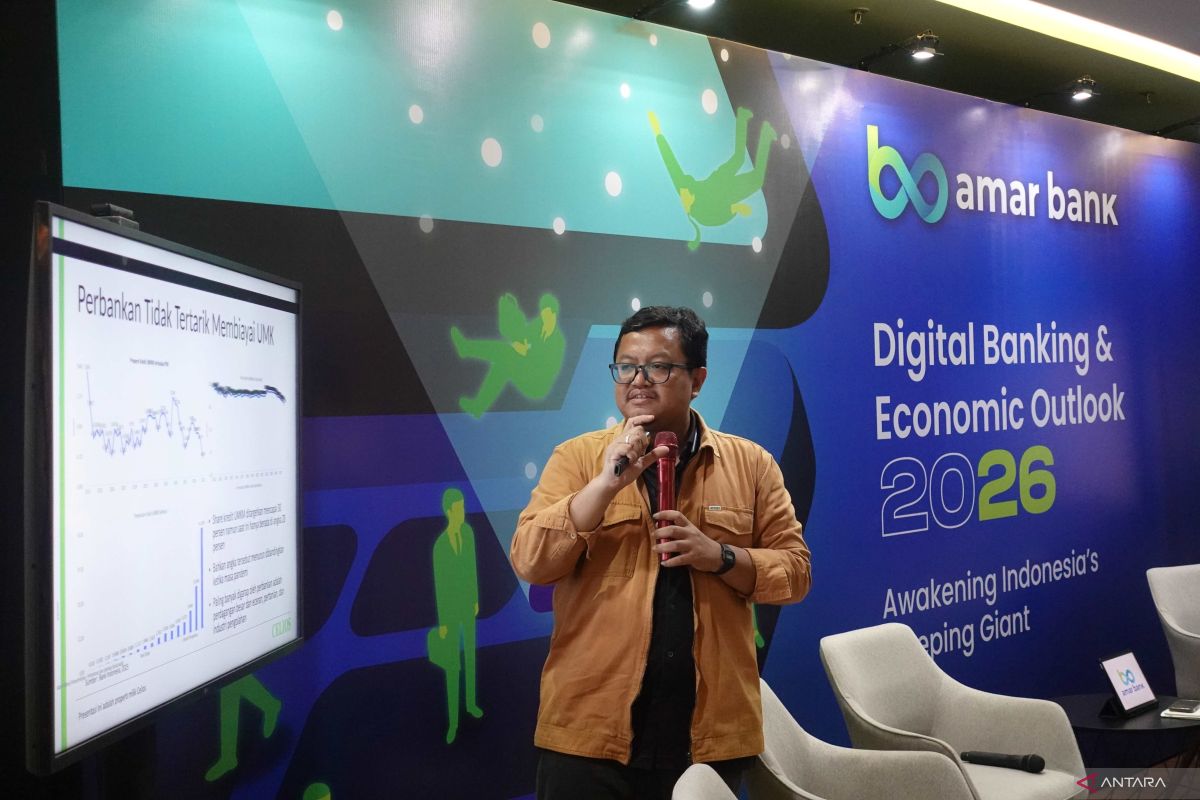
Jakarta (ANTARA) - PT Bank Amar Indonesia Tbk (AMAR) is accelerating digital financing for SMEs as a top priority to strengthen Indonesia’s digital economic resilience. Amar Bank’s President Director Vishal Tulsian stated in Jakarta on Wednesday that this approach is key to unlocking the vast potential of SMEs, which have not been optimally developed so far. The company aims to facilitate access for SME players to grow their businesses. “Through easily accessible and reliable digital financial solutions, we want to open greater opportunities for SMEs to grow more productively and competitively. This is part of our commitment to unleashing the great potential of SMEs as the backbone of the national economy,” Vishal said. Citing the latest data from the Ministry of Cooperatives and SMEs, the number of SMEs in Indonesia reaches 64.2 million units, contributing around 61% to Gross Domestic Product (GDP) and absorbing up to 97% of the national workforce. Nevertheless, access to financing remains a major challenge. The government’s target to push SME credit to 30% of total bank credit has not been achieved, with realisation in 2025 still around 19.4%. For this reason, digital banking plays a crucial role in bridging that gap. Vishal believes digitalisation enables simpler processes, faster financing access, and more secure systems, thereby promoting broader financial inclusion. In agreement, Nailul Huda, Director of Economics at the Center of Economic and Law Studies (CELIOS), also views limited financing access as the main challenge for SME players in Indonesia. During a discussion at the Digital Banking & Economic Outlook 2026: Awakening Indonesia’s Sleeping Giant event, Nailul noted that many small business operators still rely on personal capital or family loans due to administrative barriers and high costs of accessing banking services. “In this context, the presence of digital banks and ability-based financing schemes offers opportunities to expand financial access, especially in areas still dependent on informal loans,” he said. He added that amid these challenges, Indonesia’s digital economy continues to show significant growth. Nailul noted that the value of digital payment transactions is projected to reach Rp4,000 trillion by 2026. This substantial figure is driven by increasing internet and mobile device usage, as well as rapid QRIS growth from both user and merchant sides. However, he warned that data security issues and digital talent limitations remain major challenges. “Looking ahead, strengthening literacy, financial inclusion, and digital innovation is key to driving more inclusive and sustainable economic growth,” Nailul said. Furthermore, Josua Sloane Solagracia, Senior Vice President of MSME at Amar Bank, stated the company’s commitment to providing appropriate solutions to help SME players overcome barriers to formal financial services. According to him, through the Amar Bank Bisnis service, SME players are encouraged to build more organised, systematic, and documented administration and financial management systems. “This solution not only helps daily operational efficiency but also strengthens the business foundation in the long term. With a more structured financial track record, SMEs have greater opportunities to be objectively assessed as creditworthy by financial institutions, thus opening up access to formal financing,” Josua said. Meanwhile, on the technology and operations side, Amar Bank’s Director of Information Technology and Operations Kevin Kane revealed that his company will continue to strengthen innovations, including through the use of artificial intelligence (AI)-based technology. This is done to improve efficiency and accuracy in the overall banking process. “Amid rapidly evolving technology, we continue to develop infrastructure and explore new innovations to drive productivity and efficiency. Through automation, real-time underwriting processes, and customer behaviour analysis, we can deliver faster, more accurate, and secure decision-making,” Kevin said.