
Credible Policies to Avoid Public Uproar
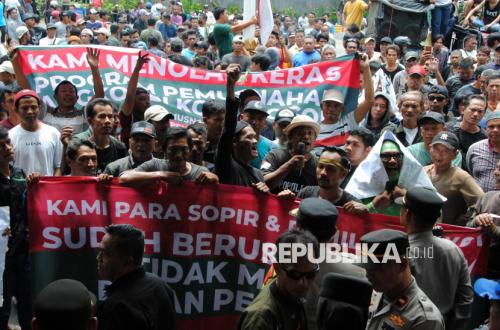
In the midst of increasingly complex development dynamics, one aspect often overlooked is that public policy is not merely an administrative product but a signal of trust. Every policy announced by the government is in fact ‘read’ by the public, not just its content, but also the way it is formulated. When policies arrive suddenly, change frequently, or lack explanation, what emerges is not only confusion but also uproar in the public sphere.
It has been witnessed often enough how a policy intended to solve a problem instead triggers prolonged polemics. This is not solely because its substance is wrong, but because the process is not strong enough to build legitimacy. Herein lies the fundamental issue: the credibility of a policy is determined not only by ‘what’ is decided, but also by ‘how’ that decision is made.
It must be acknowledged that the quality of public policy greatly determines the level of public trust in the government. Policies that change too quickly or appear sudden easily create perceptions of uncertainty. In this context, the public questions not only the policy’s content but also the capacity and consistency of the policymakers themselves.
Ensuring Credibility
Policies formulated through transparent processes, based on data, and involving various stakeholders tend to be more readily accepted. Transparency provides space for the public to understand the policy’s rationale. A data basis strengthens the policy’s arguments so they are not seen as speculative. Meanwhile, stakeholder involvement ensures that the policy is not disconnected from field realities.
Theoretically, this phenomenon can be explained by what is known as the credibility thesis. This theory asserts that the success of an institution or policy is greatly determined by the level of public trust in it. This is obtained by building perceptions of legitimacy, transparency, and fairness. In other words, a policy that is technically correct is not necessarily successful if it is not considered credible by society.
Public uproar is often not caused solely by the policy’s substance, but by the weakness of the underlying process. When policies appear sudden, changeable, or inconsistent, the public perceives signals of uncertainty. From the perspective of institutional trust, this condition lowers public confidence, which in turn hampers policy implementation.
However, building credible policies requires more than good intentions. Nor is it sufficient merely to convey in various occasions that the policies made are for justice and to show the state’s presence in societal life. There are several requirements that need to be met.
First, policy direction consistency. One of the most frequent sources of uproar is inconsistency, both over time and between agencies. A policy announced today and revised tomorrow creates costly uncertainty. The business world holds back investments, the public is confused in making decisions, and the bureaucracy itself loses footing in implementation.
Second, clarity in public communication. Not a few policies that are actually good fail to be understood due to rushed or incomplete communication. In the digital era, gaps in official information are quickly filled by speculation. As a result, the policy narrative becomes wild and difficult to control. Therefore, policy communication must be viewed as an integral part of the policy design itself, not merely a final stage after the policy is set.
Third, policy testing before widespread implementation. Many countries have adopted a policy piloting approach or limited trials before national rollout. This approach allows the government to identify potential problems early and make adjustments without causing major uproar. Without this stage, policies risk becoming expensive ‘public experiments’.
Fourth, the courage to meaningfully involve the public. Public participation is not just a formality through consultation forums, but a genuine dialogue process. When society feels involved, they tend to be more accepting, even possibly supportive of policies that do not fully benefit them. Conversely, policies that feel ‘imposed from above’ are more likely to trigger resistance.
Changing the Mindset
Policymakers need to view the policy formulation process not merely as an administrative stage, but as a strategic investment. The time spent strengthening the process at the beginning is often far less than the costs incurred to address implementation failures later on.
In the context of increasingly complex national development, the government is indeed demanded to be responsive and innovative. However, quick responses must not be sacrificed for hasty ones. Innovative policies must still be grounded in reality, consider implementation capacity, and maintain consistency with existing policies.
Policies formulated meticulously do require more time in the initial stage. But in the long term, this approach actually saves social, political, and economic costs. Public uproar can be minimised, public trust maintained, and implementation runs more effectively.
Ultimately, if the main goal of public policy is to improve societal welfare, whether smooth or not, its formulation process must be carried out with caution, thoroughness, and high responsibility. Credible policies