
Creators and Industry Begin to Adopt 3D Printing Technology
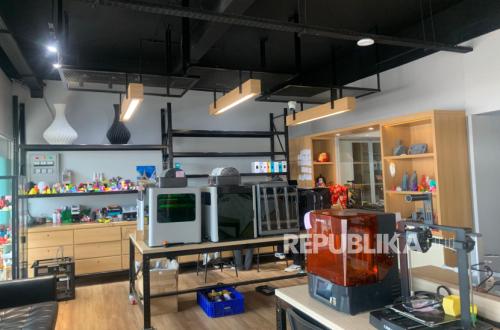
Jakarta – 3D printing technology is increasingly being utilised in Indonesia as digital manufacturing continues to develop. This technology opens new opportunities for creators, industry players, and educational institutions to transform designs into products more rapidly and flexibly.
IndoCart, a distributor of 3D printing technology, believes that the trend of digital manufacturing adoption in Indonesia is accelerating, ranging from product prototype development to small-scale production. Albert Ong, owner of IndoCart, stated that the company is working to expand the technology ecosystem to make it more accessible to various stakeholders.
“IndoCart has been established for 23 years. From the beginning, we have believed that technology, including 3D printing, should be more openly accessible to various groups, not just specific communities or limited market segments,” said Albert in a written statement on Monday (16 March 2026).
According to Albert, the creative potential of young Indonesians is substantial, yet often limited by access to production technology. 3D printing technology is regarded as capable of accelerating the prototyping process and new product development.
“3D printing technology enables ideas and imagination to be realised into actual products, from product prototypes and functional components to creative works such as figurines and miniatures,” said Albert.
Currently, IndoCart distributes various 3D printer devices used across different sectors, particularly FDM (Fused Deposition Modeling) and resin printing (SLA) technology. FDM-based printers use filament materials such as PLA, ABS, and PETG that are printed in layers to form objects, whilst resin printing technology produces more precise object details.
The technology is utilised for various needs, from product prototyping and functional components to educational requirements in schools and universities. In the industrial sector, the technology is also used for limited production through the print farm concept.
IndoCart, he said, distributes several 3D printer brands including Bambu Lab, Creality, Snapmaker, Phrozen, Sunlu, Esun, PolyMaker, and Elegoo. Beyond printer devices, the company also provides printing materials and supporting equipment within the 3D printing ecosystem.
Amid increasingly intense competition in technology device distribution, IndoCart has chosen a strategy to maintain balance between product quality, price, and customer service. The company also emphasises the importance of after-sales support for every product marketed.
“We do not position ourselves as a distributor offering the cheapest price. What is more important to us is maintaining a balance between reasonable pricing, product quality, and reliable service,” said Albert.
He added that the company does not sell products that are no longer supported by manufacturers. “We are committed to not selling clearance products or discontinued items. Every product we distribute is guaranteed to remain relevant and has clear after-sales support,” said Albert.
Beyond product sales, IndoCart is also developing strategies to strengthen communities and technology education to expand 3D printing utilisation in Indonesia. “We are not only marketing products, but also working to build an ecosystem and education regarding 3D printing technology in Indonesia,” said Albert.
Looking ahead, IndoCart plans to expand its business reach by opening outlets in shopping centres and introducing pop-up store concepts to introduce this technology to a wider audience. The company will also strengthen customer service and technical support as market demand for digital manufacturing technology increases.