
Creative Economy Minister Ensures Regional Government Involvement in Rindekraf Implementation
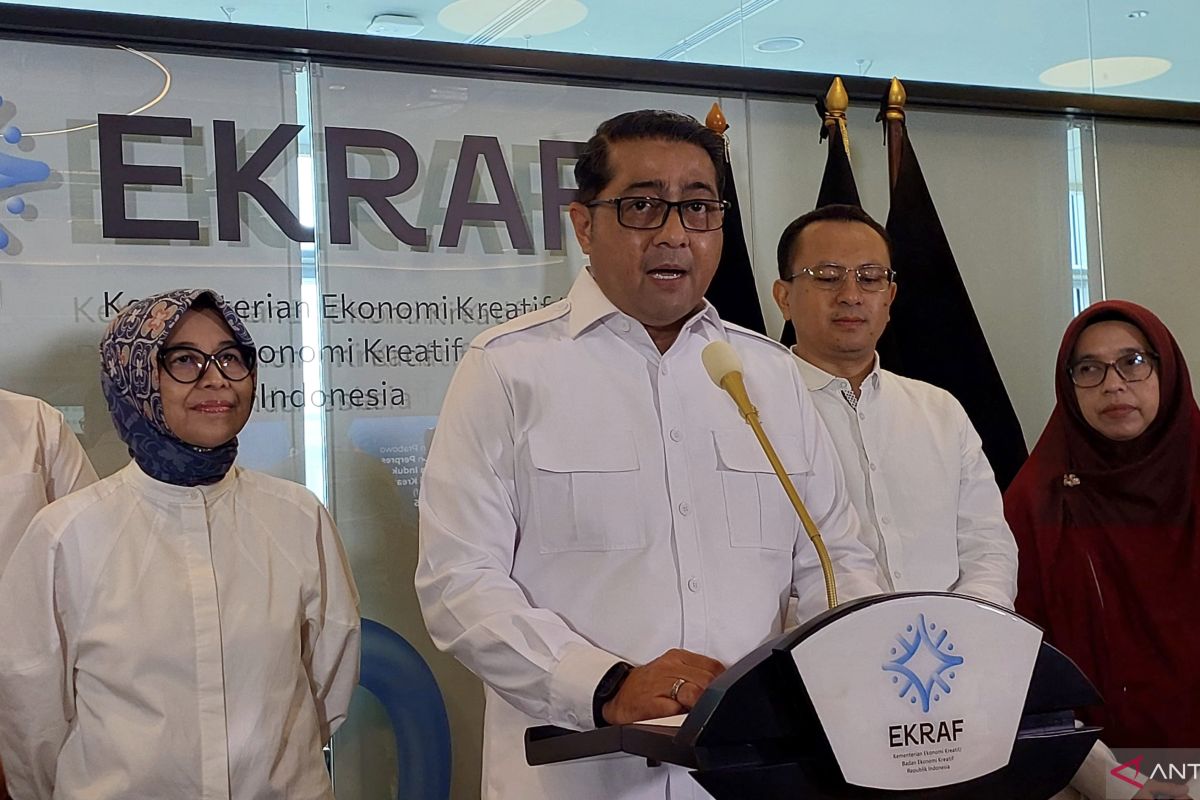
Creative Economy Minister Teuku Riefky Harsya stated that the implementation of the 2026-2045 Creative Economy Master Plan (Rindekraf) will certainly involve regional governments in executing priority agendas for the development of the national creative economy industry. “Because this is indeed our function to orchestrate with regional governments. So, of course, the role of regional governments is very important, the role of associations or communities is also very important, and the role of academics, media, and including financial institutions is very important in the implementation of this Rindekraf,” Riefky said during a press conference on the Rindekraf 2026-2045 in Jakarta on Wednesday.
He said the Rindekraf will become a guideline for regional governments to set policy directions and institutional arrangements to develop programmes that can advance the creative economy potential in their regions. Riefky stated that the programmes to be run will be adjusted according to the budget available in each regional government. “We are currently holding trilateral discussions with the Ministry of Finance and Bappenas under the direction of the President. And of course, if that can be done, it can be implemented starting from the second semester of this year,” he said.
He said the Rindekraf also includes funding to develop the quality of regional creative economies through three flagship programmes. The three programmes are the activation of creative villages in their respective areas fostered by regional governments, ministries/agencies, or private sector programmes, and Creative Hubs for providing medium-term certified training facilities with skill enhancement, assistance for intellectual property registration, as well as market access and funding. “Indeed, this Presidential Regulation on Rindekraf does not mean everything is financed by the central government. But it serves as a guide when they want to run or develop the creative economy sector in their regions,” Riefky said.
Riefky stated that with the Rindekraf, collaboration between the central and regional governments can expand opportunities for local intellectual property to become a driving force for the national economy, contributing to exports and attracting investment. He said the Presidential Regulation on Rindekraf will be evaluated every five years to observe the rapid development of the creative industry, especially those based on digital and technology, and will continue to coordinate with ministries/agencies as implementers through monitoring and evaluation every six months so that programme targets remain within the established corridor.