
Creative! Dlingo Bantul Residents Transform Critical Land into Essential Oil Producer
Residents of Pedukuhan Kebosungu 1, Dlingo, Bantul, have transformed critical land into an area teeming with essential oil-producing plants. Started in 2017, the community now produces 60 litres of essential oil from lemongrass and red ginger each month.
Coordinator of the Shafaluna UMKM, Sunaryanta, stated that the land used for planting essential oil-producing crops is located on marginal land in Kebonsungu 1. The land is dominated by rocks, making it unsuitable for growing secondary crops.
“Because the land cannot be planted with secondary crops, we planted it with essential oil plant materials such as red lemongrass and eucalyptus,” he said to reporters in Dlingo, Bantul, on Wednesday (15/4/2026).
As a result, in 2017, residents began planting essential oil crops on seven hectares of land. This initiative caught the attention of the Bantul Regency Government, which began developing the planting of essential oil crops.
“Red lemongrass was chosen because its maintenance is relatively easy; once planted, it can be harvested multiple times. Even until now, we have harvested 127 times,” he said.
Sunaryanta detailed that during the first planting season, harvesting occurs in the sixth month. Subsequent harvests require only 33 to 38 days.
“Because we have harvested many times, we have built several replications or demonstration plots for red lemongrass and eucalyptus,” he said.
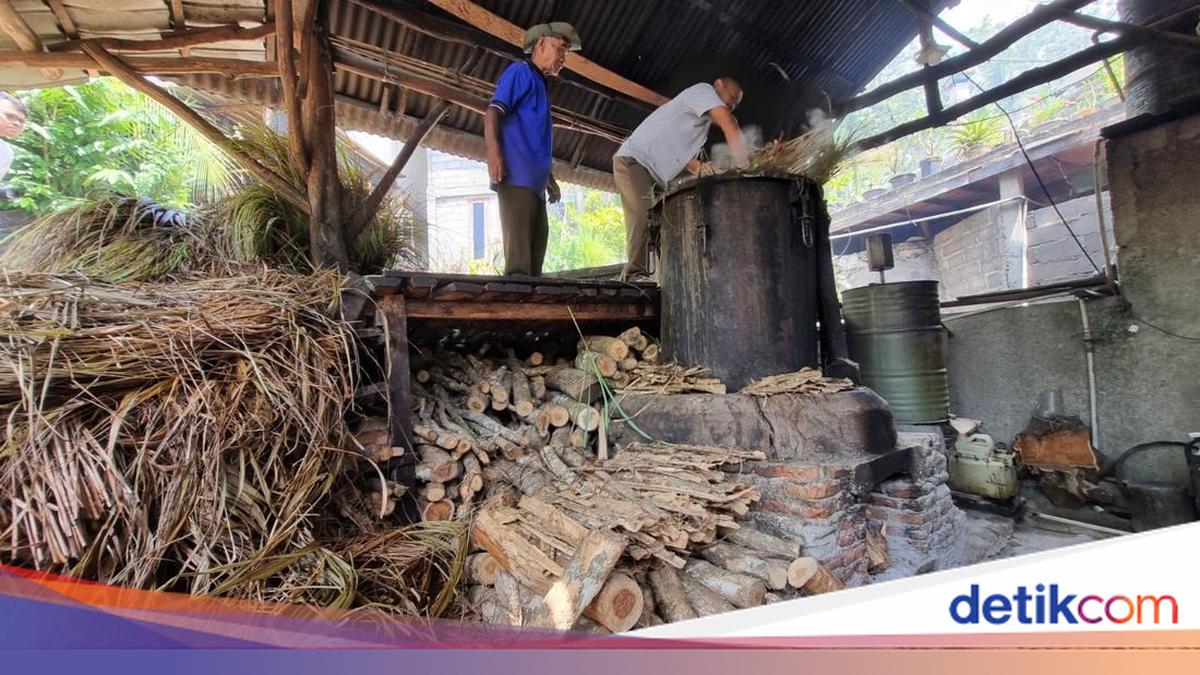
Furthermore, Sunaryanta produces essential oils into products ranging from bath soaps and aromatherapy candles to rubbing oils. The production uses distillation techniques, where 100 kg of red lemongrass yields 400-700 ml of essential oil.
“So the essential oil plants are cooked in a large container for three and a half hours, then refilled with raw materials until depleted. In a month, we can produce 50-60 litres of essential oil,” he said.
Regarding prices, Sunaryanta noted they vary. Essential oil in 10 ml packaging costs Rp 10,000, 30 ml Rp 30,000, and 60 ml Rp 50,000.
“For the bar soap, it’s Rp 5,000 each. But that’s our price; to resellers, it’s slightly different,” he said.
Regarding turnover, Sunaryanta declined to disclose it, as the business is still new and the proceeds will return to the community.
On the other hand, Sunaryanta complained about the difficulty in marketing essential oil products, given that the largest market is abroad.
“The products are sold to various regions online. Actually, the best interest comes from India, but we still face difficulties accessing that market,” he said.
On the other hand, Sunaryanta revealed that essential oils have many benefits. One of the latest is that the oil can treat wounds from venomous animal bites.
“Its benefits include relieving stress, headaches, and treating venomous animal bites. The soap is for skin health,” he said.
Therefore, Sunaryanta and his colleagues, currently numbering 472 farmers, are expanding their product marketing efforts.
“We’ve just created an e-commerce account, hopefully we can penetrate the overseas market,” he said.