
Court Rejects Pre-trial Motion by Former Religious Affairs Minister Yaqut; Suspect Status Upheld
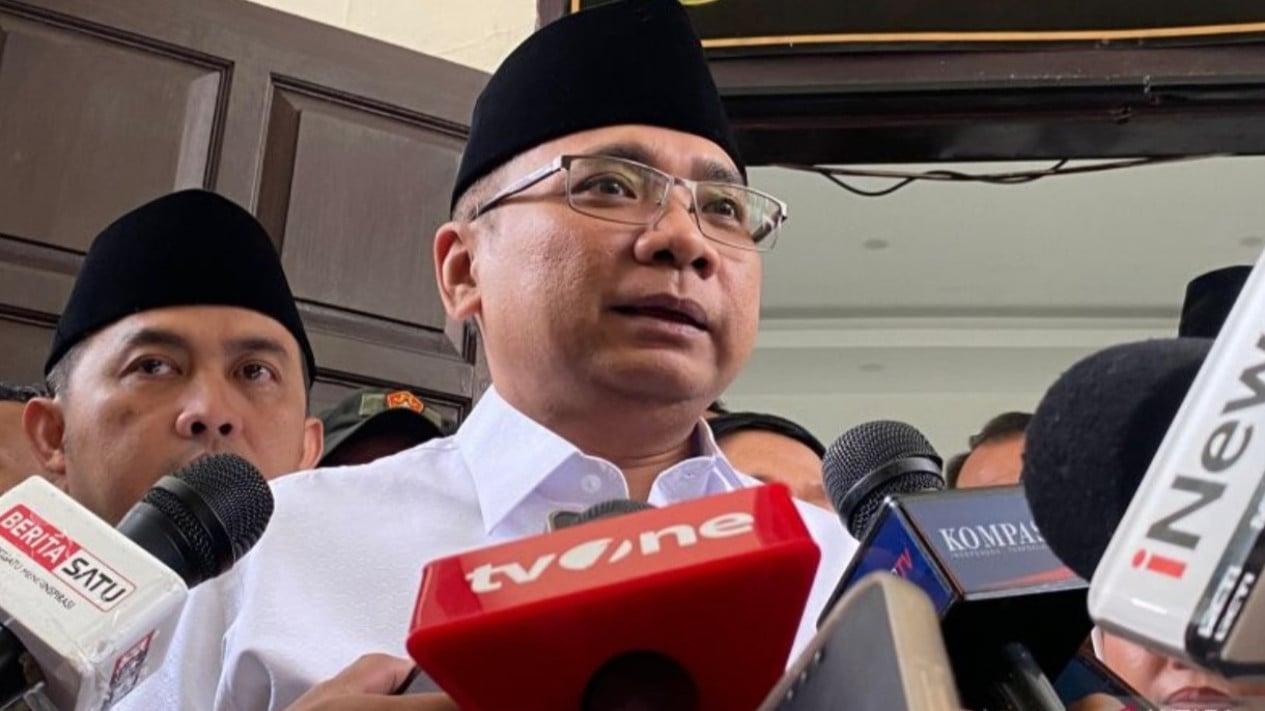
The South Jakarta District Court has rejected a pre-trial motion by former Minister of Religious Affairs (Menag) Yaqut Cholil Qoumas regarding his suspect status in an alleged corruption case involving the hajj quota, as investigated by the Corruption Eradication Commission (KPK).
The decision was announced by single judge presiding over the pre-trial proceedings, Sulistyo Muhamad Dwi Putro, during a ruling session held at the South Jakarta District Court on Wednesday, 11 March 2026.
“In the main case, I reject the pre-trial motion of the applicant in its entirety,” stated judge Sulistyo when reading the verdict.
With this ruling, the suspect status held by former Religious Affairs Minister Yaqut in the hajj quota corruption case remains valid.
Previously, it was reported that former Minister of Religious Affairs Yaqut Cholil Qoumas stated that the pre-trial lawsuit he filed at the South Jakarta District Court was not intended to obstruct the legal process. He reaffirmed this position following the pre-trial hearing on his suspect status at the South Jakarta District Court on Tuesday, 24 February 2026.
“I am exercising my right to file a pre-trial motion against my designation as a suspect by the KPK. Therefore, this is not intended to obstruct or oppose the legal process,” Yaqut told journalists.
He noted that the pre-trial motion represented his legal right as a party designated as a suspect by the Corruption Eradication Commission (KPK) in the hajj quota case.
“However, in exercising this right, as you all witnessed, the KPK also exercised its right not to appear today,” he added.
At that time, Yaqut also explained his rationale for dividing the additional 2024 hajj quota on a 50-50 basis between special and regular hajj allocations.
Yaqut stated that his consideration was to safeguard the lives of hajj pilgrims due to space limitations.
“Furthermore, I must also clarify that the issue affecting me concerns the hajj quota, as we all know,” he said.
“In essence, my only consideration when determining the quota distribution was the principle of hifdhun nafsi—protecting the lives of hajj pilgrims—because of the limited capacity available in Saudi Arabia,” he elaborated.