
Countries Isolate US Over Hormuz Strait Blockade
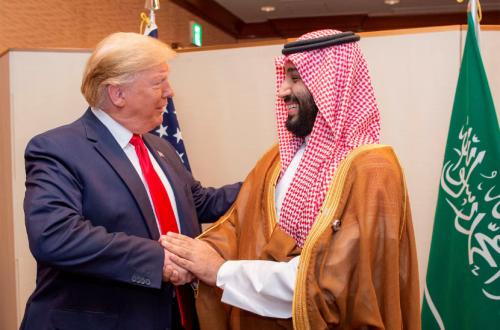
RIYADH – No country has so far offered support to the United States for its action in blockading the Strait of Hormuz to counter-pressure Iran. US allies in the region and Europe have rejected President Donald Trump’s desperate move and are reluctant to provide assistance.
Saudi Arabia has recently joined in urging the US to halt its blockade of the Strait of Hormuz. This contradicts claims from Washington that its Gulf allies support the action.
The Wall Street Journal reported on Tuesday, citing Saudi officials who urged US President Donald Trump to “return to the negotiating table”. The officials said Saudi Arabia is concerned that the US naval blockade could trigger attacks on other major shipping routes, further disrupting energy markets.
Tehran’s ally in Yemen, the Houthi group based in Sanaa, controls most of Yemen’s coastline on the Red Sea along the Bab al-Mandab Strait. The Houthis have previously shown willingness to escalate, with rocket attacks on Israel and US military positions in the area, as well as attacks on ships linked to the US and Israel in the Red Sea.
In the current round of battles between Israel, the United States, and Iran, the Houthi group is only targeting ships they describe as those connected to Israel.
Saudi Arabia reportedly warned Washington that the Houthis could close Bab al-Mandab, which has become a major shipping route for the kingdom since the US-Israel war against Iran disrupted traffic in the Strait of Hormuz.
Using the East-West oil pipeline, Saudi Arabia has shifted to exporting oil via the Red Sea, but this alternative route also faces challenges. On Monday, Saudi Arabia announced that the pipeline had returned to full pumping capacity of 7 million barrels per day after repairs to damage suspected to be from an Iranian projectile.
Meanwhile, Iran has indicated its willingness to escalate in the Red Sea, and the semi-official Tasnim news agency also highlighted that a Red Sea blockade could play a role.
Separately on Monday, Iran’s military warned that the US blockade of their ports would face retaliation. “If the security of Iran’s ports in the Persian Gulf and Gulf of Oman is threatened, no port in the Persian Gulf and Gulf of Oman will be safe.”
Meanwhile, China, the main importer of Iranian oil, condemned Trump’s blockade of the Strait of Hormuz in one of its harshest criticisms of the US-Israel war against Iran.
“Such actions will only exacerbate contradictions, worsen tensions, undermine the already fragile ceasefire, and further endanger navigation security through the strait,” said Guo Jiakun, spokesman for China’s Foreign Ministry. “This is dangerous and irresponsible behaviour.”
Chinese President Xi Jinping also finally spoke out. He said that international law “must not be applied or ignored selectively, and the world must not be allowed to regress into the law of the jungle”.
Shipping data on Tuesday – the first day of the blockade – showed that at least three tankers linked to Iran passed through the Strait of Hormuz, but since they were not heading to Iranian ports, they were not covered by the blockade.
On Monday, the China Rich Starry, approved by the US, passed through the strait on Monday and exited on Tuesday morning without being stopped by the US blockade.