
Cost of Kidney Failure Treatment Per Patient Exceeds Heart Disease; BPJS Health Highlights Young Age Trend
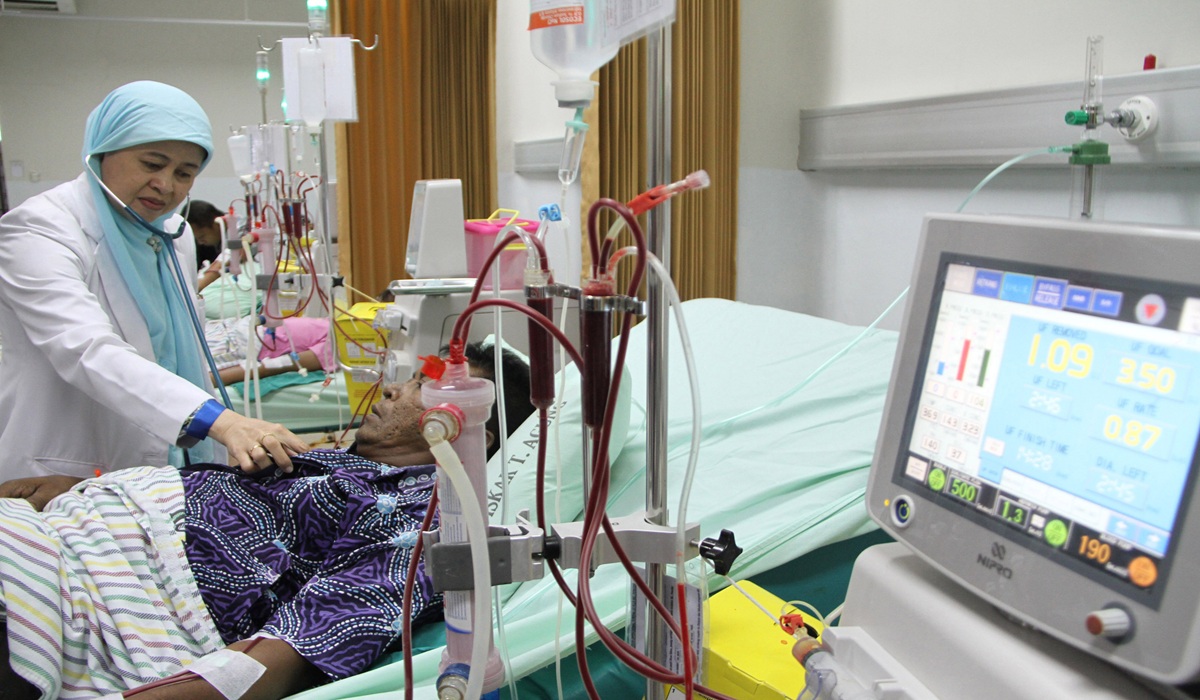
BPJS Kesehatan has recorded surprising data regarding healthcare financing efficiency in Indonesia throughout 2025. Although heart disease still holds the highest nominal cost, the medical treatment cost per individual for kidney failure patients is substantially larger.
During a health discussion commemorating World Kidney Day 2026 in Jakarta on Wednesday (11 March), Policy Analyst for Primary Referral Benefit Assurance at BPJS Kesehatan, drg. Tiffany Monica, revealed that total kidney failure treatment costs reached Rp13 trillion in 2025. This figure places kidney failure in second position after heart disease, which consumed Rp17 trillion.
However, Tiffany made a critical observation regarding the patient-to-cost ratio. The Rp17 trillion heart disease cost was accessed by approximately 3 million people, whilst Rp13 trillion in kidney failure costs were accessed by only around 640,000 people.
“So although heart disease certainly has greater nominal damage, in terms of per-person financing, kidney disease actually requires significantly more expenditure,” said Tiffany.
The high costs stem from the diverse and ongoing nature of kidney therapy. Patients typically require haemodialysis (blood washing) two to three times weekly, or transplant procedures requiring expensive medications routinely each month.
BPJS Kesehatan 2025 data shows kidney failure cases are predominantly found in men aged 50-60 years. However, what demands serious attention is the emergence of cases in productive age groups, namely teenagers through to those in their 20s.
“In the teenage years, 20 years of age, these productive young age groups—according to BPJS Kesehatan claims data, cases of kidney failure have already been recorded. Although we may not yet know the stage, broadly speaking from stages 3, 4, 5 they are included here,” stated Tiffany.
Regarding treatment methods, haemodialysis services remain the primary choice and continue to experience a 7% increase in claims during 2025. There are 147,000 haemodialysis claim visits recorded with total general costs reaching Rp7 trillion since 2021.
On the other hand, Continuous Ambulatory Peritoneal Dialysis (CAPD) is beginning to attract 3,247 people with cost absorption of Rp210 billion.
“This increases every year although the increase is not exponential, it is fairly slow but gradually it appears more people are switching to CAPD,” she added.
Meanwhile, kidney transplant procedures also show marginal growth, rising from 130 participants in 2024 to 135 participants in 2025.
Observing the mounting economic burden, Tiffany emphasised the importance of shifting the paradigm from curative (treatment) towards preventive (prevention).
The primary focus going forward is early detection and healthy lifestyle education to mitigate long-term economic burden without reducing service quality.
“By optimising early detection and healthy lifestyle education as steps to mitigate long-term economic burden,” she concluded.