
CORE: Import design and downstreaming are crucial in facing the Indonesia-US ART
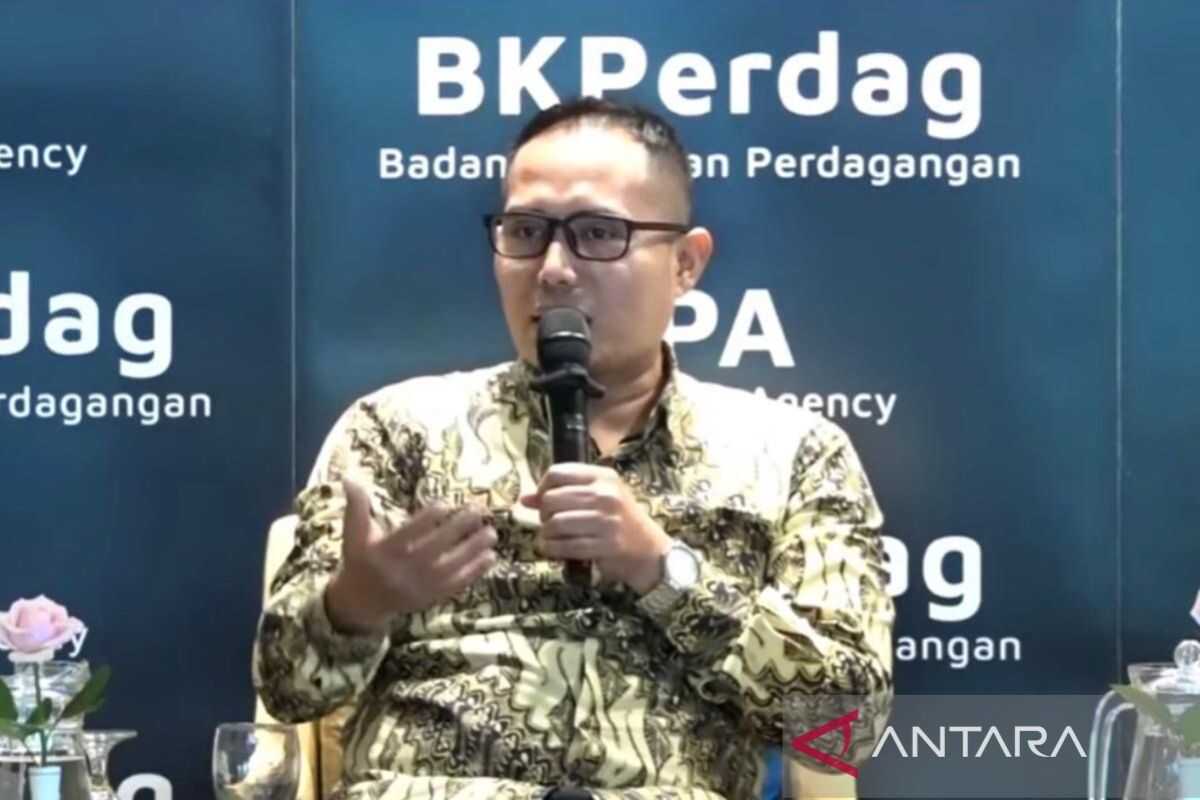
Jakarta (ANTARA) - The Executive Director of the Center of Reform on Economics (CORE) Indonesia, Mohammad Faisal, believes that the government needs to formulate a more coordinated import and downstream agricultural policy to face the opening of trade access within the Agreement on Reciprocal Tariff (ART) between Indonesia and the United States.
“We need to be careful, especially when imports are opened in the food sector,” said Faisal to ANTARA in Jakarta, Thursday.
He explained that for certain commodities, such as wheat and cotton, which are naturally difficult to produce domestically, imports can still be understood.
However, according to him, a different approach needs to be applied to commodities that actually have a domestic production base, such as sugar and a number of other foods.
“If it is something that we can actually produce ourselves, for example, sugar, this needs to be considered and monitored because it means there will be direct competition with domestic products,” he said.
He assessed that opening imports with low tariffs has the potential to create direct competition between imported products and domestic producers.
On the one hand, consumers do get easier access and more affordable prices. However, on the other hand, domestic producers, who are also economic actors and job creators, may be affected.
Faisal emphasized that the agricultural and food sectors are one of the government’s priority programs, so trade policies need to be aligned with the agenda of increasing productivity.
He said that agricultural downstreaming requires a clear policy design, from upstream to derivative products.
“There must be an industrial map for each commodity. It is possible that the raw materials for the downstream industry come from imports, but of course, the impact will not be maximal if the raw materials can actually be produced domestically,” he said.
As an example, he said that importing wheat for the flour industry is still in line because Indonesia cannot grow wheat optimally.
In the Indonesia-US ART document, Indonesia is recorded as committing to import 1.3 million metric tons of wheat from the US per year.
According to Faisal, importing wheat with good prices and quality can actually support the food and flour industry to obtain sufficient and affordable supplies.
The Central Bureau of Statistics (BPS) recorded that the volume of wheat and meslin imports during the January-June 2025 period reached around 5 million tons, reflecting the needs of the processing industry for raw materials that are not produced domestically.
However, he reminded that the opening of imports needs to be managed in a measured and coordinated manner so as not to conflict with efforts to increase productivity in the upstream sector.
“There must be good coordination and synergy to anticipate the impact of import policies so that they do not potentially weaken domestic productivity,” he said.
Previously, the government stated that trade cooperation through the Indonesia-US ART is commercial and strategic in nature and is designed to provide economic benefits for both countries.
The Coordinating Minister for Economic Affairs, Airlangga Hartarto, said that through negotiations, reciprocal tariffs on Indonesian products were successfully reduced from 32 percent to 19 percent, with the potential for further adjustments to the 15 percent range as US tariff policy issues develop after the US Supreme Court ruling.