
CORE: Government Needs to Mitigate Post-Eid Economic Challenges
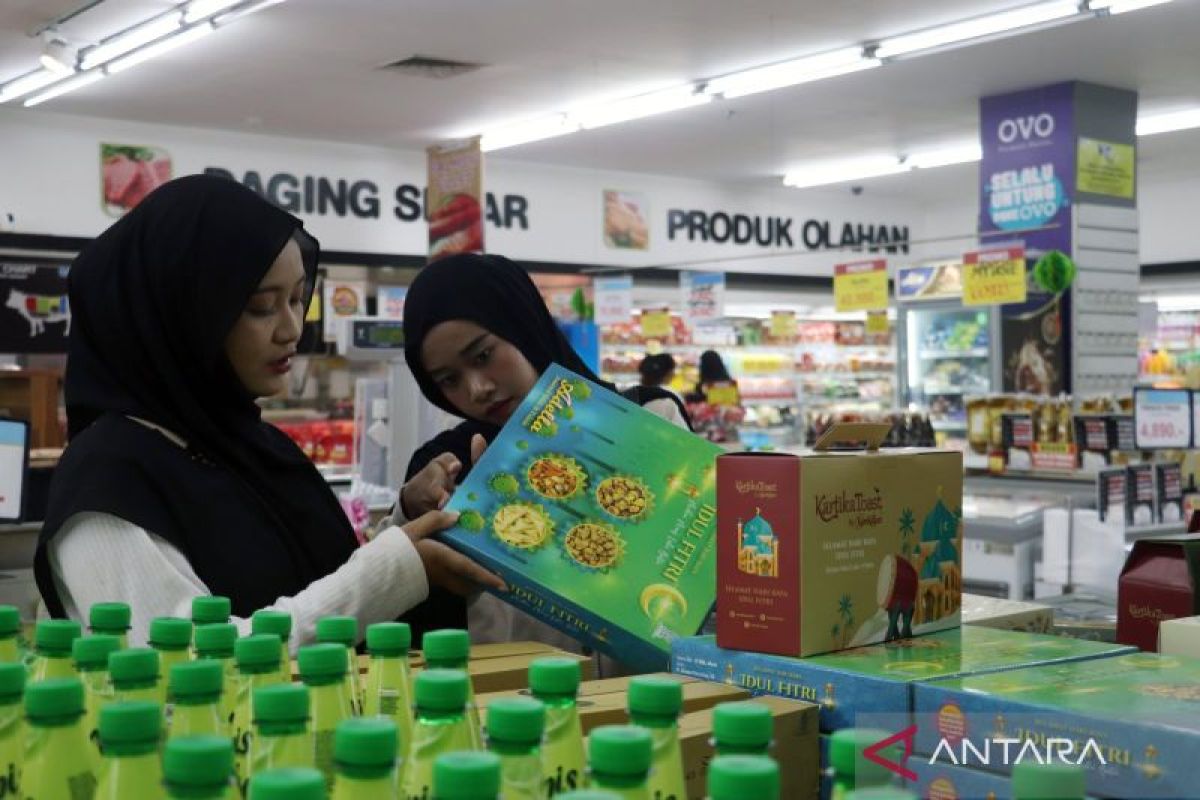
Jakarta (ANTARA) - Economist from the Center of Reform on Economics (CORE), Yusuf Rendy Manilet, believes the government needs to mitigate economic challenges following the momentum of Ramadan and Eid al-Fitr.
According to him, the performance of the first quarter of 2026 will indeed be strongly driven by economic activities during Ramadan and Eid al-Fitr. However, economic performance will normalise after this momentum ends, and at the same time, the economy in general is facing complex challenges.
“Now the challenges are even more complex, because we are not only talking about the seasonal effects that are subsiding, but also external and domestic pressures that could hold back future consumption,” said Yusuf when contacted by ANTARA in Jakarta on Wednesday.
For the first quarter, household consumption boosted by the surge in spending during the Ramadan and Eid al-Fitr period will provide a solid foundation for short-term economic growth.
However, given that this spending acceleration is seasonal, not a permanent increase in purchasing power, the impetus for economic growth will gradually slow down.
The subsiding seasonal effects are also accompanied by external and domestic pressures that could restrain future consumption, one of which is the potential rise in energy prices.
“When the prices of fuel oil (BBM), electricity, or global energy face pressure, the impact is direct on living costs and production costs, thus narrowing household spending space and at the same time making business actors more cautious about expansion,” explained Yusuf.
He also highlighted the risk of extreme climate events that could disrupt domestic food production and drive up prices of strategic commodities, such as rice and other basic necessities.
Yusuf emphasised that this risk is very crucial because food inflation has a direct impact on people’s purchasing power, especially for lower-middle income groups.
“This means that even though consumption was strong during Eid, its sustainability is very vulnerable to being eroded by a combination of rising energy prices and food pressures due to climate factors, so what we see ahead is not just normalisation, but also the potential for real consumption weakening if these price pressures are not controlled,” he added.
From the distribution side, continued Yusuf, the impact will also tend to be increasingly uneven, because low-income groups will be most affected by rising energy and food prices, while upper groups are relatively more resilient.
That condition makes aggregate consumption still grow, but with relatively weaker quality and a narrower base.
Therefore, Yusuf opines that although Eid has successfully lifted first-quarter economic growth, that momentum now faces a fairly heavy test.
“Without strong purchasing power support and price stability, both for energy and food, domestic consumption will struggle to become a sustainable growth engine, and ultimately this will also limit the overall pace of economic growth in subsequent periods,” he stated.