
CoRE Economist Urges Public Not to Panic-Buy Fuel Amid US-Israel–Iran Tensions
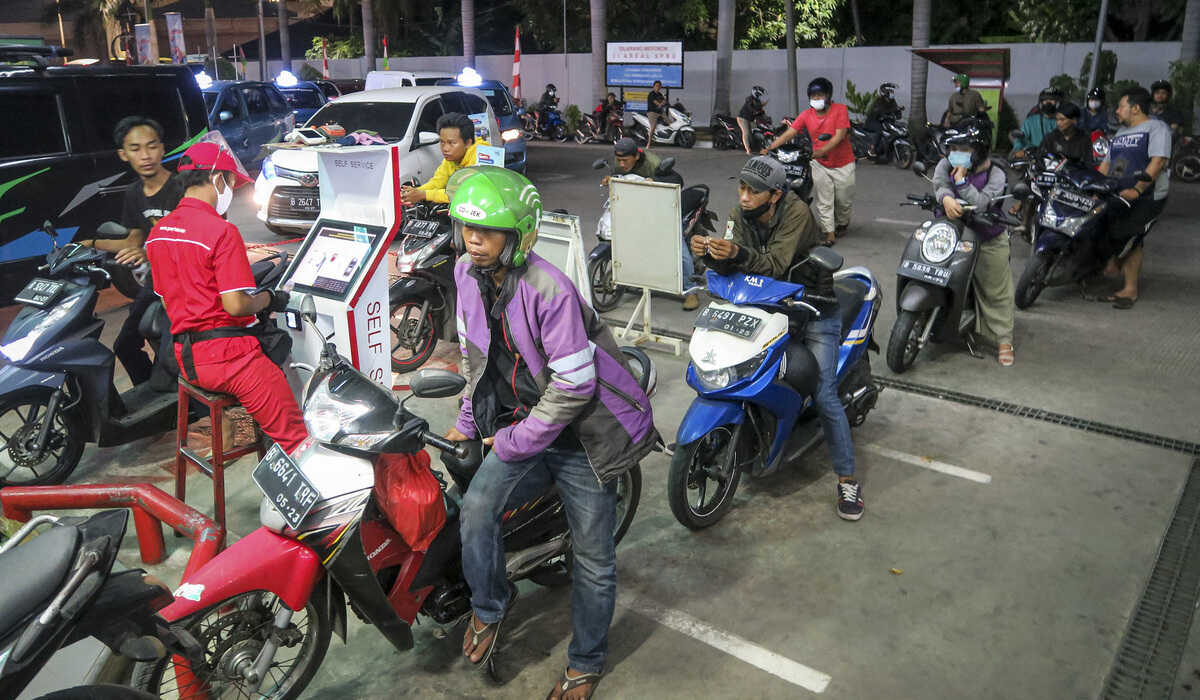
Executive Director of the Centre for Reform on Economics (CoRE), Mohammad Faisal, has urged the public not to panic-buy fuel (BBM) as global geopolitical tensions escalate between the US-Israel and Iran, which could affect energy supplies. He says the government should promptly strengthen anticipatory measures to keep national energy supply stable and public confidence intact.
The most urgent step, he argues, is to stockpile oil reserves. Currently, national fuel stocks are relatively limited and must be increased promptly to anticipate potential global supply disruptions. ‘The first thing to do is stocking — truly gathering oil reserves. If now it is around 21 days, it should be increased by buying. If storage facilities are lacking, you can also rent storage,’ Faisal said in an interview on Friday (6/3). He emphasised that the fuel stock issue is crucial as it can directly affect economic stability and social conditions.
‘Fuel problems are crucial because they can be vulnerable to politics and also to the general public. Therefore strengthening energy reserves is an important step that must be taken immediately,’ he said.
In addition to stockpiling, Faisal urged the government to expand oil supply sources from relatively safe countries far from conflict zones to minimise supply disruption risk. ‘The government should also seek safe oil origins, obviously far from conflict areas,’ he said.
He also argued that accelerating the energy transition is an important part of the medium-term strategy to reduce dependence on energy imports, especially diesel imports. This aligns with the biodiesel development plan previously announced by Energy and Mineral Resources Minister Bahlil Lahadalia. ‘The energy transition must be accelerated, for example through biodiesel development to reduce our imports, especially diesel imports,’ Faisal said.
He added that the government should communicate clearly to the public about concrete steps that have been taken to avoid triggering panic. ‘Public socialisation is important, but it must be accompanied by concrete steps. If you only explain without taking real steps, it will not be enough to calm the public,’ he said.
Similarly, CoRE researcher Yusuf Rendy Manilet said the minister’s statement on national fuel stocks of around 20–25 days actually referred to Indonesia’s storage capacity, not an indication that supply will run out. ‘But because the technical information was conveyed without proper context, part of the public interpreted it as a sign of scarcity, prompting panic and over-purchasing,’ he said.
This situation indicates a gap between how the government communicates information and how the public understands it. He stressed that technocratic explanations are often not translated into language easily understood by the public, while people process information with simple logic influenced by daily concerns. ‘There is no denying that pressures from the global situation, including geopolitical tensions, could disrupt energy distribution channels and push up global oil prices. However, that pressure does not automatically mean domestic supply is in an emergency. What is more dangerous is when public panic creates a self-fulfilling prophecy—overbuying that ends up causing shortages at distribution levels,’ he added.
Minister of Energy and Mineral Resources (ESDM) Bahlil Lahadalia stated that national fuel stocks are safe above standard. President Prabowo instructed building new storage facilities in Sumatra to strengthen energy. The Ministry of ESDM assured that national fuel stocks remain safe and subsidised prices stable amid the Middle East conflict. Pertamina has said it prepared fuel and LPG stocks long before the Israel-US war against Iran. The government is urged to maintain stability of national energy supply and prices. Tauhid positively assessed Pertamina’s supply planning, from refinery production to energy imports. Minister Bahlil Lahadalia reiterated that national fuel stocks are safe above the standard, and President Prabowo instructed the construction of new storage in Sumatra to reinforce energy.