
Copyright Law Revision: Once Mekel Emphasises Need for Clear Oversight Regulations
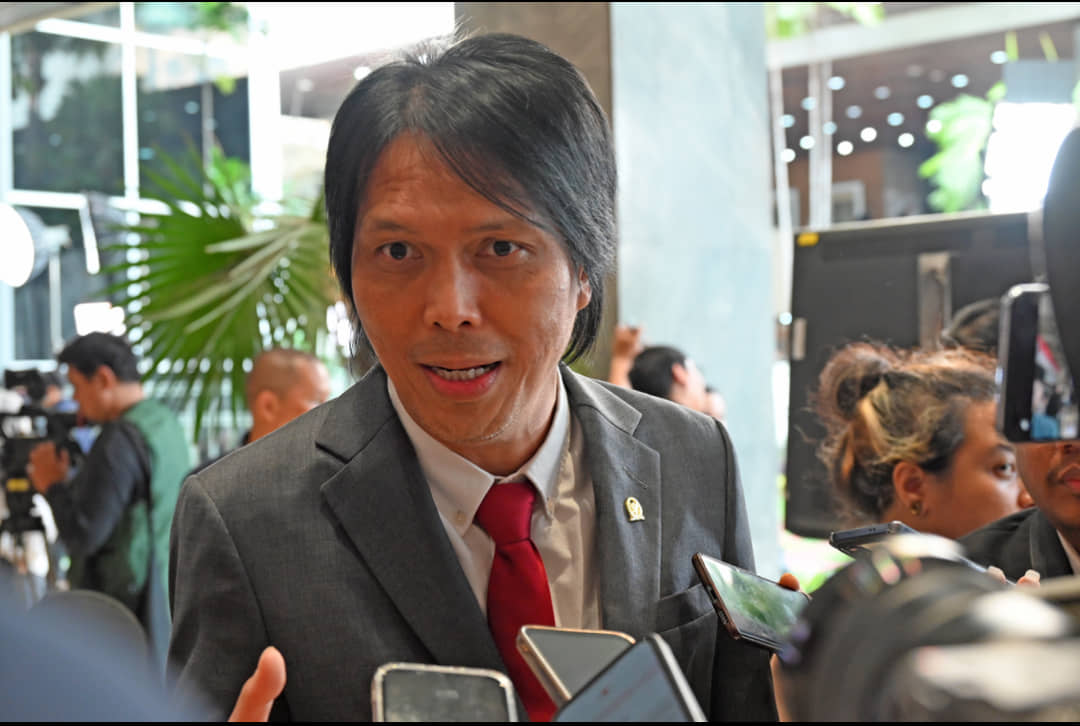
LEGISLATOR from the Indonesian House of Representatives (DPR) Legislative Board (Baleg) and PDI-Perjuangan faction member Once Mekel has expressed his aspiration regarding copyright enforcement oversight during a Copyright Law Bill discussion meeting at the DPR on Tuesday, 10 March.
Mekel hopes the new legislation will protect the interests of creators, neighbouring rights holders, performers, and recording labels, whilst maintaining public access to creative works. He emphasised that the primary objective of this revision is to introduce higher-quality regulation benefiting the entire copyright ecosystem.
“We, as proposers, share a commitment that this new law must be better than its predecessor, more robust, and particularly benefit all stakeholders—whether creators, neighbouring rights holders, performers, labels, or the public utilising those works,” Mekel stated on Wednesday, 11 March.
He explained that the fundamental principle of copyright regulation must maintain balance between protecting creators’ exclusive rights and enabling widespread use of works to advance arts and culture. Mekel noted that copyright differs from conventional property ownership due to its intangible nature and capacity for simultaneous use across multiple locations at the same time.
“Many people do not yet understand that copyright is mobile and intangible. Unlike physical objects whose existence can be directly verified, copyright can be exploited simultaneously across multiple locations,” he clarified.
Given this characteristic, Mekel believes the state’s role remains essential to ensure copyright protection and management operate fairly and transparently. During institutional discussions, he expressed support for maintaining royalty collection and distribution mechanisms through Collective Management Institutions (LMK), which function to gather and distribute royalties to copyright holders.
However, Mekel stressed the importance of an independent oversight body to serve as regulator, ensuring regulatory functions are not centralised within a single institution. He viewed the division of roles between royalty management bodies and regulatory institutions as critical for maintaining accountability and preventing excessive concentration of authority.
Additionally, Mekel highlighted the necessity of developing a robust digital database system supporting copyright registration processes and transparent royalty management. He noted that copyright registration through LMK can simultaneously serve as the basis for granting authority to the institution to manage, collect, and distribute royalties, including taking legal action against copyright infringement by third parties.
Therefore, he hopes that with a more structured system, the public will have a clear single point of contact for paying royalties when utilising copyrighted works, particularly within the performance rights domain.
“Collective management institutions must become the sole reliable venue where the public can pay royalties and receive assurance that such payment legally permits them to exploit creative works,” he stated.
Mekel hopes the Copyright Law revision will provide legal certainty and create a more harmonious ecosystem. He aims for conflicts between creators, industry practitioners, and work users to be minimised, thereby promoting creativity and strengthening the national creative industry.