
Copyright Bill to Extend Exclusive Rights Protection to Journalistic Works
Jakarta — The Indonesian Parliament’s Legislative Body (Baleg) has announced that journalistic works will be incorporated into the substantive provisions of the draft law amending Law Number 28 of 2014 on Copyright.
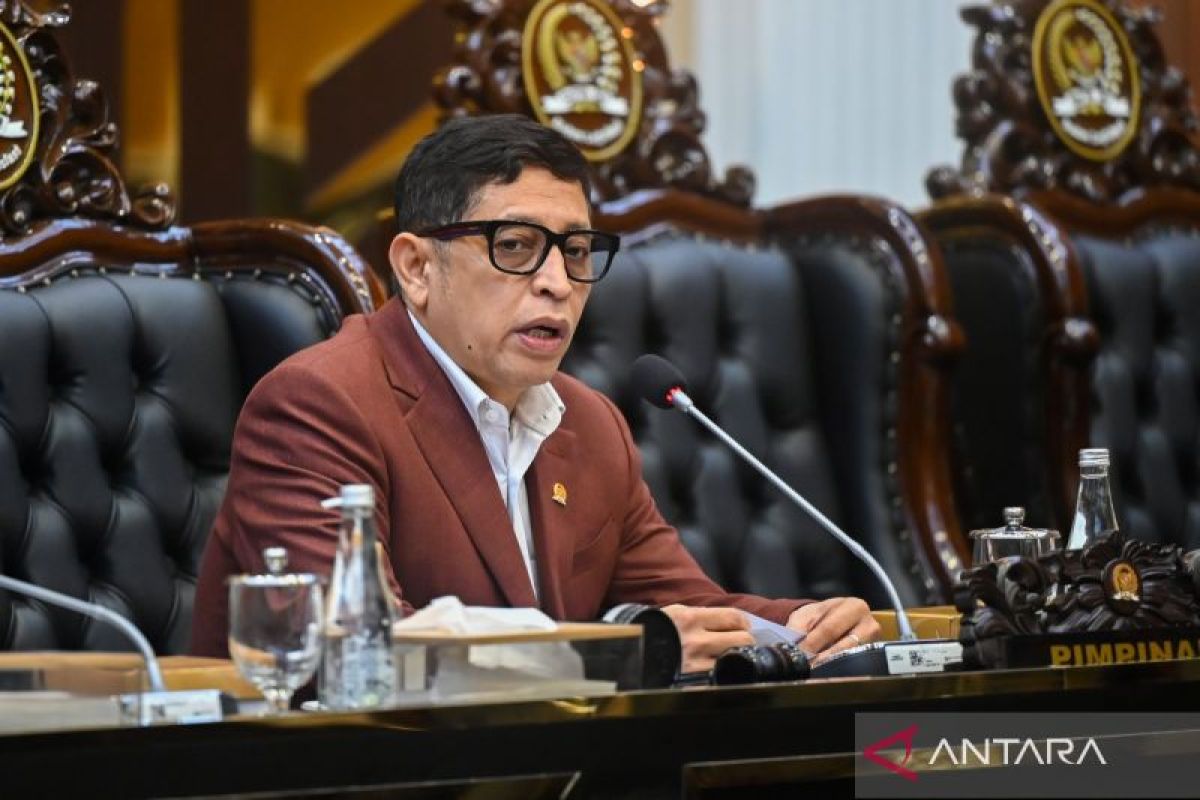
Baleg Chairman Bob Hasan explained that the draft legislation will establish that exclusive rights are attached to journalistic works, with the objective of protecting journalistic content in the same manner as other creative works.
“The key point is that exclusive rights are attached to such works. Every creation, whether it is a song or journalism, should have protection,” Bob Hasan said during a meeting at the Parliament complex in Senayan, Jakarta, on Thursday.
He stated that under these regulatory provisions, journalistic works that are disseminated by other parties must obtain permission from the relevant press company and pay royalties as fulfilment of economic rights.
“If it contains elements of creative work, even if it may be general in nature, and is then adopted to become a journalistic creation, then when it is to be disseminated again or made as part of journalistic or news results created by someone, it must obtain permission, and therein lie the royalty rights,” he said.
Meanwhile, Baleg Vice-Chairman Martin Manurung stated that recognising journalistic works as copyright constitutes an aspiration from the journalism community. This recognition has not been regulated in Law Number 40 of 1999 on the Press.
“So it is not arbitrary that news is simply copied and pasted from one media outlet to another. What is written—just as when we write a book it is also copyright, writing news is also copyright,” Martin said during a Baleg working committee meeting on Copyright Law harmonisation at the Parliament complex in Senayan, Jakarta, on Tuesday (10 March).
Baleg legal expert Rfima Ghulam explained that the regulation of journalistic works in the Press Bill is contained in Article 19, which addresses journalistic works as part of creative works. Since journalistic works are recognised as creations, such works automatically possess copyright.
Meanwhile, Article 22 of the Copyright Bill addresses exclusive rights encompassing both moral rights and economic rights of press companies.
The Copyright Bill defines a press company as an Indonesian legal entity engaged in press operations, encompassing print media companies, electronic media companies, news agencies, and other media companies that specifically conduct, broadcast, or distribute information.
Journalistic works, meanwhile, are defined as the results of journalistic activities, encompassing seeking, obtaining, possessing, storing, processing, and conveying information in the form of writing, sound, images, sound and images, as well as data and graphics, or in other forms using print media, electronic media, and all types of available channels.
“We adopted this definition from the Press Law to ensure synchronisation,” Ghulam said during the same meeting.
He added that the moral rights of a press company refer to rights attached to the press company that cannot be removed or eliminated for any reason whatsoever, even though the economic rights have been transferred.
Economic rights of press companies encompass the right to implement themselves, grant permission, or prohibit other parties from publishing journalistic works.
“Then in Article 40, relating to protected creations, we also include journalistic works. We inserted journalistic works there, just as with books, equipment, songs, and so forth,” he said.
The draft law amending Law Number 28 of 2014 on Copyright was approved as a parliamentary bill proposal during the Parliament’s 16th Plenary Session of the Fourth Session of the 2025–2026 term on Thursday morning.