
Coordinating Minister Zulhas emphasises that PTSEL project must be completed in seven weeks
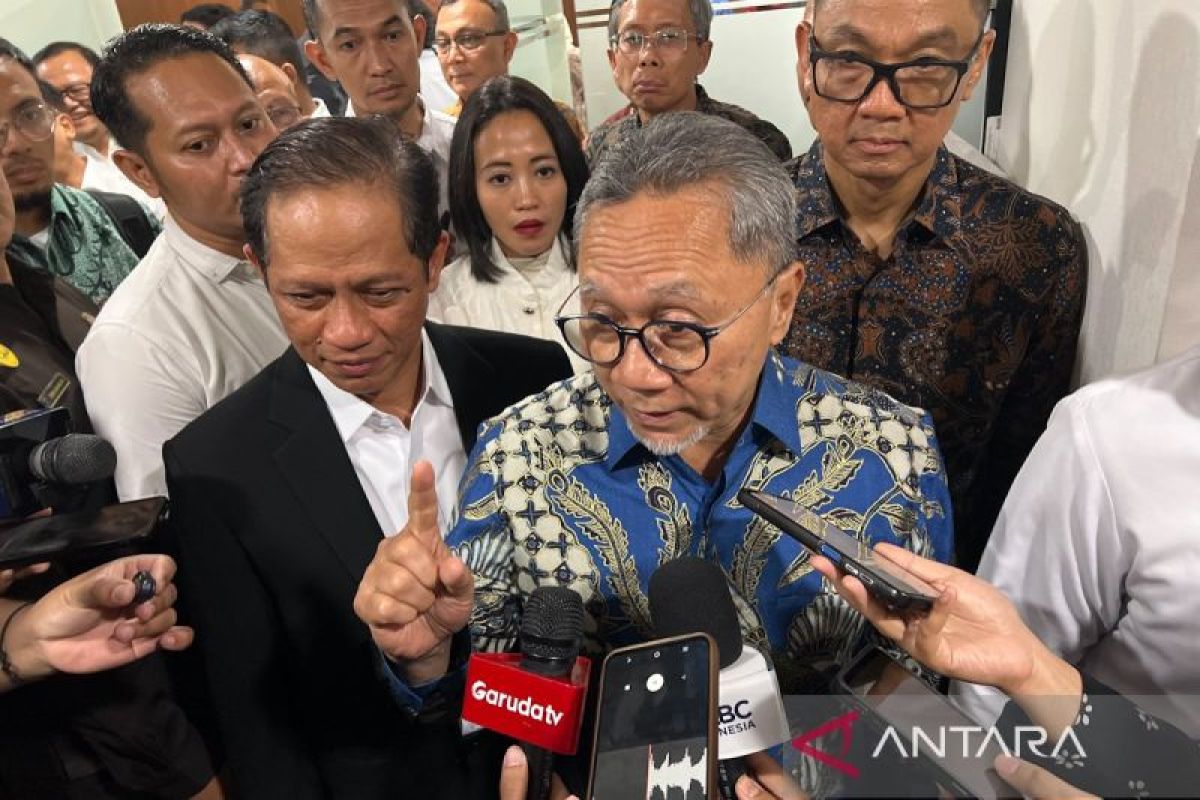
Jakarta (ANTARA) - Coordinating Minister for Food Affairs Zulkifli Hasan (Zulhas) has emphasised that the waste-to-energy (PSEL) processing project must be completed within seven weeks to accelerate the handling of the increasingly urgent national waste issue.
“Because this is a direct order from the President (Prabowo Subianto). If it’s not completed within seven weeks, we (the central government) will have no choice but to take over. That’s the order,” Zulhas said in Jakarta on Tuesday.
Zulhas emphasised this while witnessing the signing of Cooperation Agreements (PKS) between three regional governments and the Waste-to-Electricity Management (PSEL) Development and Management Business Entity (BUPP).
The signing covers three strategic areas: Bekasi City, Bogor Raya, and Denpasar, as part of national efforts to tackle waste problems while promoting clean energy transitions.
Zulhas noted that previously, the PSEL project was designed over an 11-year period, but only two projects were realised, and even those did not operate optimally.
“Over 11 years, only two. And of those two, one works and one doesn’t; the one that works sometimes does, sometimes doesn’t,” he said.
In response, the government then targeted completion within six months. However, President Prabowo Subianto wanted a much faster acceleration so that the impact could be felt by the public soon.
As a result, the project completion target was cut to seven weeks through various acceleration measures and cross-ministerial coordination, as well as regional government support.
Zulhas affirmed that the government would not hesitate to take over the project if it is not completed according to the set targets within those seven weeks.
He also urged regional heads, whether governors, regents, or mayors, to directly oversee the project implementation to ensure it runs as planned and does not face further delays.
“Because of that, in the last meeting here, I also said that Mr Governor can improvise, find partners of all kinds, because this is a direct order from the President,” he stressed.
Currently, several projects have begun to progress, and the government is targeting acceleration for an additional 12 locations that must also be completed in no more than seven weeks.
Overall, the government targets PSEL development in 32 agglomeration areas as part of major efforts to handle waste issues systematically and sustainably.
However, this achievement will only address about 24 to 25 percent of the total national waste problem, so further steps are still needed to tackle the remaining issues.
“If there are those using waste-to-energy, please do so; we will make it faster. Because there are many in several regencies/cities,” he said.
The government is also encouraging waste management from the source, such as in markets, offices, schools, and other public facilities, to significantly reduce the handling burden.
With this acceleration, the government hopes the national waste problem can be addressed more quickly while promoting sustainable investments in the waste-to-electricity processing sector.
“So, please, Mr Governors, Regents, Mayors, oversee this so it can be completed on time, so we’re happy, we’re clean, but the investors don’t lose because there’s always waste being processed and available,” he said.
The PSEL project in Bekasi City, West Java, involves cooperation between the regional government and PT Wangneng Bekasi Environment Nusantara.
For the PSEL project in Bogor Raya, it involves the West Java Provincial Government, Bogor City, and Bogor Regency with PT Weiming Nusantara Bogor New Energy.
For the Denpasar Raya area, cooperation is carried out by the Bali Provincial Government, Denpasar City, and Badung Regency with PT Weiming Nusantara Bali New Energy.
It is known that the PSEL development plan was previously proposed in around 34 locations, then adjusted to 33 locations covering 61 regencies/cities.
However, several of those locations were then merged into service areas, becoming 30 projects covering 61 regencies/cities by using a regional consolidation approach in one project.
The PSEL projects have a processing capacity of around 14.4 million tonnes of waste per year. This amount is equivalent to about 22.5 percent of the total national waste accumulation.
According to Zulhas, the remaining 77.5 percent of waste will be handled through other approaches, including management in the office, market, school, and public facilities sectors.
The government has various waste processing technologies, such as refuse-derived fuel (RDF), to compost processing, which can be applied according to regional needs.
In addition, several other projects such as Palembang, South Tangerang, Makassar, Lampung Raya, Semarang Raya, Surabaya Raya, to Medan have been verified and are ready to enter the tender stage.
According to Zulhas, the government targets the initial phase projects to start operating in 2027, while the other projects are targeted to be completed by May 2028.