
Coordinating Minister, Social Affairs Minister, and BPS Head Meet to Discuss Health Insurance Subsidy Recipients
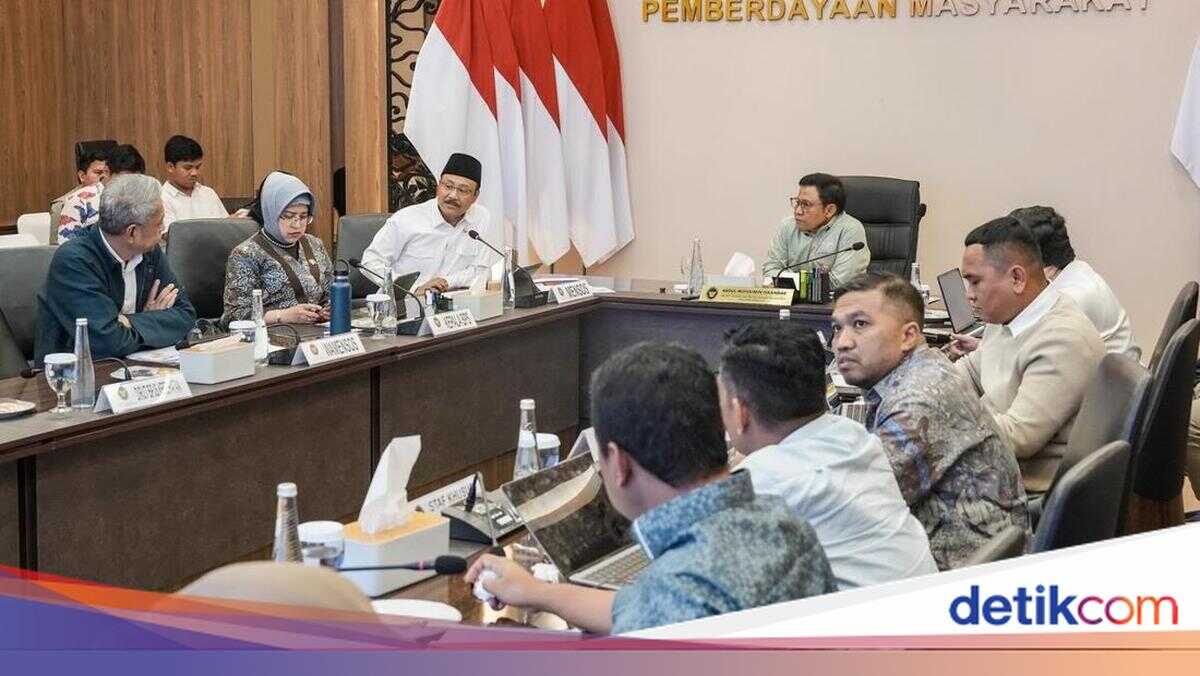
Social Affairs Minister Saifullah Yusuf (Gus Ipul) has confirmed that the government continues to strengthen the accuracy of data on recipients of the Premium Assistance (PBI) scheme under the National Health Insurance programme to ensure aid reaches the right beneficiaries. He made the statement following a coordination meeting with Coordinating Minister for Community Empowerment Muhaimin Iskandar and Head of the Central Statistics Agency (BPS) Amalia Adininggar Widyasanti at the Coordinating Ministry’s office.
“Today, we discussed two important matters. The first concerns data, as this is the most crucial element in ensuring our social assistance is properly targeted. The second is the distribution mechanism,” said Gus Ipul in a written statement on Monday (16/2/2026).
Gus Ipul added that the Ministry of Social Affairs determines beneficiaries based on BPS data and proposals from regional governments, particularly for population groups in deciles 1 through 5.
“The Ministry of Social Affairs is tasked with determining beneficiaries. After that, we forward the information to the Ministry of Health, then to BPJS Kesehatan to work with healthcare facilities,” he explained.
He expressed appreciation for the increasingly accurate BPS data updates over time, thanks to the participation of regional authorities and the public.
“We always refer to BPS data and regional proposals. That is why we invite the wider public to participate in producing accurate data. If the data is accurate, our social assistance will be properly targeted. If the data is inaccurate, our social assistance will miss the mark,” said Gus Ipul.
He also encouraged the public to use official channels such as the Cek Bansos application, call centres, and WhatsApp centres to update their data or submit objections.
“Everyone has the opportunity to correct their data. Even if someone feels they no longer deserve social assistance, we respect that. The mechanism is already in place,” he added.
Meanwhile, Muhaimin Iskandar stated that approximately 52 per cent of Indonesia’s population, or around 152 million people, are currently registered as PBI recipients. Of that number, nearly 100 million are funded by the central government and approximately 50 million through regional PBI schemes.
“We continuously ensure that the entire implementation process of the National Health Insurance programme, particularly for premium assistance recipients, will continue to be well served,” said Muhaimin.
He explained that the dynamics of socio-economic data — from births and deaths to changes in economic conditions — demand ongoing consolidation across ministries and regional governments.
“Deactivations are carried out because there are still those who are not entitled to receive assistance, as their economic conditions have improved. This is within the framework of ensuring PBI is properly targeted at deciles 1 through 5. If someone is removed because they are no longer entitled, the assistance is actually redirected to those who are,” he stressed.
Muhaimin also emphasised that PBI participants experiencing emergencies or catastrophic illnesses must still be treated by hospitals.
“In genuine emergencies, hospitals must accept and treat patients. They can then coordinate with the Ministry of Social Affairs, regional social services, and BPJS Kesehatan,” he said.
Muhaimin called on regional heads down to village officials to proactively detect changes in the conditions of their residents.
“Village heads, sub-district heads, and regional leaders are urged to be truly proactive in updating decile classifications. This is important to prevent errors and ensure everyone is covered,” said Muhaimin.
Meanwhile, BPS Head Amalia Adininggar Widyasanti explained that BPS will conduct ground checks on 106,153 PBI participants who had been deactivated but were automatically reactivated, with a target completion date of 14 March.
“We will immediately conduct ground checks on 106,153 PBI participants who were deactivated but have since been reactivated. We will still verify them in the field,” said Amalia.
In addition, BPS and the Ministry of Social Affairs will also verify approximately 11,017,000 other inactive PBI participants, equivalent to roughly 5.9 million families, through collaboration between regional BPS offices, PKH social assistance facilitators, and statistical partners, with an estimated timeframe of around two months.
She affirmed that decile classification is determined nationally using approximately 40 welfare variables, not solely income.
As such, the public can update their decile status through the objection feature in the Cek Bansos application by completing a form and attaching supporting evidence such as housing conditions or assets.
“This decile classification is a ranking of the welfare of the Indonesian population nationally using approximately 40 variables. So it is certainly different from decile classifications at the regional level,” Amalia concluded.