
Coordinating Minister for Community Empowerment: MBG Empowers Communities Down to the Grassroots
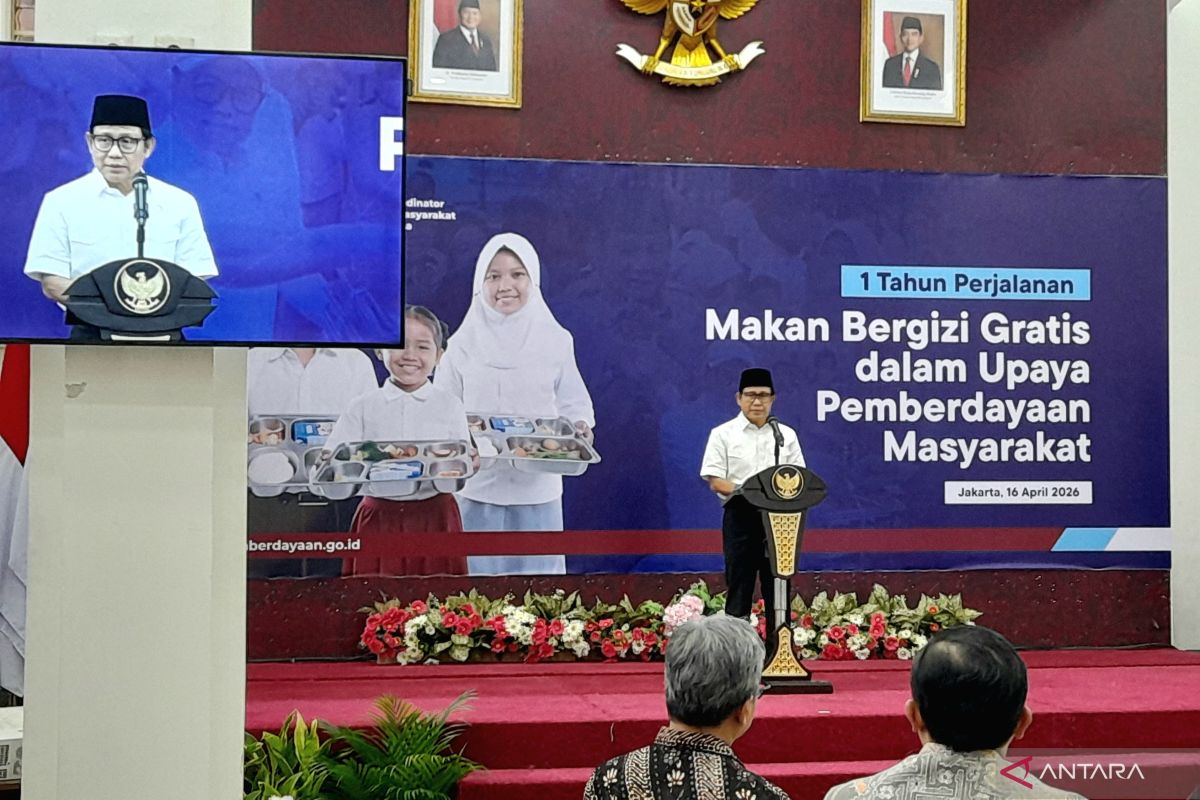
Jakarta (ANTARA) - Coordinating Minister for Community Empowerment Muhaimin Iskandar stated that the Free Nutritious Meals Programme (MBG) is capable of empowering communities down to the grassroots level to strengthen economic resilience. “The implementation of the MBG Programme must be continuously appreciated as it undergoes ongoing refinements and improvements, aimed at building an economic ecosystem and supply chain that can truly give birth to new entrepreneurs, growing SMEs, and increasingly varied and productive local production,” he said in Jakarta on Thursday. During the event marking one year of MBG’s journey in community empowerment efforts, Muhaimin emphasised that, on the other hand, the government wants the MBG Programme to be of higher quality and accessible to students equitably, through various efforts such as more complete meal menus. “The spearhead of efforts to build this economic ecosystem is the Nutrition Fulfilment Service Unit (SPPG). Therefore, it must be strategically managed and organised so that our SPPGs truly become the frontline for community empowerment, particularly in terms of their governance,” he said. Meanwhile, Deputy Head of BGN Sony Sonjaya stated that over the past year of the MBG Programme’s operation, 27,066 SPPGs have been verified, with more than 25,000 of them already operational. “Speaking of community empowerment, this is the first concrete manifestation because all 27,000 SPPGs empower communities,” Sony said. He added that to ensure the needs of families in traditional markets are not disrupted, innovations from regional heads are needed to prepare the supply chain. Some activities already implemented by local governments that should serve as examples include the thematic hydroponic village in Bogor Regency. “So, they grow vegetables like water spinach and others using hydroponics,” he said. Furthermore, he explained that to date, 1.7 million people have been employed in SPPGs, providing tangible proof of community empowerment for SPPG operations. “In implementing MBG, the contributors are the communities around the SPPGs, with priority given to 30 percent of them being our brothers and sisters from extreme poverty groups (decile 1, decile 2),” he said. He detailed that out of a total of 47 people working in an SPPG, 30 percent are prioritised from extreme poverty, with the remainder being local communities around the SPPG.