
Coordinating Minister Airlangga announces Indonesia-US trade tariff reduced to 15 percent
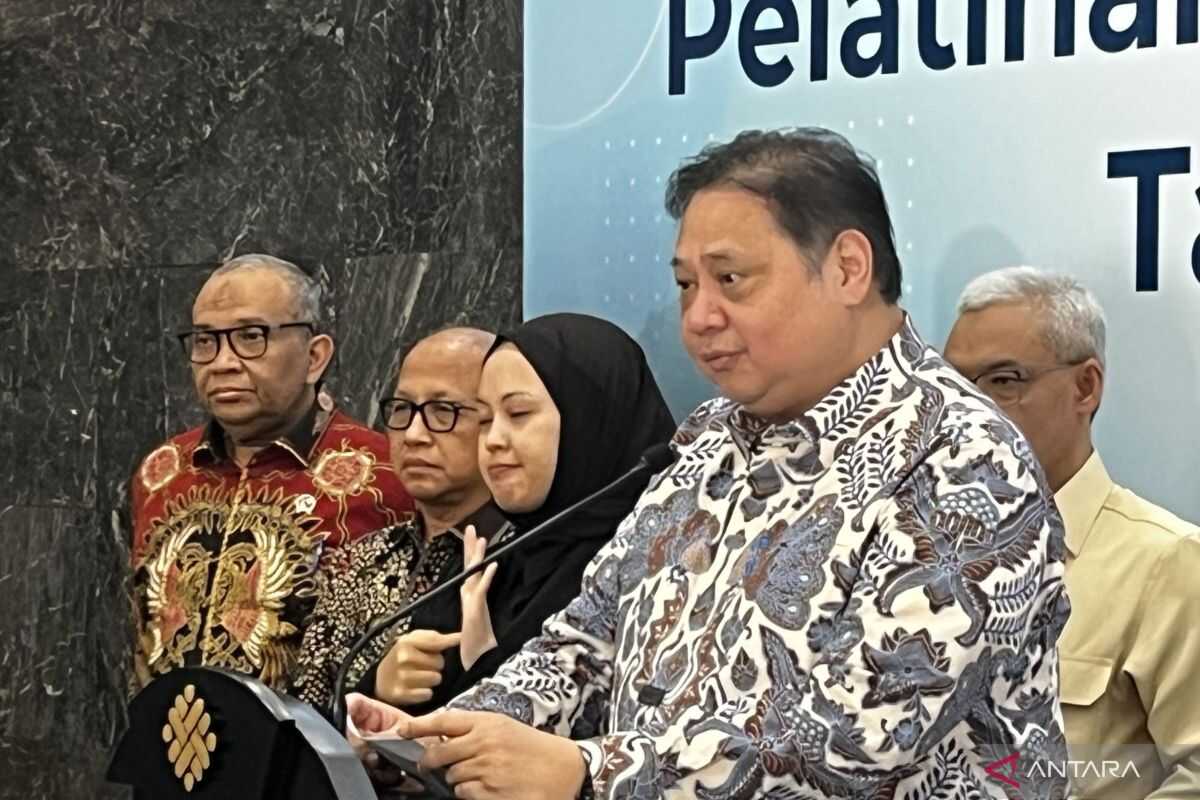
Jakarta – Coordinating Minister for Economic Affairs Airlangga Hartarto announced that the trade tariff between Indonesia and the United States has declined from 19 percent to 15 percent. This reduction follows the US Supreme Court’s decision to annul President Donald Trump’s tariff policies and plans to implement a global 15 percent tariff rate.
“We have obtained a discount down to 15 percent,” said Minister Airlangga during a meeting at the Indonesian Ministry of Manpower office in Jakarta on Friday.
Furthermore, Airlangga stated that the settlement or final result of Indonesia-US trade tariff negotiations outlined in the Agreement on Reciprocal Trade (ART) reached some time ago will remain in effect after a 90-day period. “It is not cancelled; it only comes into effect after 90 days and after ratification,” said the Coordinating Minister for Economic Affairs.
Under the agreement, 1,819 tariff lines for Indonesian products are granted zero-percent import duty exemptions. The products covered include palm oil, coffee, cocoa, spices, rubber, electronic components including semiconductors, and aircraft components. Additionally, both countries agreed to eliminate zero-percent import duties for Indonesian textiles and garments through specific quota schemes.
Airlangga confirmed that these terms will remain applicable to Indonesia. “Since zero-percent tariffs for these 1,600-plus sectors are one of our mainstays, we hope market expansion becomes possible. Those products already at zero percent will remain at zero percent,” he said.
Previously, the United States had imposed a reciprocal tariff of 19 percent on imported products from Indonesia. However, the list of 1,819 tariff lines and textile products identified in the agreement received zero-percent tariff exemptions.
One day after the ART announcement, the US Supreme Court decided to cancel several of Trump’s global tariff policies. On Friday (20 February) local time, the US Supreme Court, with a 6-3 vote, ruled that President Donald Trump lacked the authority to impose global tariffs under the International Emergency Economic Powers Act (IEEPA). This ruling led the United States to begin implementing temporary global tariffs of 10 percent, with the White House planning to increase them to 15 percent.