
Cooperatives: From Village/Urban Cooperatives to Rural Economic and Community Empowerment Cooperatives
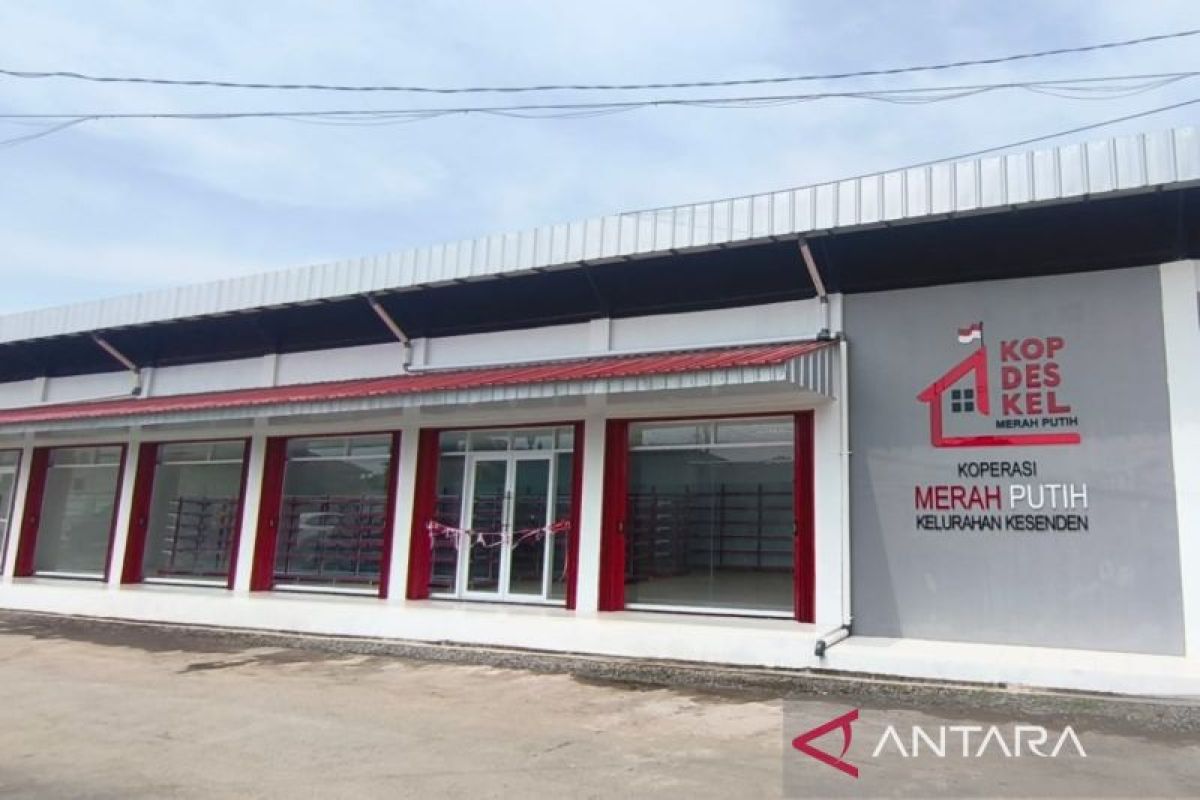
The success of the program does not solely depend on the size of the budget, but also on serious supervision and transparent management of funds.
Jakarta (ANTARA) - On Saturday, May 16th, President Prabowo Subianto inaugurated the operation of 1,061 Desa/Kelurahan Merah Putih (KDKMP) cooperatives in Nganjuk Regency, East Java. This date is significant because it coincides with the birthday of his grandfather, Margono Djojohadikoesoemo, who was a prominent figure in the Indonesian cooperative movement.
Margono was born in Purwokerto, Banyumas, on May 16th, 1894. He is not just Prabowo’s biological ancestor but also considered by Culture Minister Fadli Zon as the ‘Father of Cooperatives,’ while Mohammad Hatta is known as the ‘Father of People’s Economy.’
Margono’s involvement with cooperatives began during the Dutch colonial era when he served as the Head of the Cooperative Department. During his decade-long tenure, until 1939, a total of 574 cooperatives were established with a membership of 52,055 people. Meanwhile, Hatta was awarded the title ‘Father of Cooperatives’ by the 2nd National Cooperative Congress in Bandung in July 1953.
There is a sense of continuity in this agenda, and Prabowo seems to be fully aware of it. The inauguration of KDKMP in Nganjuk was designed as more than just a ceremonial event. Prabowo emphasized that the inaugurated cooperatives have complete infrastructure and operational systems, including physical buildings, warehouses, logistics systems, operational vehicles, and field staff. Each unit is equipped with a building, warehouse, truck, and pick-up vehicle.
The number 1,061 has its own story. Initially, the government planned to inaugurate around 1,300 units, but this was reduced to 1,000 due to incomplete construction. However, Prabowo preferred the number eight, so 1,061 was chosen because the sum of the non-zero digits in the total is eight. This technical decision is intertwined with numerology, but the essence remains: over a thousand cooperatives will operate simultaneously within seven months after physical construction began in November 2025.
Of the 1,061 units inaugurated, 530 are located in seven regencies in East Java, while the remaining 531 are spread across eight regencies and cities in Central Java. This is just the first wave. Coordinating Minister for Food Affairs Zulkifli Hasan targets 30,000 KDKMP units to be completed and fully operational before August 17th, 2026. As of the inauguration date, 9,294 KDKMP physical buildings have been completed, with an additional 150 to 200 units being added daily.
The government, through the state-owned enterprise PT Agrinas Pangan Nusantara, is still in the process of building 25,000 additional cooperative units as of May 2026. Each unit is designed as a rural logistics hub, no longer just a retail outlet. Its functions include distributing subsidized goods such as Minyakita, rice, and 3 kg LPG at regulated prices, as well as aggregating local MSME products and agricultural produce.
Each KDKMP employs 17 workers recruited directly from the local village. Another crucial function, which also serves as the backbone of capital turnover, is that the cooperative is positioned as a supplier of raw materials for the Free Nutritious Meal (MBG) program, with an estimated cash flow of up to IDR 900 million per month per village. To support this operation, the government is recruiting 30,000 KDKMP managers, who are currently in the selection process.