
Cooperatives Can Build Telecommunication Networks
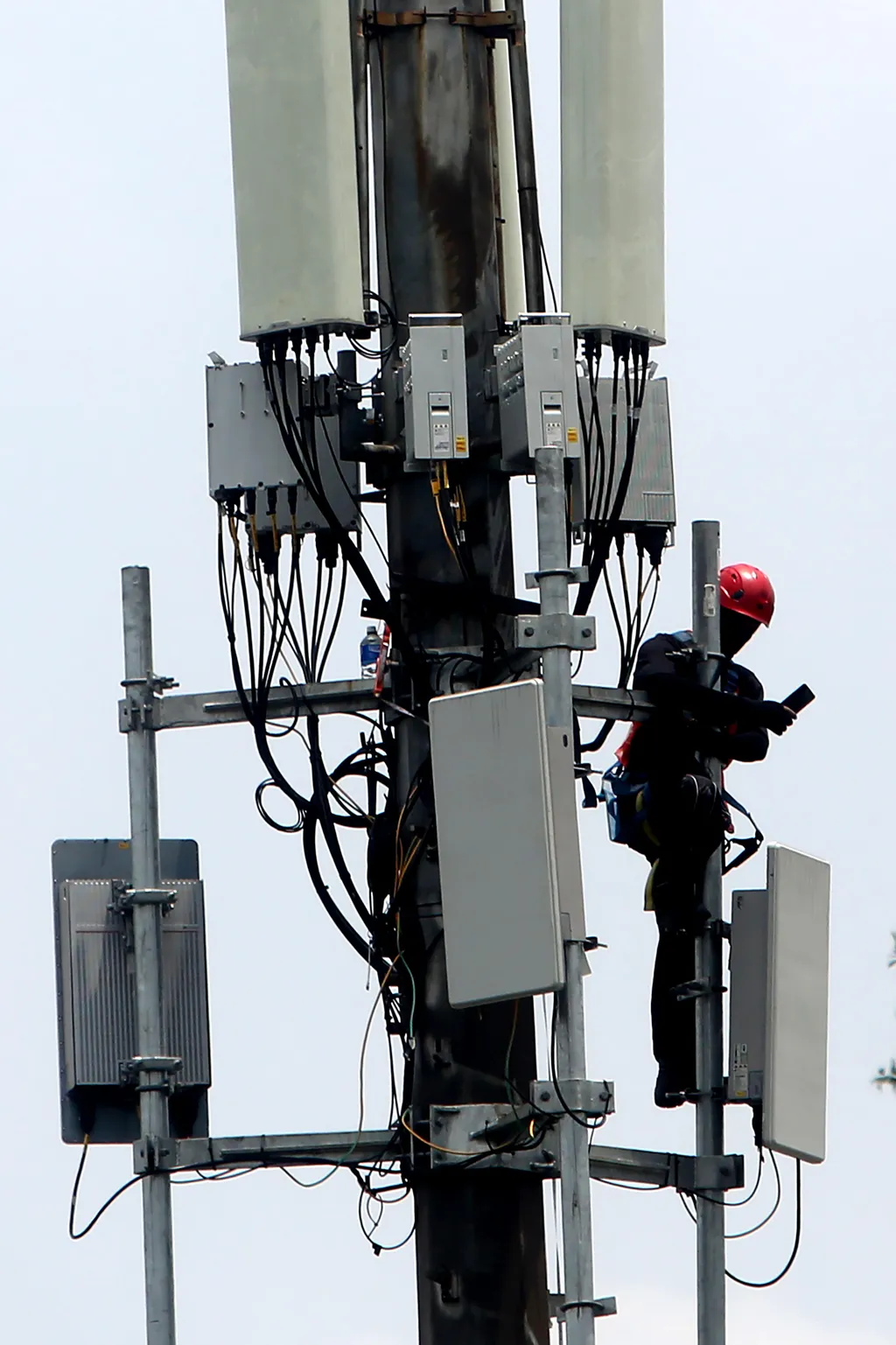
If a cooperative operates a telecommunications business, it is important to ensure whether the risk of loss is borne by all members or only by the management.
By Caecilia Mediana
10 Mar 2026 14:51 WIB · English
JAKARTA, KOMPAS — Cooperatives can legally engage in the development of telecommunications infrastructure in Indonesia. However, the success of the projects heavily relies on the capital strength and sustainability of each cooperative to ensure that the networks built do not become idle.
A lecturer at the School of Electrical Engineering and Informatics of the Bandung Institute of Technology (ITB), Ian Joseph Matheus Edward, stated on Tuesday (10/3/2026) in Jakarta that, according to the legal provisions in Law Number 36 of 1999 concerning Telecommunications (Telecommunications Law), parties that can obtain licenses as network or telecommunications service providers are not limited to legal entities.
The Telecommunications Law also opens up the possibility for cooperatives, individuals, and even foundations to become telecommunications network or service providers.
In practice, although individuals, foundations, and cooperatives are permitted by regulation, telecommunications providers are usually structured as legal entities, such as limited liability companies, to ensure clarity of responsibility and governance.
With the government’s plan for significant funding towards the Merah Putih cooperative program, he sees an opportunity for cooperatives to engage in the development of telecommunications networks becoming available. However, the opening of opportunities for a cooperative to build telecommunications networks does not automatically guarantee the sustainability of the business.
“According to the Telecommunications Law, cooperatives are permitted to obtain permits to operate telecommunications networks or services. The issue isn’t whether it’s legally permissible, but whether cooperatives can sustain their network or telecommunications services operations. If they can’t sustain their business, the public will suffer,” Ian said.
Based on his observations of the development of the telecommunications industry in Indonesia, business sustainability has become an important factor. The number of mobile telecommunications operators in Indonesia, for instance, has continued to decline, from seven operators previously to four, and now only three major players remain. This condition indicates the high capital requirements and business capabilities necessary for the enterprise to continue growing sustainably.
In the context of cooperatives, he stated that a cooperative is a combination of individuals who become members and contribute capital to enhance collective welfare. Unlike limited liability companies, the mechanism of business responsibility in cooperatives needs to be examined more closely, especially if the business being operated incurs losses.
“Network and telecommunications business typically requires significant investment. Therefore, if a cooperative is running that business, it is important to ensure whether the risk of loss will be shared by the cooperative members or only by its management,” Ian added.
Previously, the Minister of Cooperatives (Menkop) Ferry Juliantono visited the construction project of the Telecommunications Backbone Network (fiber optic backbone) for the Java Ring Railway at Gubeng Station, Surabaya, East Java, on Monday (March 9, 2026). The project was initiated by the Indosat Employees Cooperative (Kopindosat) with financial support from the Cooperative Revolving Fund Management Institute (LPDB), a public service agency under the Ministry of Cooperatives.
The project is now in the project closing stage. He stated that this project, a key milestone in efforts to equalize telecommunications access in Java, is being carried out by a cooperative.
One of the classic problems faced by villages and urban communities, particularly in remote areas, is the availability of internet and electricity networks. This issue was also encountered by the government during efforts to accelerate the development of 83,000 units of Koperasi Merah Putih. Therefore, the involvement of all parties, including Kopindosat, is necessary to address the limitations of internet access.
After the telecommunications backbone network began commercial operations, Ferry openly expressed his hope that it would support the smooth operation of the Merah Putih Cooperative.
“I hope Kopindosat can connect all of this with our efforts to expedite the operationalization of the Merah Putih Cooperative. The management of the Merah Putih Cooperative will require the internet,” he said.
He hopes that Kopindosat can continue the telecommunications backbone network project, enabling the provision of affordable, fast, and accessible internet connectivity to residents’ homes. The Ministry of Cooperatives, through the Cooperative Financing Fund (LPDB), is assuredly ready to provide additional support in the form of competitive financing.
The President Director of Kopindosat, Wahono, explained that the construction of the telecommunications backbone network is being carried out along the railway line with a total length of approximately 4,600 kilometers. The main network route stretches from Cikampek to Banyuwangi, accompanied by several branches.
The total financing from LPDB to Kopindosat for various business activities amounts to Rp228 billion. Meanwhile, the financing value from LPDB for that project is around Rp47 billion to Rp48 billion.
LPDB’s General Affairs and Legal Director, Deva Rachman, confirmed in Jakarta on Tuesday (March 10, 2026) that this was the first time LPDB Koperasi had disbursed funding to a cooperative that was deploying telecommunications backbone network infrastructure. Previously, LPDB Koperasi had disbursed funding for tower maintenance and telecommunications management services.
“We expect more applications for strategic industries, like Kopindosat’s in the future,” he said.