
Cooperative Minister Requests Priority for MSME Products in Village Cooperatives
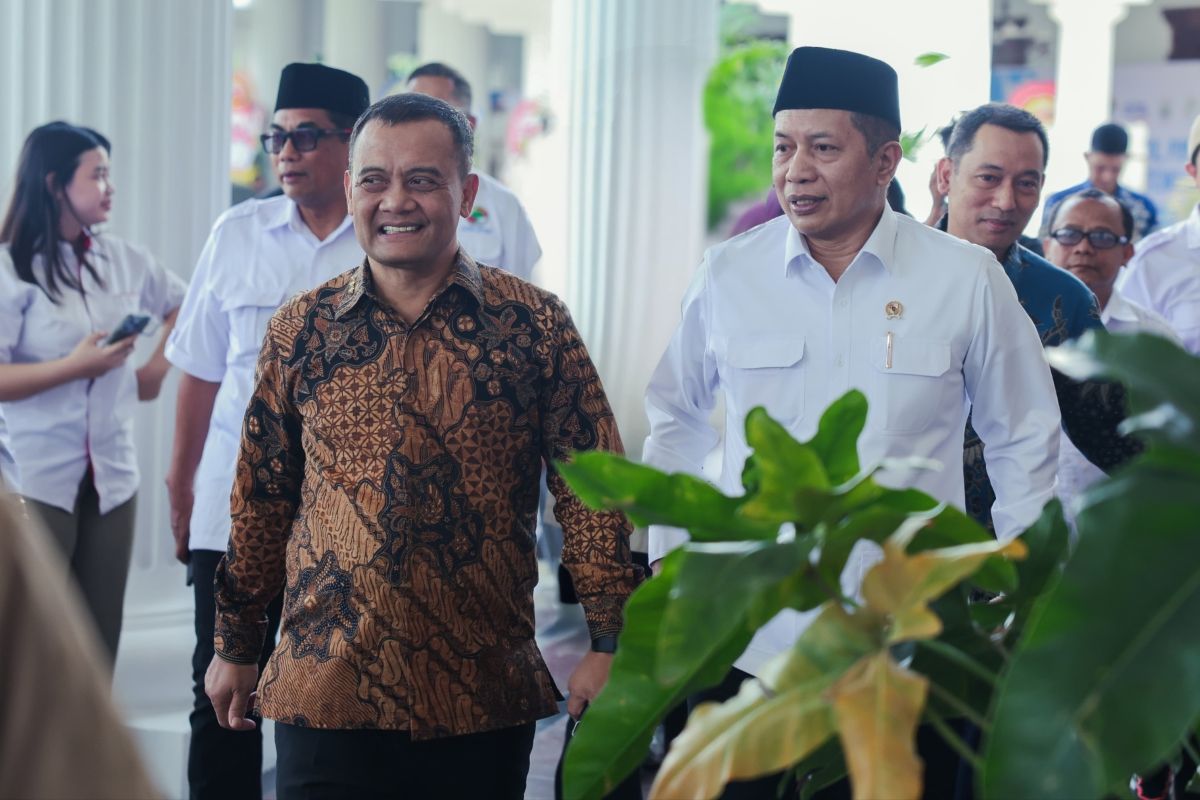
Strengthening cooperatives must now enter a more concrete phase, namely the operationalisation of KDKMP and the development of business collaborations that directly impact the economy of the people. Semarang (ANTARA) - Minister of Cooperatives Ferry Juliantono has requested that products from micro, small, and medium-sized enterprises (MSMEs) be prioritised for entry into the outlets of Village/Subdistrict Red and White Cooperatives. “Strengthening cooperatives must now enter a more concrete phase, namely the operationalisation of KDKMP and the development of business collaborations that have a direct impact on the people’s economy,” said the Minister in Semarang on Tuesday. He conveyed this during the Inauguration of the Leadership of the Indonesian Cooperative Council (Dekopin) for the Central Java Region, as well as the 2026 Regional Working Meeting. According to him, the Cooperative Movement also needs to enter the sector of producing daily needs for the community and post-production so that its economic effects are felt more broadly. He assessed that the development of cooperatives can serve as an entry point to revive small industries in the regions. “We can learn to make soap, shampoo, detergent, even sambal ourselves. This can revive small industries and drive economic growth in Central Java, as well as become a breakthrough to solve various problems in society,” he said. He also noted that Central Java is one of the regions that stands out in cooperative development, particularly in accelerating the formation of legal entities for KDKMP. On that occasion, the Minister hopes that the Central Java Dekopin Region will move in sync with the Ministry of Cooperatives to revive the activities of cooperative business entities in the regions. “This mandate is not light because Dekopin is one breath that must be in harmony with the Ministry of Cooperatives,” he said. Ferry also hopes that the Central Java Dekopin Region can become an example of modern cooperatives whose benefits are felt widely. Meanwhile, Central Java Governor Ahmad Luthfi stated that cooperatives must be present as hubs for supporting the people’s economy, especially to encourage micro-business actors to level up. He emphasised the role of cooperatives as a healthier alternative financing option for the community. The Central Java Dekopin Region is also encouraged to take a more concrete role in transforming human resources and digitalisation, strengthening businesses and networks, as well as advocacy and protection for cooperatives. “The management has been formed. With this new management, colleagues can colour it so that cooperatives in Central Java become the foundation for community prosperity,” he said. Based on data from the Cooperative and SME Office, Central Java has 19,022 active cooperatives with more than 6.8 million members, total cooperative assets reaching Rp60.13 trillion, business volume of Rp43.78 trillion, and returns to members of Rp1.16 trillion. Currently, there are 8,523 KDKMPs in Central Java, of which 6,271 units are operational and 1,466 units have physical outlets as centres of economic activity.