
Controversy Over Indian Pickup Imports: DFSK Ready to Meet Local Demand
JAKARTA — The import of trucks and pickup trucks from India for the operational needs of the Koperasi Desa Merah Putih (Red and White Village Cooperative) has continued to generate coverage in the national media this week.
The government, through PT Agrinas Pangan Nusantara, plans to procure commercial vehicles from Tata Motors and Mahindra & Mahindra Ltd. Despite the existence of a domestic automotive industry, the government has chosen to supply the cooperative’s needs through imports.
Cing Hok Rifin, Director of Sales Centre at PT Sokonindo Automobile (the local distributor of DFSK), stated that the company is actually capable of supporting PT Agrinas’s requirements if the segment in question is the 4x2 pickup category.
“In principle, we are ready to support the needs of PT Agrinas and the Red and White Cooperative for 4x2 pickup units. Given that our factory facilities can produce up to 25,000 units per year, the presence of DFSK’s factory in Indonesia guarantees a commitment to long-term after-sales service availability compared to imported units. Additionally, our 3S dealer network is spread throughout Indonesia,” Cing Hok Rifin told Kompas.com on Thursday (26 February 2026).
The DFSK factory is located in Cikande, Serang, Banten.
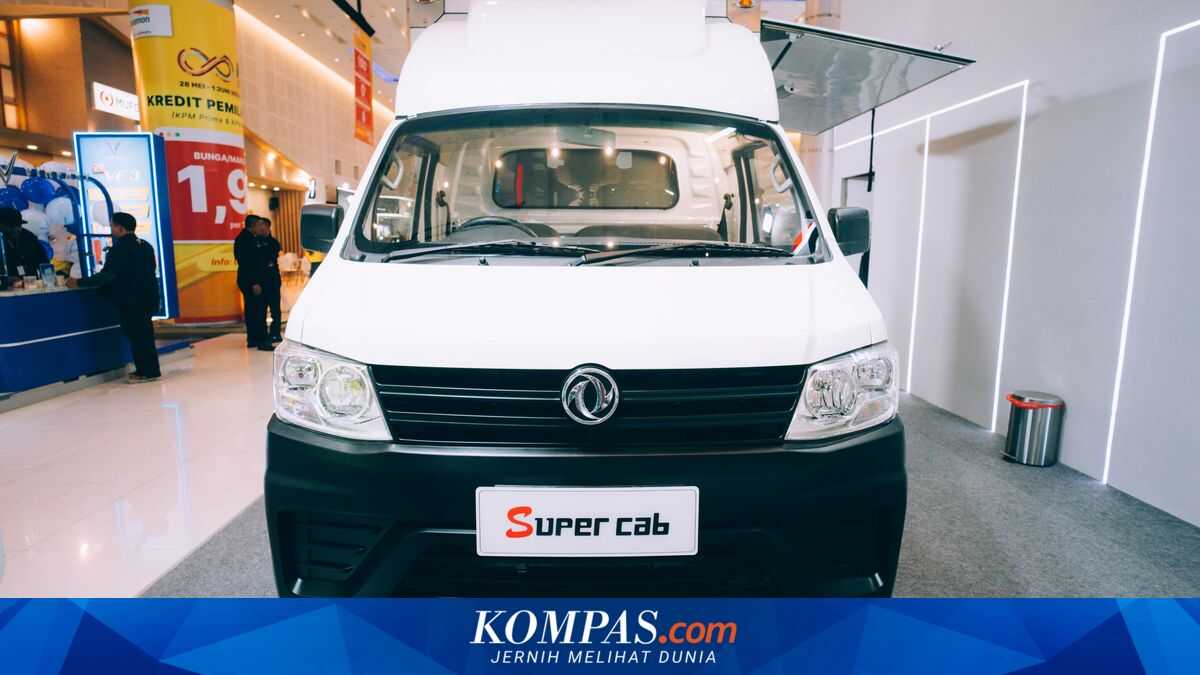
DFSK first introduced the Super Cab to the Indonesian market in 2017. By specification, the Super Cab is a pickup truck with a 1,500cc engine and a spacious cargo bed in its class. The cargo bed dimensions are 2,470 mm in length, 1,670 mm in width, and 340 mm in height.
To date, DFSK has sold over 15,000 units in Indonesia and also exports to Southeast Asia.
“Currently the local content value is approximately 30 per cent. We will continue to increase this figure through cooperation with local parts suppliers in Indonesia,” he said.
Regarding the commercial vehicle ecosystem in Indonesia, Cing Hok Rifin also expressed hope that the government will prioritise domestic products in government budget procurement.
“This is important to support the circulation of the national economy, as well as create more jobs in the automotive sector and local parts industry,” he said.
Meanwhile, to maintain market share this year, DFSK will continue to focus on retail sales directly through dealers spread across all provinces in Indonesia.