
Controversy over Human Rights Activist Certification: Natalius Pigai's Idea Sparks Storm of Criticism
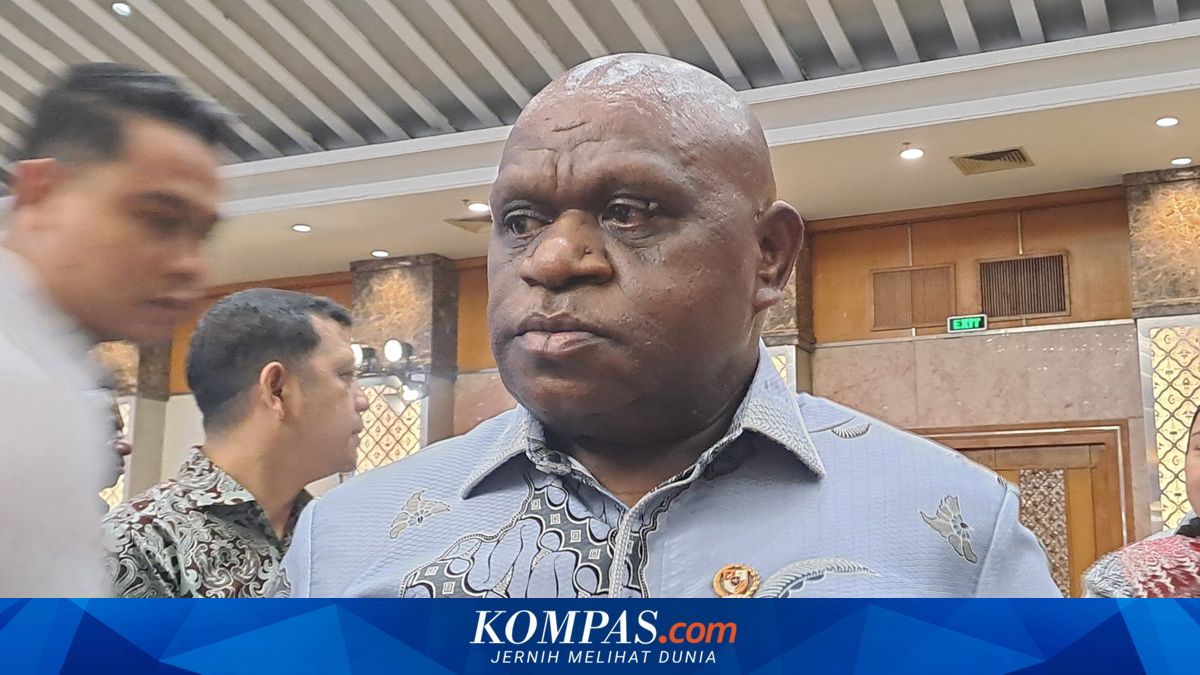
JAKARTA, KOMPAS.com - The government’s discourse on determining the validity of human rights (HAM) activist status through an advisory team has drawn a variety of protests.
Several quarters assess that the idea could potentially give rise to new problems, from injustice to conflicts of interest.
This idea was first raised by Human Rights Minister Natalius Pigai, who stated that the Ministry of Human Rights is preparing an assessment mechanism to ensure that legal protection is only provided to parties that truly carry out the function of human rights defenders.
“There will be a team, an advisory team. The advisory team will then determine whether this person is an activist or not,” said Pigai, in an exclusive interview with Antara, in Jakarta, on Wednesday (29/4/2026).
The assessment will be conducted based on the context of a person’s actions, including whether the activity truly defends public interests or is instead driven by personal or commercial interests.
Pigai gave an example that a person claiming to be a human rights activist may not meet the criteria if in practice they work for a certain payment that is not related to public interests.
He added that the advisory team will be composed of cross-sectoral elements, from government, civil society, to law enforcement apparatus.
Several national figures are said to be involved to maintain the objectivity of the assessment.
However, the idea immediately drew criticism from legislative circles.
Member of Commission XIII of the DPR Mafirion assessed that protection for human rights activists should not depend on certification or state recognition.
“If there is human rights certification, then only parties that are administratively recognised will receive protection,” said Mafirion, to Kompas.com, on Thursday (30/4/2026).
He warned that such a condition could potentially create injustice because individuals who genuinely defend human rights might not receive legal protection simply because they are not on the government’s official list.
“If this happens, then there is injustice in the concept of human rights protection,” he opined.
According to him, the state should focus on its primary obligation, which is to protect all citizens in exercising their rights, including in advocating for human rights.
Mafirion assessed that the plan to form an advisory team could potentially conflict with the principle of civil freedom.
He referred to the United Nations through the 1998 Declaration on Human Rights Defenders, which affirms that every individual has the right to defend human rights without requiring state recognition.
Chairman of Commission XIII of the DPR Willy Aditya viewed the discourse from a protection perspective.
He emphasised that the state remains obligated to protect all human rights defenders, without limiting who can be called an activist.
“Everyone has the right to defend human rights for themselves or others and therefore they are activists who must be protected,” said Willy, when contacted, on Thursday.
He assessed that the government’s idea could serve as an entry point to strengthen the protection system for human rights defenders, especially for vulnerable groups who often face criminalisation when advocating for rights.
However, Willy cautioned that the policy should not instead restrict the space for civil society movement.