
Container Congestion in Ports Attributed to Regulatory Confusion
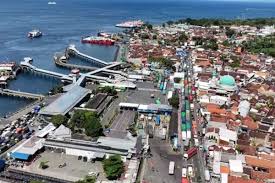
Confusion over import regulations in Indonesia is said to have ensnared the national shipping industry in a growing web of complications. Inconsistent and frequently amended legal regulations, including Ministry of Trade Regulation (Permendag) No. 36 of 2023, Permendag No. 8 of 2024, and the latest umbrella regulation Permendag No. 16 of 2025, have systemically caused logistical paralysis at major ports while threatening the existence of domestic labour-intensive industries. Analyst and Master of Law student at Jakarta’s 17 August 1945 University (Untag), Revitriyoso Husodo, stated that these fluctuating regulations create legal uncertainty for businesses and hinder the national shipping sector’s industrialisation agenda. ‘Industrialisation refers to adding value across all industries, including shipping, to boost national foreign exchange earnings,’ Revitriyoso said in a statement on Wednesday (27 May 2026). Revitriyoso noted that regulatory confusion previously caused a backlog of 26,000 containers at Tanjung Priok and Tanjung Perak ports in May 2024 due to stringent import documentation requirements. This logistics crisis pushed the Yard Occupancy Ratio (YOR) close to or above the safe limit of 90%, rendering port operations inflexible for new cargo. ‘Operational impacts include prolonged waiting times (dwelling time) leading to higher demurrage costs, as well as reduced terminal productivity due to limited space for heavy equipment like Rubber Tyred Gantry (RTG) cranes, slowing down loading and unloading speeds,’ he explained. On a macroeconomic scale, the soaring logistics costs force businesses to burn more fuel due to prolonged ship waiting times, incur demurrage penalties, and resort to rerouting cargo to distant alternative ports, increasing land transportation expenses. Beyond harming the real sector, container truck queues clogging port access roads have caused traffic jams on Jakarta’s tollways. ‘Air pollution has worsened due to hundreds of trucks idling with engines running, degrading air quality around the port area,’ he added. Revitriyoso outlined that the root issue stems from Permendag No. 36 of 2023, which shifted oversight from post-border to border control and mandated additional documents like Technical Considerations (Pertek) and Surveyor Reports (LS) under Articles 20, 21, and 24. This regulation was deemed overly restrictive on goods entering the country. The government responded with Permendag No. 8 of 2024, relaxing rules by removing the Pertek requirement from the Ministry of Industry. However, this policy was seen as overly lenient, allowing all delayed imports—such as iron, steel, textiles, and electronics—to leave ports with only an LS document. The result was a flood of imported finished goods in the domestic market, triggering local industry bankruptcies and mass layoffs. The situation worsened with the introduction of Permendag No. 16 of 2025 as the latest umbrella regulation. The deregulation of restrictions and limitations (Lartas) under Article 93 drew sharp criticism, including from the Indonesian Sugar Cane Farmers Association (APTRI). ‘The removal of import approval instruments for derivative commodities has rendered commodity balances and Ministry of Industry recommendations obsolete. Consequently, import quota oversight is lost, leading to an influx of cheap raw material imports and leaving hundreds of thousands of tons of local sugar and molasses unsold,’ Revitriyoso explained. Another legal loophole was found in Article 8, which relaxed the transfer of General Importer Identification Number (API-U) to Producer Importer Identification Number (API-P). House of Representatives Commission VI deemed this regulation vulnerable to abuse by rogue importers, who could import finished consumer goods under the guise of production materials and sell them freely in the domestic market. Amidst the erosion of foreign goods protections, Permendag 16 of 2025 has imposed stringent tiered enforcement and penalties on domestic businesses deemed unprepared for the new digital cluster system. Sanctions include unilateral cargo holds by Customs, total import permit freezes, and recommendations to revoke Business Identity Numbers (NIB) for reporting errors within post-border surveillance deadlines. To break this regulatory quagmire, Revitriyoso urged the government to streamline import bureaucracy precisely without compromising domestic market protection. ‘Overlapping regulations must be resolved to ensure the shipping sector functions optimally. Improvements to the Online Single Submission (OSS) and INATRADE platforms are needed as procedures for national business import permits,’ he concluded. This operational growth aligns with positive national trade trends. Total throughput reached 850,768 TEUs, a 0.9% increase from the same period last year’s 843,187 TEUs. The rise in container volume was driven by significant growth in key operational areas, spurred by new regular and ad-hoc services enhancing trade connectivity.