
Consumer Protection Law Challenged, Students Highlight Misleading Advertising
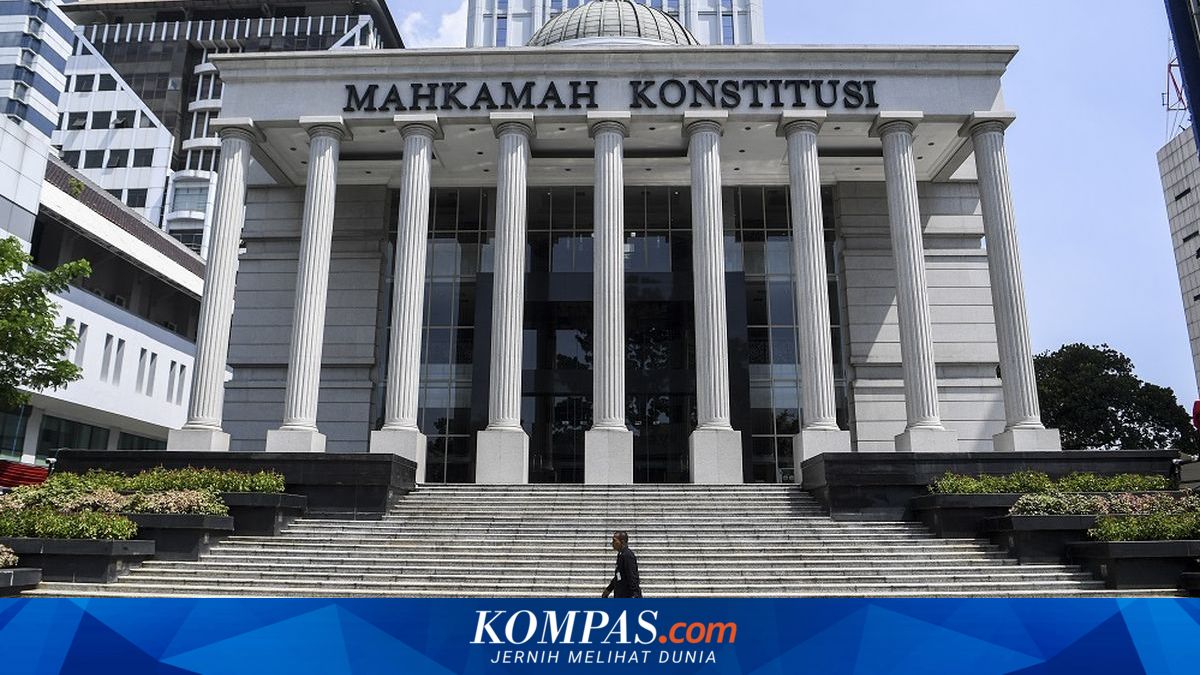
JAKARTA, KOMPAS.com - Seven law students submitted a material examination of Law No. 8 of 1999 on Consumer Protection to the Constitutional Court (MK) on Wednesday (29/4/2026).
The petitioners are Sarah Rahayu, Nurhaliza Zahra, Livia Maulina, Primo Putra Ramadhan, Zalva Viola Munir, Amelia Harditya, and Muhamad Nabil Gunawan.
They highlighted digital advertising practices deemed misleading due to the phrase “as if” in Article 9 paragraph (1), which is considered open to multiple interpretations.
Article 9
- Business actors are prohibited from offering, promoting, or advertising goods and/or services in an untrue manner and/or as if:
the goods have met and/or possess discounts, special prices, certain quality standards, certain styles or fashions, certain characteristics, history, or uses;
the goods are in good condition and/or new;
the goods and/or services have obtained and/or possess sponsorship, approval, certain equipment, certain benefits, certain operational features, or accessories;
the goods and/or services are produced by a company that has sponsorship, approval, or affiliation;
the goods and/or services are available;
the goods do not contain hidden defects;
the goods are accessories to certain goods;
the goods originate from a certain region;
directly or indirectly disparaging other goods and/or services;
using excessive words such as safe, non-hazardous, risk-free, or without side effects without complete information;
offering something that contains uncertain promises.
“As a result, consumers do not receive accurate information, while promotional practices may appear correct but are actually misleading,” said one of the petitioners.
The petitioners also assessed that business actors exploit the loophole in the norm to form erroneous perceptions.
According to them, the regulation shifts from a consumer protection tool to legitimising misleading practices.
“We as consumers face difficulties, even nearly impossible, in proving deception. This creates a vague standard of proof and burdens the weaker party,” they stated.
“Consequently, the effectiveness of the law in providing real protection becomes weak. The phrase ‘as if’ ultimately creates norm ambiguity,” they added.
Meanwhile, Constitutional Court Justice M Guntur Hamzah asked the petitioners to explain the constitutional harm experienced, including the causal relationship with the application of the norm being challenged.
Constitutional Court Justice Daniel Yusmic P Foekh assessed that the challenged article actually regulates prohibitions for business actors and obligations to provide accurate information, so the petitioners’ arguments need to be reconsidered.
MK Chief Justice Suhartoyo also asked the petitioners to detail individual harms and explain the norm’s conflict with the 1945 Constitution.
The MK has given the petitioners 14 days to improve the petition. The improvements must be submitted by 12 May 2026 at the latest before the next hearing is held.