
Consumer Goods Issuers' Profit Map: Unilever Soars, GGRM Recovers
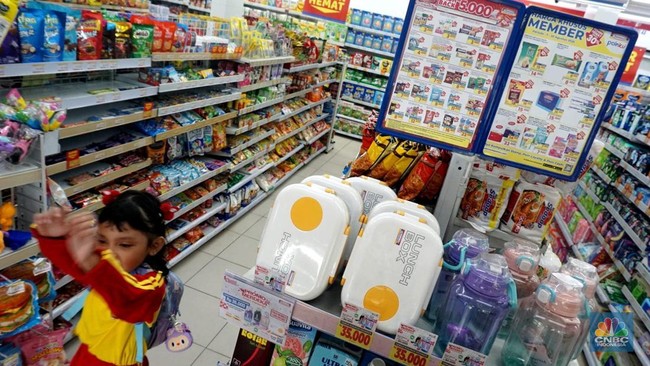
Entering April 2026, the Indonesian capital market is once again enlivened by the season of full-year 2025 financial report releases. This period is a crucial moment eagerly awaited by market participants to realistically evaluate companies’ fundamental performance after navigating last year’s macroeconomic dynamics. One sector that always draws central attention during this earnings season is the consumer goods sector. As the backbone of the national economy driven by domestic consumption levels, the financial reports of issuers in this sector are consistently used as the primary barometer to measure the resilience of public purchasing power and the effectiveness of operational cost efficiencies executed by management amid global commodity price fluctuations. Based on the series of financial reports officially published, the performance of consumer issuers throughout 2025 presents a highly diverse picture, ranging from impressive profit surges to margin pressures resulting in profit contractions. FMCG Conglomerates and Daily Needs Dynamics In the Fast-Moving Consumer Goods (FMCG) conglomerates and staple needs category, 2025 performance was marked by significant profitability recovery among several major players. The most striking achievement was recorded by PT Unilever Indonesia Tbk (UNVR), which posted an annual net profit surge exceeding 100%, although revenue growth was only in single digits. This condition explicitly indicates massive cost structure improvements or a low base effect from the previous year’s performance. This positive trend was replicated by Indofood Group business entities, where PT Indofood CBP Sukses Makmur Tbk (ICBP) and its parent PT Indofood Sukses Makmur Tbk (INDF) successfully notched double-digit net profit growth. In contrast, PT Mayora Indah Tbk (MYOR)‘s pace was held back with a slight decline in net profit, signalling that market penetration challenges and operational cost control remain strategic issues internally. On the valuation side, the market responded to this fundamental performance with varying ratios. INDF shares are currently traded at a deeply discounted price-to-book value (PBV) ratio below one times, making it one of the cheapest options in this conglomerate class. Resilience in the Dairy Products, Beverages, and Ice Cream Sector In the dairy products, packaged beverages, and ice cream segment, company performance trajectories show a fairly split condition. Dairy producer issuers performed solidly, driven by stable public demand for nutritional products. PT Cisarua Mountain Dairy Tbk (CMRY) and PT Ultra Jaya Milk Industry Trading Company Tbk (ULTJ) maintained positive net profit growth trends, supported by the ability to keep profit margins above the industry average. Conversely, PT Sariguna Primatirta Tbk (CLEO) and PT Campina Ice Cream Industry Tbk (CAMP) faced pressures, recording annual net profit declines. The profitability drop in both issuers was primarily influenced by rising cost of goods sold and distribution expenses. Interestingly, despite profit contraction, market players still assigned a premium valuation to CLEO shares. Growth in Snack Producers and Raw Materials Fundamental performance in the snack producers, industrial raw materials, and poultry processed products group generally showed optimistic recovery. Normalisation of global commodity prices provided room for issuers to improve business margin structures. PT Charoen Pokphand Indonesia Tbk (CPIN), as a major player in the poultry industry, recorded net profit growth above 50%. Margin improvements were also experienced by PT Garudafood Putra Putri Jaya Tbk (GOOD) and PT Kino Indonesia Tbk (KINO), which consistently posted net profit growth. No less solid achievements were shown by PT Budi Starch Sweetener Tbk (BUDI) with a substantial net profit increase. From a valuation perspective, BUDI shares are currently the most attractive with a price-to-earnings ratio (PER) below nine times. Structural Challenges in the Tobacco Industry The tobacco industry continues to face ongoing structural challenges, particularly related to excise tariff increase policies and shifts in consumer purchasing power. The full-year 2025 financial reports reveal that the two market-leading cigarette companies experienced shrinkage in gross revenue lines. Nevertheless, PT Gudang Garam Tbk (GGRM) managed to book substantial net profit growth thanks to tight operational efficiency programmes. On the other hand, PT H.M. Sampoerna Tbk (HMSP) recorded a slight net profit decline. The reality of this highly regulated industry is reflected in GGRM shares’ valuation, which is pressured to a PBV ratio of 0.44 times. Nonetheless, HMSP’s return on equity remains far more solid compared to its main competitor. Sectoral Valuation Prospects and Implications Overall, this earnings release season confirms that the consumer goods sector still possesses adequate fundamental resilience. Current share price dynamics do not solely rely on nominal profit figures but more on the quality of growth and company margin stability. Issuers with discounted valuations offer attractive opportunities, while those with premium valuations demand proof of performance consistency in subsequent quarters.