
Construction of 2 New Petrol Refineries Could Boost Indonesia's Fuel Production by 2 Million KL
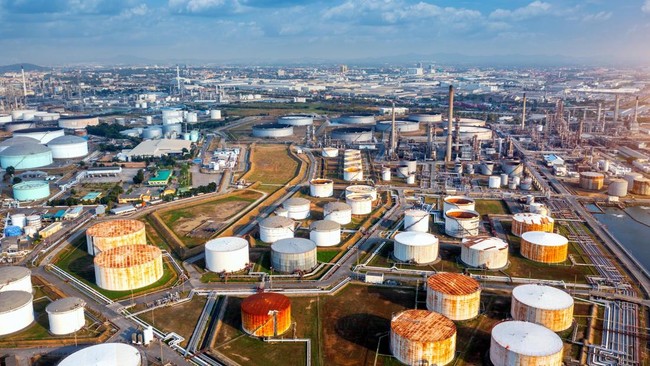
President Prabowo Subianto, together with the Nusantara Future Investment Management Agency (Danantara), has inaugurated the start of construction (groundbreaking) for 13 National Downstreaming Projects Phase II. Two of these are petrol refinery (gasoline) facilities.
President Prabowo emphasised that downstreaming is a fundamental step in transforming Indonesia’s economic structure towards a high-value-added industry-based economy that is more resilient to global dynamics.
“Phase one downstreaming already has 13 projects in 13 locations, and this year we will add another six downstreaming projects, and we will continue to add more. There might be phases 4, 5, 6, God willing, this year as well,” explained Prabowo during the inauguration in Cilacap, Central Java, quoted on Thursday (30/4/2026).
Prabowo stressed that downstreaming of natural resources in Indonesia is the only way for the country to achieve greater prosperity. Therefore, the government will continue to advance downstreaming development in the country.
“Downstreaming is the only way for us to become more prosperous,” clarified Prabowo.
One of the projects inaugurated by Prabowo is the petrol refinery project managed by PT Pertamina (Persero), located in Dumai (Riau) and Cilacap (Central Java).
The capacity expansion of the gasoline refinery will be carried out at the existing facilities of RU II Dumai and RU IV Cilacap. The total capacity will reach 62 MBSD, targeted to come online in Q4 2030.
“This project will substitute gasoline imports by up to 2 million KL per year or 9.47% of the national supply-demand gap, support the fulfilment of the Pertamax Series from domestic production, and reduce imports of by-products including propylene and LPG,” stated Danantara in a written release, quoted on Thursday (30/4/2026).
The project is seen as contributing to strengthening national energy resilience while maintaining energy price stability, which ultimately supports people’s purchasing power and economic activities.
In addition to refineries, the programme covers sectors such as energy, metals and minerals, construction materials, and agroindustry, aiming to reduce import dependency, strengthen the national industrial supply chain, increase the added value of domestic resources, and create broader job opportunities and economic activities for the community.
“Downstreaming is a strategic instrument in driving the creation of added value domestically through the processing and industrialisation of natural resources,” added Danantara.
In addition to increasing added value, downstreaming is seen as playing a role in strengthening economic independence by reducing dependence on global supply chains, which in certain conditions may face dynamics and uncertainties, including geopolitical factors.
Through strengthening the domestic supply chain, downstreaming also ensures more reliable availability of national needs, while driving the transformation of the economic structure towards a high-value-added industrial base.
Here is the list of 13 Phase 2 Downstreaming Projects along with their project owners:
Projects 1-2
Construction of Petrol Refinery Facilities
State-Owned Enterprise Holding: PT Pertamina (Persero)
Location: Dumai (Riau), Cilacap (Central Java)
• Expansion of gasoline refinery capacity at existing facilities RU II Dumai and RU IV Cilacap with a total capacity of 62 MBSD, targeted to come online in Q4 2030.
• This project substitutes gasoline imports by up to 2 million KL per year or 9.47% of the national supply-demand gap, supports the fulfilment of the Pertamax Series from domestic production, and reduces imports of by-products including propylene and LPG.
• This project contributes to strengthening national energy resilience while maintaining energy price stability, which ultimately supports people’s purchasing power and economic activities.
Projects 3-4-5
Construction of Fuel Oil Operational Tanks
State-Owned Enterprise Holding: PT Pertamina (Persero)
Location: Palaran (East Kalimantan), Biak (Papua), Maumere (East Nusa Tenggara)
• Development of three fuel oil terminals in Palaran (37,000 KL), Biak (46,000 KL), and Maumere (70,000 KL) with a total additional capacity of 153,000 KL, increasing national storage capacity by 3.1%.
• Implemented by Pertamina Patra Niaga and targeted to come online in stages in 2027 (Maumere) and 2028 (Palaran, Biak).
• This project strengthens energy distribution reliability, especially in eastern Indonesia, thereby promoting equitable development and reducing inter-regional price disparities.
Project 6
Coal Processing Facility into DME
State-Owned Enterprise Holding: PT Pertamina (Persero), PT Mineral Industri Indonesia (Persero)
Location: Tanjung Enim (South Sumatra)
• Development of a DME production facility with a capacity of 1.4 million tonnes per year in Tanjung Enim, with PTBA as the operator and Pertamina Patra Niaga as the offtaker.
• This project substitutes LPG imports, which currently meet 80% of national needs.
• In addition to providing foreign exchange efficiency, this project strengthens domestic energy resilience and creates new job opportunities in the development of downstream energy-based industries.
Project 7
Development of Stainless Steel Manufacturing Facility from Nickel
State-Owned Enterprise Holding/Partner: PT Krakatau Steel (Persero) Tbk. / Tsingshan Group
Location: Indonesia Morowali Industrial Park (Central Sulawesi)
• Development of a stainless steel slab production facility with a capacity of 1.2 million tonnes per year based on local nickel through modern smelting and refining processes.
• This initiative increases the added value of domestic minerals while driving industrial job creation and sustainable economic growth in industrial areas.
Project 8
Development of Carbon Steel Slab Production Facility from Local Iron Ore
State-Owned Enterprise Holding/Partner: PT Krakatau Steel (Persero) Tbk. / Xin Hai Group
Location: Cilegon (Banten)
• Development of a steel slab production facility with a capacity of 1.5 million tonnes per year through production process improvements and facility modernisation.