
Constitutional Court to Decide on Judicial Review of Anti-Corruption Law's Obstruction of Justice Provision Today
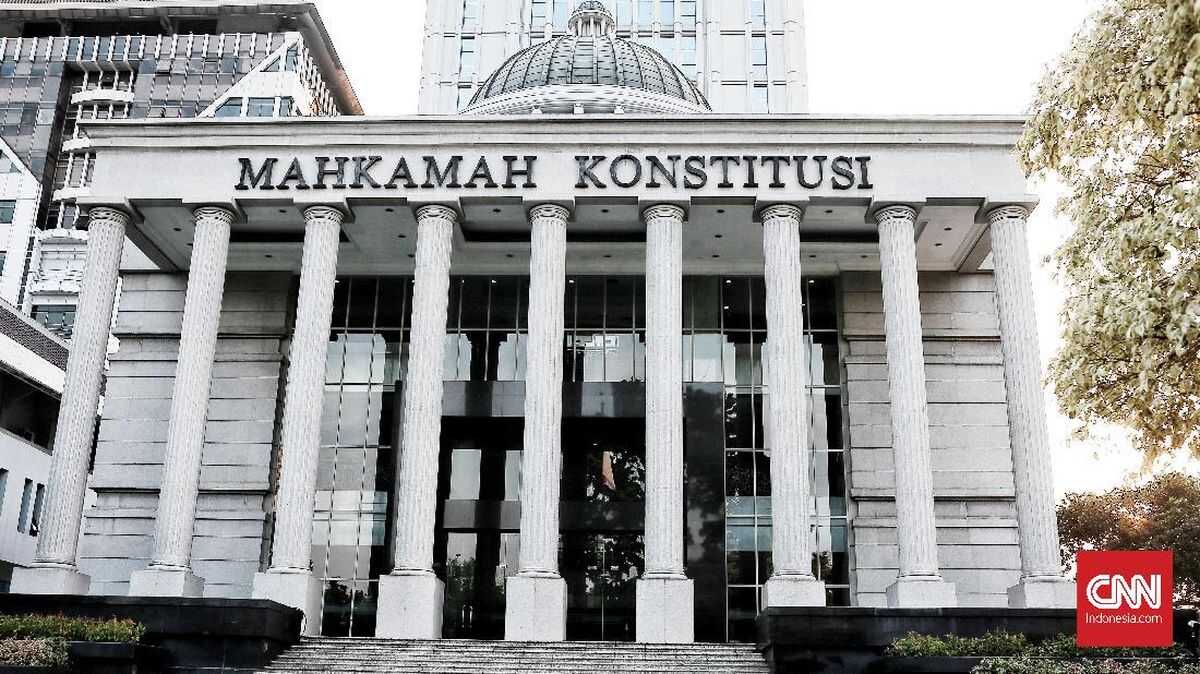
The Constitutional Court (MK) is scheduled to rule on a judicial review petition challenging the obstruction of justice provision under the Anti-Corruption Law filed by PDI-Perjuangan Secretary General Hasto Kristiyanto on Monday, 2 March.
The ruling announcement hearing for Hasto’s petition will be held alongside 38 other constitutional court petitions in an open session chaired by Constitutional Court Chief Justice Suhartoyo in the Plenary Courtroom at the MK in Jakarta.
“We are only announcing the key points, not the entire legal considerations, in order to save time and help all parties understand the essence of what the judges have decided. However, the full decisions and rulings are already prepared and will be distributed to the parties immediately after the session concludes,” Suhartoyo explained regarding court procedures.
Hasto’s petition has gone through a series of hearings, including preliminary examinations, statements from the government and parliament, and testimony from witnesses and expert witnesses.
Hasto has challenged Article 21 of Law Number 31 of 1999 on the Eradication of Corruption Offences.
The article stipulates that any person who deliberately prevents, obstructs, or frustrates, either directly or indirectly, the investigation, prosecution, and court examination of suspects and defendants or witnesses in corruption cases shall be sentenced to imprisonment of 3 to 12 years and/or a fine of 150 million to 600 million rupiah.
Hasto argues that in practice, the article is interpreted disproportionately and creates legal uncertainty, thereby contradicting the principle of a fair constitutional state. He seeks clarification of the provision’s language. In his petition, Hasto requests the Court to add the phrases “unlawfully” and “through the use of physical force, threats, intimidation, intervention, and/or promises to provide improper benefits” to the article in question.
Additionally, he argues that the criminal penalties in Article 21 of the Anti-Corruption Law are not proportional. He therefore requests that the maximum penalty for obstruction of investigation be reduced to 3 years.
Hasto also requests that the word “and” in the phrase “investigation, prosecution, and court examination” be interpreted as cumulative. In other words, he argues that a person can only be convicted if they prevent, obstruct, or frustrate all stages of investigation, prosecution, and court examination.
Hasto was previously a defendant in a case involving alleged obstruction of investigation and gratification related to the replacement of parliamentarian Harun Masiku. A judges’ panel at the Corruption Court at the Jakarta Central District Court found Hasto not guilty of obstruction of investigation but guilty of bribery, sentencing him to three years and six months imprisonment and a fine of 250 million rupiah with a three-month alternative sentence. However, Hasto did not serve his sentence as he received amnesty from President Prabowo Subianto.