
Constitutional Court summons mobile operators over controversy surrounding lapsed internet data quotas
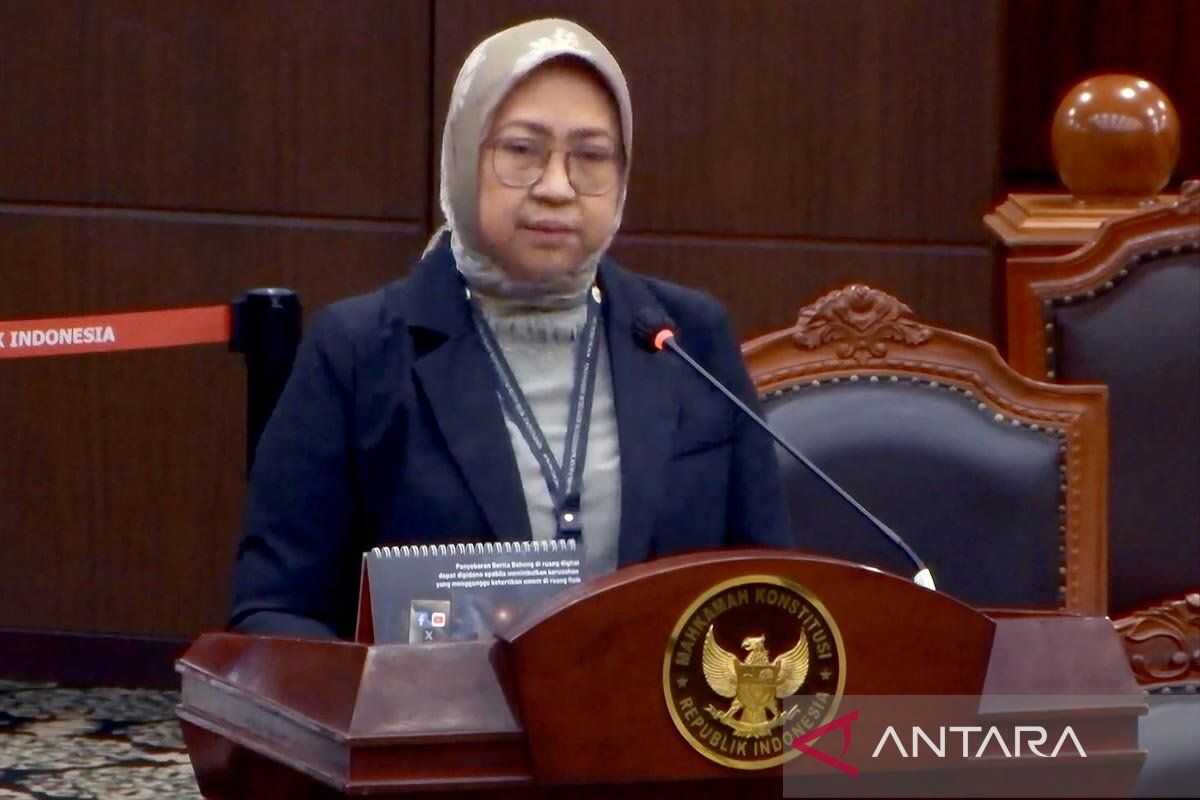
Jakarta (ANTARA) – The Constitutional Court (MK) has summoned several mobile operators as respondents in the test of the Omnibus Law on Job Creation (UU Cipta Kerja) related to the controversy over lapsed internet data quotas. ‘From the Court’s side it has also decided to hear the related parties from Telkomsel, Indosat, XL, Smartfren,’ said MK Chairman Suhartoyo in the continued hearing in the Plenary Court Room of MK, Jakarta, on Wednesday. In addition, the MK will also hear testimony from PT Perusahaan Listrik Negara (PLN). This is because the Court wishes to delve into tariffs and the setting of electricity tokens and their relation to internet quotas. Suhartoyo also said the Court had received a request to become a party from the Association of Telecommunication Operators Throughout Indonesia (ATSI). The association’s testimony would also be heard at the trial. ‘The bench has not yet been able to determine a date for the next hearing, as we will adjust to upcoming holidays,’ he said regarding the schedule for hearing the parties’ testimony. The applicants in the two petitions both challenge Article 71(2) of Law No. 6 of 2023 on the Cipta Kerja. The article, an amendment to Article 28 of Law No. 36 of 1999 on Telecommunications, governs the tariffs of telecommunications services. In its submission, the government, through the Ministry of Communications and Digital (Komdigi), stated that the lapsed internet quota controversy is essentially a service provision issue that falls under the responsibility of mobile operators, not an issue with the article’s norm. Cahyaning Nuratih Widowati, Expert Staff to the Minister of Komdigi for Legal Affairs, said the article under dispute by the applicants is in line with the principle of legal certainty, as mandated by the constitution. ‘What needs to be considered regarding the matter of the applicant a quo is that the expiry of access to internet services provided by the mobile network operator is, in fact, a problem of providing internet access services that should be more informative and transparent for service users,’ she said. She also noted that the Telecommunications Act does not specifically regulate product features, types of services, including the rollover mechanism for quotas. ‘In this regard, through the provision at issue there is a provision that gives the government a role in supervising and controlling the tariffs set by mobile network operators,’ she added. Deputy Chief Justice Saldi Isra responded to the Komdigi statement by questioning the principle of openness and protection for internet users. He said that under this concept there are constitutional rights of users that are neglected. ‘Just now I bought one of the phone cards. After I read it, there is no notice of any disconnection (the internet quota). So if consumers could find out on the card, there is none; but after I checked Telkomsel’s website, there is, but many people, when buying, do not check the website,’ he said, showing the phone card he bought. Saldi said that if product features and the rollover mechanism for quotas are left to the mobile operators’ business strategies, consumer protection becomes unclear. ‘Public interest is neglected. Therefore, what is the difficulty in regulating it?’ he asked. In petition No. 273/PUU-XXIII/2025, ride-hailing drivers (ojol) Didi Supandi and online culinary trader Wahyu Triana Sari essentially challenge the system of scrubbing internet quotas that have not been used when the quotas’ active period ends by the mobile operators. The applicants request the MK to interpret Article 71(2) of UU Cipta Kerja as: Tariff setting and the scheme for providing telecommunications services must guarantee the accumulation of remaining data quotas (data rollover) that have been paid by consumers. Meanwhile, the applicant in petition No. 33/PUU-XXIV/2026, TB Yaumul Hasan Hidayat, argues that internet quotas affect online learning. The student contends that unilateral removal of quotas without consent and fair compensation is deemed to contravene the principle of legal certainty and justice. In his petition, he requests Article 71(2) of UU Cipta Kerja be amended to: Internet quotas paid by consumers must not be removed or forfeited unilaterally, and if a time limit is set, it must be accompanied by a fair, transparent and proportionate mechanism to guarantee legal certainty and protect the constitutional rights of citizens.