
Constitutional Court Review of Ban on Incumbent President's Family in Presidential Election is Worthy of Consideration
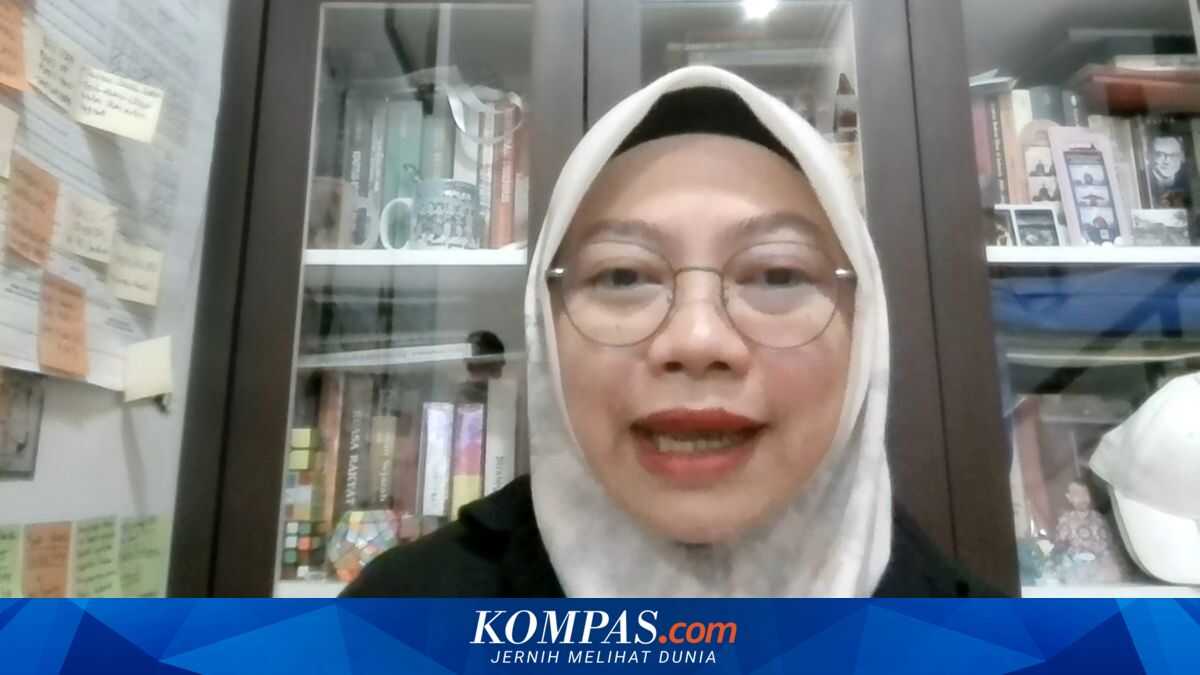
JAKARTA — A lecturer in electoral law and constitutional studies at the University of Indonesia, Titi Anggraini, has opined that a petition concerning a ban on the incumbent president’s or vice president’s family members contesting a presidential election is worthy of constitutional consideration.
“I see this petition has a basis of argumentation that merits constitutional consideration,” said Titi when contacted on Friday, 27 February 2026.
According to Titi, family relationships with sitting leaders frequently give rise to serious problems. She cited numerous cases demonstrating that family relationships often coincide with deviations and abuses of power, including mobilisation of state resources, lack of neutrality by state apparatus, and distortion of electoral competition.
For this reason, Titi stated that the petition, registered as case number 81/PUU-XXIV/2026, should be understood as an effort to ensure electoral competition remains fair. She elaborated that the objective is not to arbitrarily restrict rights, but rather to ensure political competition is based on ideas rather than on the privileges of power.
“When there is no room for suspicion of abuse of power, the people’s right to free, fair and democratic elections can be better guaranteed,” she said.
The academic believes the urgency of testing this constitutional norm is very high, particularly in the current context. This is especially true given that the Electoral Law Bill is currently under discussion, whilst future election stages will also commence shortly.
“Constitutional certainty is important so that lawmakers do not formulate norms that could give rise to conflicts of interest, unfair competition, or delegitimise the electoral process in the future,” said Titi.
She stated that without clarity from the outset, potential disputes and crises of public confidence could repeat as has occurred in previous experience.
“Therefore, the Constitutional Court’s decision, whatever its form, will become an important reference for the design of electoral law going forward and ensure that the principle of competitive fairness and electoral integrity remains protected,” she said.
Titi believes the existing legal framework is not sufficiently robust in preventing nepotistic practices, particularly because there is no explicit regulation anticipating conflicts of interest arising from family power relationships with the incumbent.