
Constitutional Court Rejects Smoking While Driving Ban Challenge, Cites Insufficient Evidence
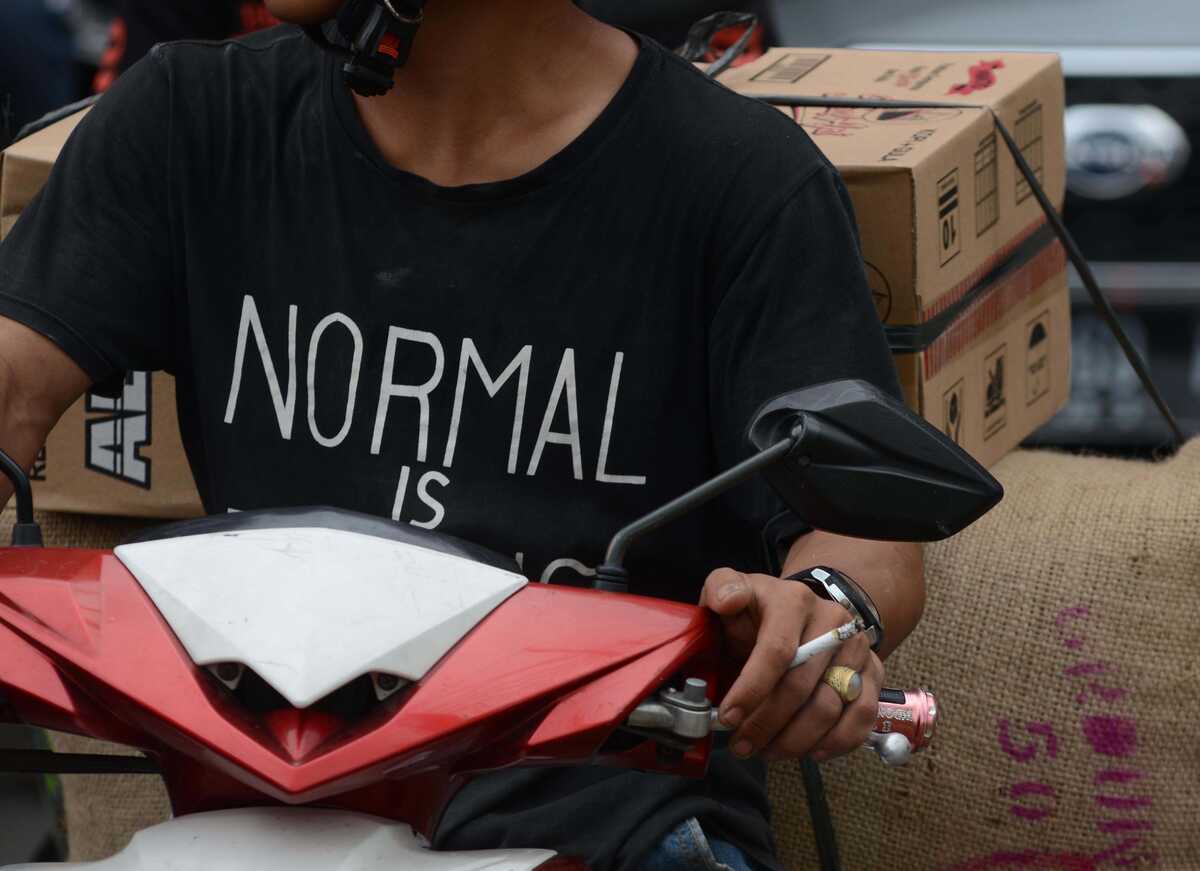
The Constitutional Court (MK) has rejected a petition for judicial review concerning the requirement of “full concentration” under the Traffic and Road Transportation Law (UU LLAJ), which was claimed to create a loophole allowing smoking while driving.
The petition was declared inadmissible because the petitioner failed to provide requisite evidence and did not appear at the hearing for petition correction.
“Petition 13/PUU-XXIV/2026 cannot be accepted,” declared Constitutional Court Chief Suhartoyo during the reading of the decision on Monday (2 March).
In legal considerations presented by Constitutional Court Deputy Chief Saldi Isra, the Court noted that throughout the preliminary examination stage with an agenda for petition correction and evidence authentication, the petitioner had not provided the required documentation. Additionally, the petitioner failed to attend the correction hearing chaired by the Court’s Chief.
The petition was filed by Syah Wardi, who challenged the constitutionality of Article 106 paragraph (1), specifically the phrase “full concentration”, as well as Article 283 of the Traffic Law. He contended that this phrase was abstract and subject to multiple interpretations, thereby potentially creating legal uncertainty.
In his petition, Syah requested that the Constitutional Court declare Article 106 paragraph (1) conditionally unconstitutional insofar as it did not explicitly prohibit acts that endanger road users, including smoking whilst operating a motor vehicle.
According to Syah, the absence of an explicit smoking prohibition whilst driving constitutes a normative gap. He argued that smoking activity can impair concentration because drivers must remove one hand from the steering wheel and risk distraction from cigarette ash or embers.
However, the Constitutional Court did not proceed to the substantive merits of the petition. The dismissal decision was rendered solely on formal grounds—that the petition did not meet procedural requirements, specifically the failure to provide evidence and the petitioner’s non-appearance at the correction hearing.
Consequently, the petition was declared inadmissible without further consideration of the substance of the provision being challenged.