
Constitutional Court Rejects Roy Suryo's Petition Challenging Criminal Code and ITE Law
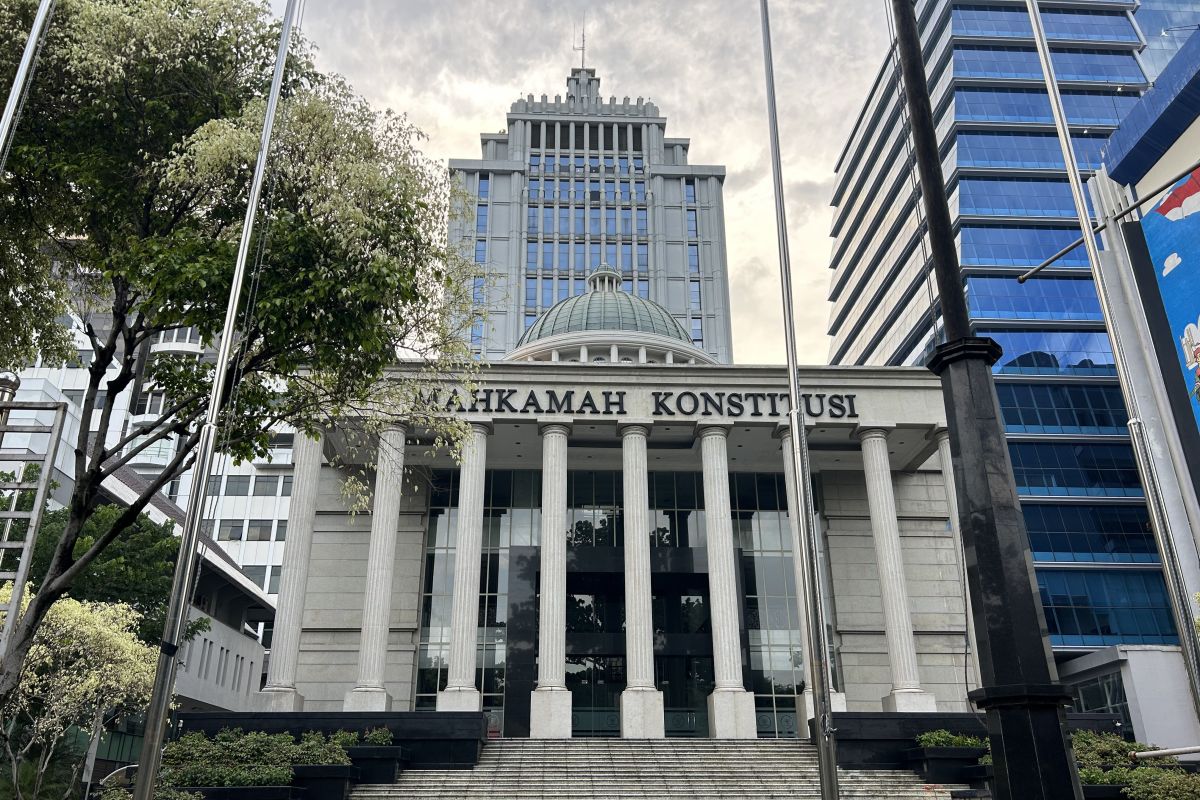
Jakarta — Indonesia’s Constitutional Court (MK) has rejected a petition filed by Roy Suryo Notodiprojo and others challenging provisions of the Criminal Code (KUHP) and the Information and Electronic Transactions Law (ITE Law) No. 11 of 2008, on grounds that the petition’s requests were unclear.
The Court’s decision on case No. 50/PUU-XXIV/2026 was read by Chief Justice Suhartoyo in the Court’s plenary session in Jakarta on Monday, together with two related cases, Nos. 47/PUU-XXIV/2026 and 56/PUU-XXIV/2026, as they shared the same essential character and operative provisions.
“The Court rules that petitions No. 47/PUU-XXIV/2026, No. 50/PUU-XXIV/2026 and No. 56/PUU-XXIV/2026 are inadmissible,” Chief Justice Suhartoyo stated.
In his judicial reasoning, Chief Justice Suhartoyo explained that for requests 2 through 6 in the petition, the Court could not find supporting arguments in the petition’s statement of facts (posita) explaining why the applicants sought to restrict the challenged legal provisions to academics, researchers, and activists only. The Court noted that the provisions would otherwise apply to all other legal subjects within the scope of the challenged norms.
Furthermore, the Chief Justice observed that if the provisions were interpreted as the applicants requested, such interpretation would apply generally (erga omnes) to all persons. Additionally, the petition lacked constitutional arguments explaining why the provisions were problematic specifically for academics, researchers, and activists.
The Chief Justice further ruled that requests 7 through 9, which sought to have certain provisions interpreted in conjunction with other provisions using the term “juncto” and declared contrary to the 1945 Constitution with conditional legal force, constituted an uncommon and incomprehensible petition.
“According to the Court, this formulation is both unusual and its purpose is unclear—specifically, whether the applicants intend to test both conjoined provisions,” the Chief Justice stated.
Had the applicants intended such a challenge, the Chief Justice noted, they should have formulated separate distinct requests, as they did with requests 2 through 6, each specifying a single provision to be tested.
“In the context of this petition, the formulation of requests 7 through 9 creates particular difficulty for the Court in understanding what the applicants actually seek,” Chief Justice Suhartoyo said.
The applicants claim they have been discriminated against by being designated as suspects in connection with research into the credentials of former President Joko Widodo (Jokowi). All three currently have suspect status in an alleged defamation case at the Jakarta Metro Police.
The provisions tested by Roy Suryo and others include Articles 310(1) and 311(1) of the old Criminal Code, Articles 433(1) and 434(1) of the new Criminal Code, and Articles 27A, 28(2), 32(1) and (2), and 35 of the ITE Law.