
Constitutional Court Rejects Challenge to New Criminal Code Provision on Unauthorised Protests
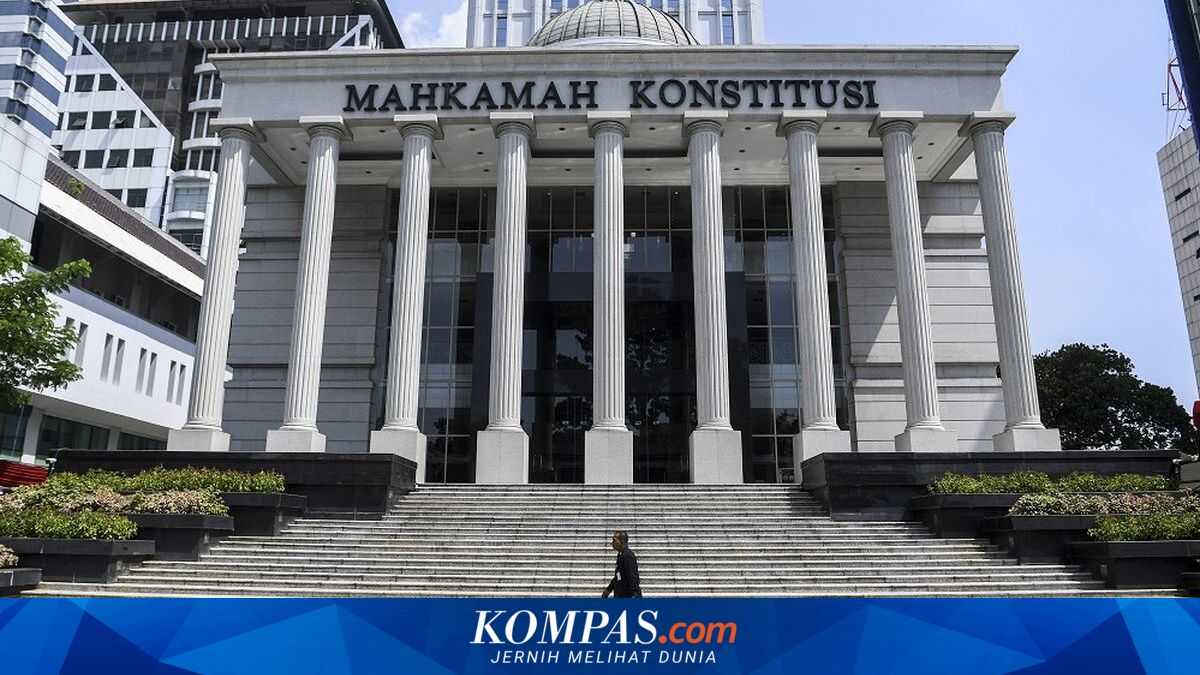
Jakarta – The Constitutional Court (MK) has rejected a legal challenge filed by 13 law students regarding a constitutional review of Article 256 of Law Number 1 of 2023 concerning the new Criminal Code (KUHP).
The decision, numbered 271/PUU-XXIII/2025, was delivered during a plenary session chaired by Constitutional Court Chief Justice Suhartoyo alongside other constitutional judges at the Constitutional Court Building on Monday, 2 March 2026.
“We reject the petitioners’ request in its entirety,” Suhartoyo stated whilst reading the decision.
The Chief Justice explained that the article only regulates criminal penalties for public statements, including parades, protests, and demonstrations on public roads that result in disruption of public interests, public disorder, or chaos in society when conducted without prior notification to the competent authorities (the police).
This means that if public expression through parades, protests, or demonstrations has been notified to the competent authorities, and the activity nonetheless results in disruption of public interests, public disorder, or chaos in society, the perpetrators cannot be prosecuted under Article 256 of Law 1/2023.
Justice Ridwan noted that such notification should preferably be conducted to prevent public expression activities from being disbanded by officials based on concerns about disruption of public interests, public disorder, and chaos in society as threatened under Article 15 of Law 9/1998.
Consequently, within reasonable interpretation, Article 256 of Law 1/2023 should be considered cumulative in nature. Criminal penalties can only be imposed if those responsible, leading, or participating in parades, protests, or demonstrations fail to provide prior notification to the competent authorities and the activity subsequently causes public disturbance, disorder, and chaos.
The criminal offence can only apply to public expression activities, whether in the form of parades, protests, or demonstrations conducted without prior notification and which result in disruption of public interests, disorder, and chaos.
Earlier, the 13 law students had filed a constitutional review of Article 256 of Law Number 1 of 2023 with the Constitutional Court, arguing that the provision could pose excessive restrictions on freedom of expression. Their legal representatives had requested the court either declare the article unconstitutional or interpret it as applicable only to intentional acts with actual malicious intent that pose a genuine threat to public order.