
Constitutional Court rejects challenge to Criminal Code article requiring notification of protests
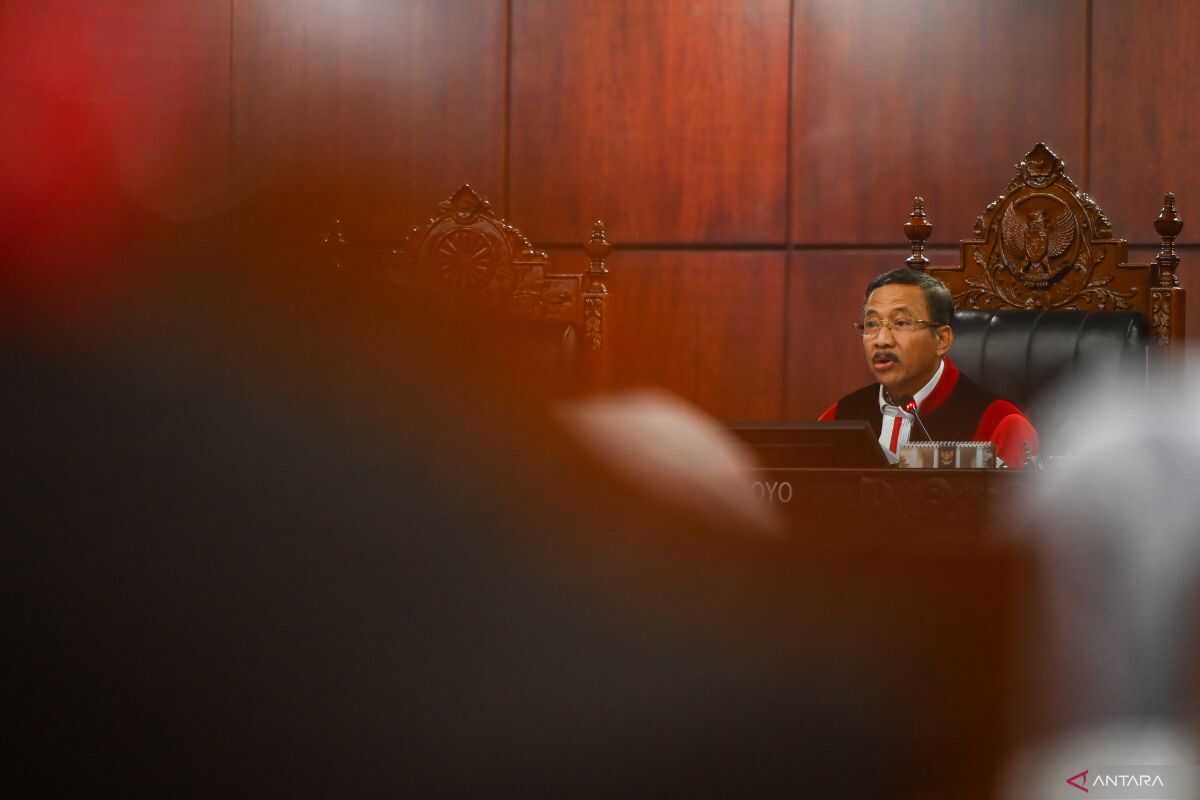
Jakarta – Indonesia’s Constitutional Court (MK) has rejected a petition challenging the Criminal Code article requiring mandatory notification to authorities before organising public marches, protests, or demonstrations.
The Court determined that Article 256 of Law Number 1 of 2023 regarding the Criminal Code contains no constitutional violation. The Court stated that the arguments presented by 13 law students from Open University’s Faculty of Law were without legal merit.
“We reject the petitioners’ request in its entirety,” said Constitutional Court Chief Suhartoyo, announcing the decision in case number 271/PUU-XXIII/2025 at the Court’s plenary hearing in Jakarta on Monday.
Constitutional Judge Ridwan Mansyur explained that Article 256 does not regulate the right to express opinions in public, nor does it impose criminal penalties merely for exercising this right. Rather, the article only establishes criminal sanctions for public expression through marches, protests, or demonstrations that disrupt public interest, cause disorder, or create chaos when conducted without prior notification to the competent authorities, namely the National Police.
According to Mansyur, if public expression is properly notified to the authorities beforehand, the organisers cannot be prosecuted under Article 256 even if the march, protest, or demonstration results in disruption of public interest, disorder, or chaos.
“Furthermore, if public expression activities are not notified to the authorities but do not cause disruption of public interest, disorder, or chaos, then the organisers cannot be threatened with criminal penalties under Article 256 of Law 1/2023,” Mansyur explained.
Criminal penalties may only be imposed when the organisers, leaders, or participants of marches, protests, or demonstrations fail to provide prior notification to authorities and subsequently cause disturbance to public order, disorder, and chaos.
“Conversely, if there is no prior notification but public order is not disrupted, the individuals involved cannot be subject to criminal sanctions,” Mansyur stated.
The 13 law students from Open University challenged Article 256 contending that the article’s implementation could excessively restrict freedom of expression. The petitioners argued that the article places freedom of expression in a vulnerable position by potentially classifying marches, protests, and demonstrations as criminal acts.
The petitioners included Tommy Juliandi, Ika Aniayati, Siti Fatimah, Ali Fahmi, Narendra A. Reza, Khaerul Imam Azam, Shidqi Ilham Zhafiri, Bagus Adiputro Putra Pratama, Septian Abdiansyah, Sadira Fahmi, Shafira Avriski, Fahri Heriansyah, and Attaubah.