
Constitutional Court Orders Revision of State Officials' Retirement Benefits Law; Parliament Proposes Special Committee First
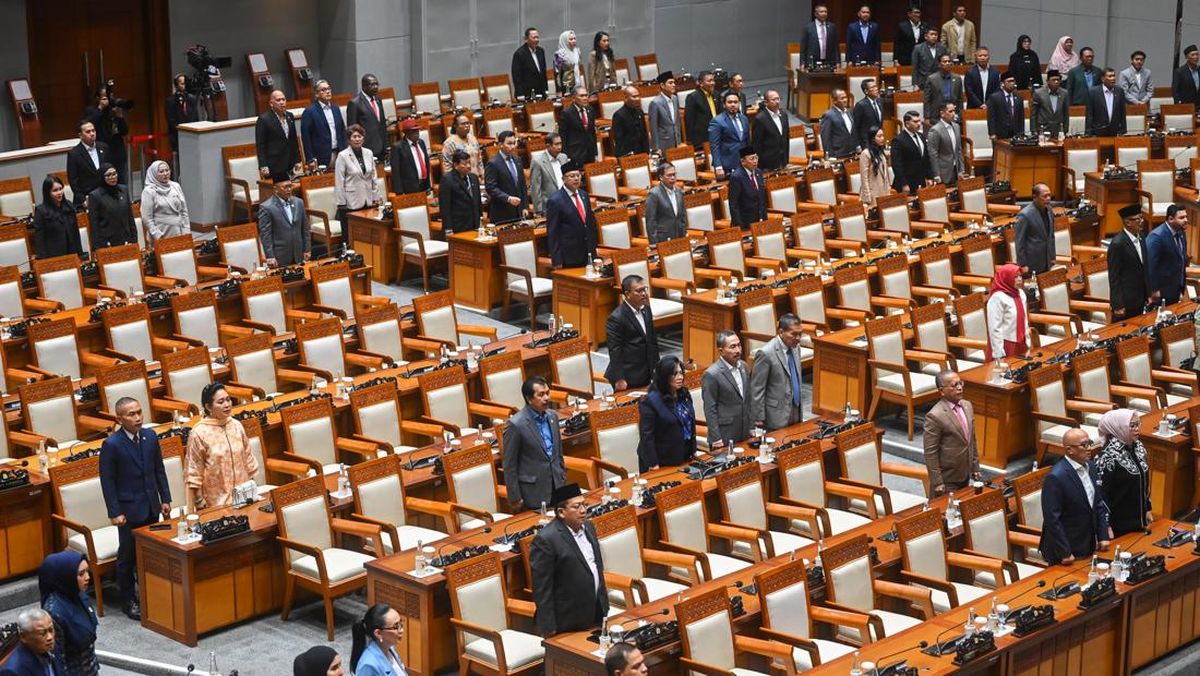
Deputy Chair of Commission II of the Indonesian Parliament (DPR), Zulfikar Arse Sadikin has proposed forming a special committee (Pansus) to discuss Law No. 12 of 1980, which regulates the retirement benefits and financial rights of leaders of high state institutions, including the DPR itself.
The proposal was presented by Arse in response to a Constitutional Court (MK) decision ordering a revision of the law. “A special multi-commission committee would be better, bringing together various commissions so we can hear the aspirations of DPR members themselves,” Arse said at the Golkar party headquarters on Tuesday (17 March).
The Golkar politician stressed that the Constitutional Court’s decision is final and binding, and the DPR must implement it. Beyond the court’s ruling, Arse also advocated for revising Law No. 12 of 1980 because it has become outdated. According to him, legislation must remain relevant to changing times and public aspirations. “Perhaps it needs to be adjusted to developments of the age and aligned with public aspirations, considering how the finances, protocol, and administration of state officials can be more proportionate,” Arse said.
Ahmad Doli Kurnia, Deputy Chair of the DPR’s Legislation Body (Baleg), commended the lawsuit and the Constitutional Court’s decision ordering a restructuring of salaries, allowances, and retirement benefits for leaders of high state institutions. He urged that various allowances, salaries, and pension payments be redesigned to be more proportionate, ensuring the DPR will follow through.
“The message in that decision is already quite clear for us, as legislators, to serve as material for study in determining policy related to state institutions and their financial rights,” he said.
Meanwhile, Martin Manurung, Deputy Chair of the Baleg, explained that Law No. 12, which regulates the financial and administrative rights of leaders and members of the highest and high state institutions, has been added to an open cumulative list following the Constitutional Court’s acceptance of the lawsuit. With this addition to the open cumulative list, the bill does not need to first be included in the national legislative programme (Prolegnas) for revision.
“Because there is a Constitutional Court decision regarding Law No. 12/1980, in accordance with Article 23 paragraph 2 of Law No. 15/2019 on the Formation of Legislation, Law No. 12/1980 enters the open cumulative list and can be revised outside Prolegnas,” Martin said.
Martin stated that his team would soon coordinate with the government to implement the revision. “Since the Constitutional Court has provided a timeframe of two years, the DPR will certainly coordinate with the Government regarding the revision of Law No. 12/1980,” he said.
Law No. 12 of 1980 on the Financial and Administrative Rights of Leaders and Members of the Highest and High State Institutions regulates matters of salaries, allowances, and retirement benefits. The legislation covers the MPR, DPR, BPK (Supreme Audit Board), and MA (Constitutional Court).
In its ruling, the Constitutional Court ordered the government and the DPR to create new legislation regarding the financial rights of high state officials and former leaders of high state institutions within a period of two years.
“The Court declares Law No. 12 of 1980 on the Financial and Administrative Rights of Leaders and Members of the Highest and High State Institutions and Former Leaders and Members of the Highest and High State Institutions conditionally contrary to the 1945 Constitution of the Republic of Indonesia and lacks binding legal force insofar as it is not replaced with new legislation within a maximum of two years from the pronouncement of this decision,” said Constitutional Court Chief Suhartoyo during a plenary hearing at the Constitutional Court in Jakarta on Monday (16 March).
Should this not occur, the consequence would be that the DPR’s retirement benefit entitlements would no longer have legal force.