
Constitutional Court Orders Restructuring of Pension Payments for Parliamentary and High State Office Members
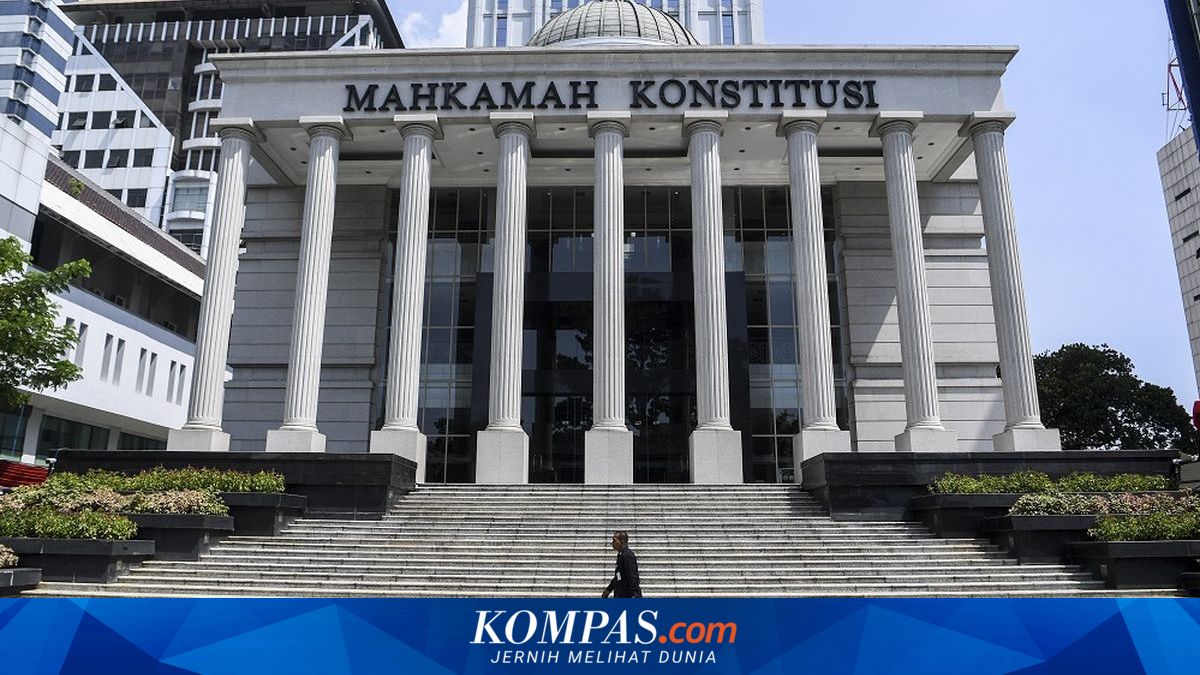
Jakarta — Indonesia’s Constitutional Court (MK) has ruled that Law No. 12 of 1980 concerning the financial and administrative rights of leaders and members of high state institutions, as well as former leaders and members of high state institutions, is conditionally unconstitutional.
The law previously regulated salaries, allowances, and pension payments for leaders and members of high state institutions. High state institutions under the law are defined as the People’s Consultative Assembly, the Supreme Advisory Council, the House of Representatives (DPR), the Financial Audit Board (BPK), and the Supreme Court, excluding the President.
The Constitutional Court’s decision, which revoked the law’s binding force conditionally, was based on a constitutional review petition filed by two law professors from the Islamic University of Indonesia (UII)—Ahmad Sadzali and Anang Zubaidy—alongside students Muhammad Farhan Kamase, Zidan Patra Yudistira, Rayhan Madani, and Muhammad Fajar Rizki.
Through constitutional review petition No. 191/PUU-XXIII/2025, the petitioners outlined the constitutional harm they experienced. They specifically challenged Article 12 Paragraph 1 of the law, which states that “leaders and members of high state institutions who honourably cease their duties are entitled to receive pensions.”
The petitioners argued that providing lifetime pensions, particularly for DPR members, does not serve the collective interests of society. They contended that such pensions for parliamentary members who serve only five-year terms are inappropriate and divert budget allocations from productive sectors such as education and healthcare.
Citing Article 28D of the 1945 Indonesian Constitution, which guarantees every person’s right to legal recognition, protection, and certainty, as well as equal treatment before the law, the petitioners maintained that the current pension arrangement violates these constitutional principles.
“This harm is both actual and potential, and can be ascertained to occur in the future because it affects the effectiveness of budget allocation that should fulfil the basic needs and rights of citizens guaranteed by the 1945 Indonesian Constitution,” the petitioners wrote.
Based on this reasoning, the petitioners requested that the Constitutional Court specifically amend Articles 12 Paragraphs 1 and 2 of Law 12/1980 to exclude parliamentary leaders and members from lifetime pension entitlements.