
Constitutional Court Interpretation of Article 14 of the Corruption Law and the Effectiveness of Corruption Law Enforcement
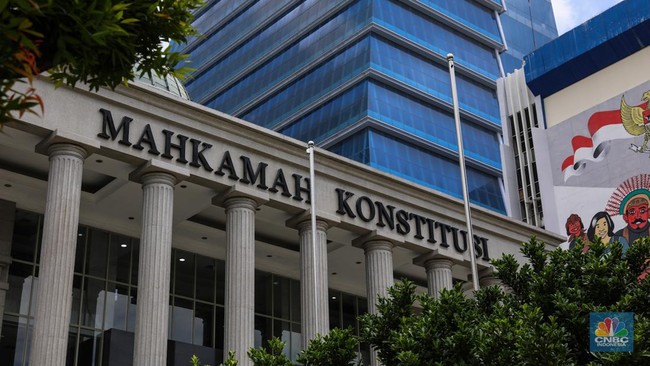
The Constitutional Court (MK) has once again ruled on a case, partially granting the petitioners’ request in case 123/PUU_XXIII/2025, which challenged Article 14 of Law No. 31 of 1999 on Corruption Offences (UU Tipikor).
Notably, this is the second consecutive time the MK has interpreted provisions of the Corruption Law, following its recent interpretation of obstruction of justice, which was only two weeks prior to the reading of this decision.
The lawsuit essentially requests the Constitutional Court to reinterpret Article 14 of UU Tipikor. This provision is seen as providing too much leeway for law enforcers to determine whether an act regulated in another law, such as in the forestry sector, can be categorised as a corruption offence.
Therefore, the petitioners asked the Court to clarify the article’s wording. The core point is that an offence outside UU Tipikor can only be treated as a corruption offence if the regulating law explicitly states it as corruption. If there is no such explicit statement, the provisions of UU Tipikor should not be applied.
Although the MK partially granted the lawsuit in its operative part, in my view, there is a different spirit between the petitioners’ claim and the MK’s decision. In its operative part, the MK solidifies the existence of Article 14 of UU Tipikor by stating that Article 14 does not contradict the constitution if the sectoral law in question fulfils the elements of corruption offences.
The MK bases this decision on technological advancements that can influence the form of crimes and the increasingly sophisticated modus operandi in corruption offences. For this reason, a special criminal regime is necessary to investigate offences categorised as extraordinary crimes.
Key Points of the Decision
At least, according to the author, there are three important aspects in this decision. First, the MK tends to base its ruling on existing norms. This stance is evident from its accommodation of common practices, namely using UU Tipikor as the basis for applying offences in sectoral laws that do not explicitly mention them as corruption offences.
Furthermore, the MK emphasises that the corruption regime can be applied to sectoral laws if the elements of corruption offences are met.
In this regard, the MK implicitly states that determining the regime is an open legal policy, which is the authority of the lawmaker. Therefore, such determination must be made during the law-making process, not as the MK’s authority, which could potentially lead to judicial activism.
Second, the MK delegates authority to law enforcement officials to determine which regime can be used to investigate an offence. This means that if a case meets the elements of both a sectoral offence and a corruption offence, through this decision, it is the law enforcement apparatus that can decide whether the offence is resolved as a standard criminal offence, a corruption offence, or even administrative sanctions.
With the caveat that the choice of regime must be done proportionally. Meanwhile, the MK does not provide boundaries for that proportionality.
Third, this decision issues a constitutional mandate for lawmakers of sectoral laws in the future to explicitly regulate whether the offences listed in those sectoral laws are classified as corruption offences or not, as has been included in some tax provisions.
This not only prevents confusion for law enforcers but, most importantly, prevents the mixing of criminal provisions related to sectoral laws with corruption offences.
Impact of the Decision
Although the MK has decided this case, the issue is not resolved just like that. This decision must be read in the spirit of efforts to eradicate systemic crimes in sectoral laws such as environmental, forestry, and tax laws that meet the elements of corruption offences, done effectively and on target.
While this decision explicitly states that criminal provisions in sectoral laws can be pulled into corruption offences, in the same breath, it also mandates proportional actions. This is what can prevent law enforcement practices that turn corruption offences into a ‘wastebasket’ due to disproportionate enforcement.
The outrage against corruption, thus creating an anti-corruption euphoria, must be viewed appropriately so as not to cause counterproductive outcomes in resolving systemic issues of crime and anti-corruption efforts themselves.
One of the goals of criminal law reform with the enactment of the new Criminal Code is to promote restoration (restore), not merely retribution-based punishment.
Meanwhile, if linked to the characteristics of corruption offence instruments, besides demanding criminal accountability from perpetrators, the elements of fines and replacement costs may not necessarily restore the losses because there is no planned restoration component.
Now the question is, if so, in cases of environmental damage, for example, is the corruption offence instrument the most appropriate way? Isn’t repairing the environmental damage the way that