
Constitutional Court Gavel for Jakarta's 500th Century
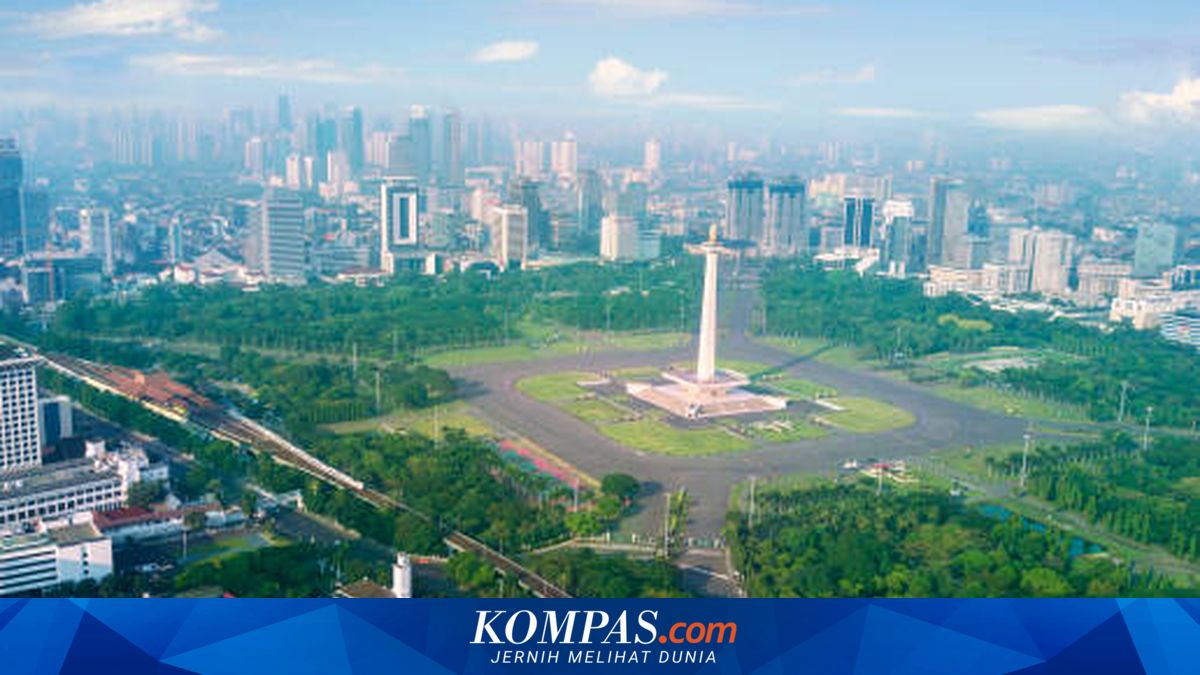
The gavel strike by Constitutional Court Chief Justice Suhartoyo in Decision Number 71/PUU-XXIV/2026, in mid-May 2026, has provided crucial legal certainty for Jakarta. By rejecting the judicial review of the IKN Law, the Court has affirmed that constitutionally, Jakarta retains its mandate as the State Capital until an official Presidential Decision on the relocation is established. This ruling is not merely an administrative matter; it is a psychological anchor for the megacity preparing to celebrate its fifth century in 2027. Legal uncertainty often becomes the main enemy of urban development. Prior to this decision, concerns arose regarding the “suspended status” between the Special Region of Jakarta Law (DKJ) and the IKN Law. If read more visionarily, the revocation of administrative capital status from Jakarta should not be viewed as a crisis, but as a historic opportunity. Jakarta is at a turning point to shed the burden of national bureaucracy and evolve into a “civilisation laboratory”—a model of a self-sufficient, regenerative, solution-based global city. This evolution demands that Jakarta heal its systemic urban ills. Jabodetabek congestion, as cited from the World Bank report and the 2024 Bappenas study, is now estimated to erode productivity by up to Rp 100 trillion annually. If a city becomes too expensive and congested, it loses its function as an innovation engine. Projections of flooding costs expected to surge by 2050, according to a study by Nurul Fajar Januriyadi from Pertamina University, further underscore the urgency for Jakarta to prove that its contribution of 60 per cent of the national GDP can be converted into robust urban resilience. A city’s modernity is not measured by the number of skyscrapers, but by the efficiency of human movement. Jakarta’s spatial planning reform is now guided by Governor’s Regulation Number 31 of 2022 on the Detailed Spatial Plan (RDTR), which mandates compact development through Transit-Oriented Development (TOD) areas. The integration of MRT Phase 2A and the development of the Dukuh Atas hub are key to compressing urban growth.