
Constitutional Court Ethics Council Refuses to Disclose Adies Report to Parliament: 'I'd Rather Be Dismissed'
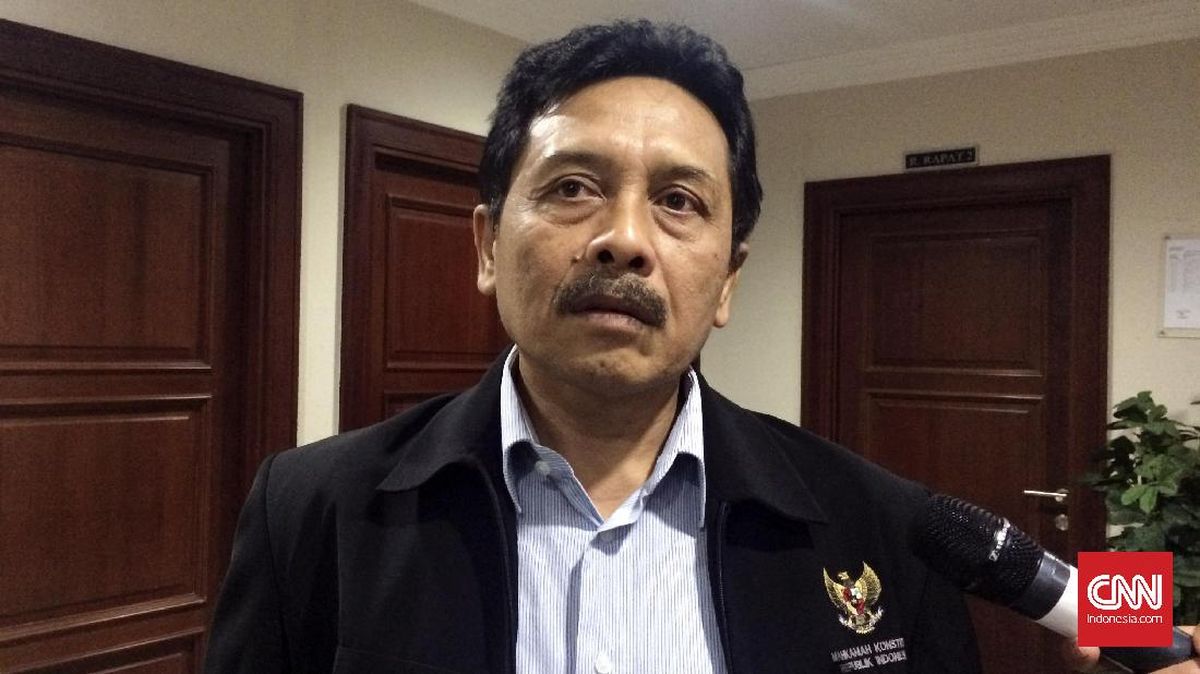
The chairman of the Constitutional Court’s Ethics Council (MKMK), I Gede Dewa Palguna, refused to disclose the contents of a complaint against constitutional justice Adies Kadir when appearing before Commission III of the House of Representatives (DPR) on Wednesday (18 February).
Several Commission III members initially criticised Palguna for not revealing the status of the complaint regarding Adies Kadir’s appointment as a constitutional justice nominated by the DPR.
Commission III member from NasDem, Mahfud Arifin, asked Palguna to disclose the status of the complaint and the progress of proceedings thus far. “Has it been verified or not, or has it reached the hearing stage, or what?” Mahfud said.
Meanwhile, Commission III member from Gerindra, Bimantoro, criticised the MKMK for its perceived lack of transparency in handling the complaint. He also asked whether the court had received evidence related to the complaint. “What is the status of the complaint — have you examined what kind of complainant it is, what the evidence looks like? That hasn’t been communicated until now,” Bimantoro said.
Palguna rejected the request, asserting that the confidentiality of the complaint’s substance is integral to the MKMK’s independence.
He stated he would rather step down than disclose the details of the complaint before members of parliament. “If that is what you are asking, I would rather request to be dismissed from the Ethics Council. Seriously. Because that is the crown jewel of the Ethics Council, Sir,” Palguna said during the hearing.
According to Palguna, the substance of the complaint against Adies is confidential between the complainant and the MKMK. He added that even staff members do not know when the complaint will be decided upon, including whether it will proceed or be rejected.
Palguna explained that the complaint is still under examination and that testimony would only be taken on Thursday (19 February). “We cannot present it before other people, because the three of us must keep it confidential. Even our staff do not know when we will make our decision,” Palguna said.
The hearing specifically discussed the MKMK’s decision to accept a complaint related to the nomination of Adies as a constitutional justice to replace Arief Hidayat. According to Commission III Chairman Habiburokhman, the nomination of Adies falls outside the MKMK’s jurisdiction.
Habiburokhman emphasised that the DPR’s authority to nominate Adies is not an anomaly but rather part of the checks and balances system. He cited Article 24C Paragraph 3 of the 1945 Constitution, which stipulates that constitutional justices are nominated by three branches of power: the DPR, the President, and the Supreme Court.
“This norm is not merely procedural but also reflects the philosophy of the constitution’s framers that the Constitutional Court should be filled by figures with diverse backgrounds: political, executive, and judicial,” he said.