
Constitutional Court Decision Protects Lawyers and Journalists from Rubber-stamp Article
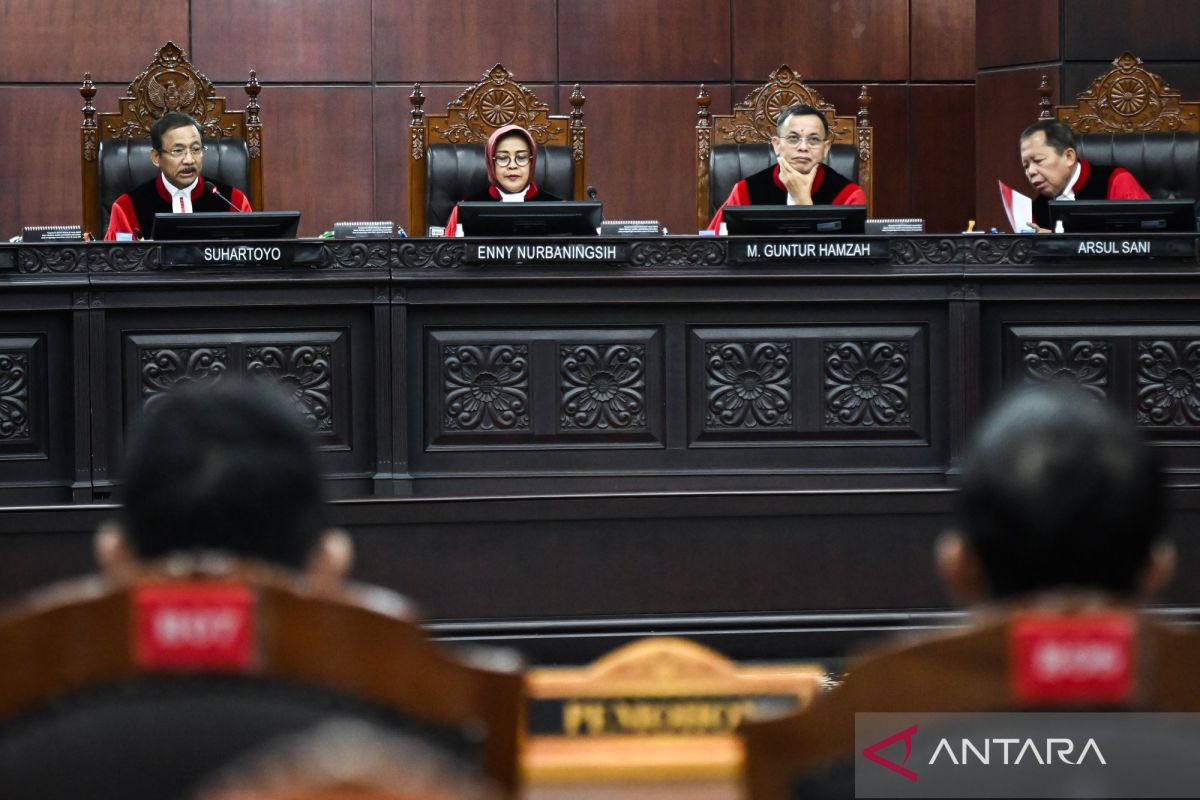
Jakarta — A criminal law observer from Trisakti University, Abdul Fickar, has stated that the Constitutional Court’s (MK) decision removing the phrase “directly or indirectly” from the obstruction of justice article in the Anti-Corruption Law can protect lawyers and journalists from overly broad legal interpretations.
Fickar assessed that the phrase contained in the Anti-Corruption Act has the potential to create wide interpretation that could ensnare professions that are actually performing their constitutional functions.
“This article is somewhat risky, especially for lawyers, given their position as defenders, accompanying individuals suspected of committing crimes, as legal advisers,” he said in a statement received in Jakarta on Monday.
Lawyers are tasked with accompanying clients from the investigation stage through prosecution to court proceedings and further legal remedies. According to him, in carrying out these duties, lawyers’ actions should not automatically be interpreted as attempts to obstruct legal processes.
The problem, Fickar explained, arises when the phrase “or indirectly” in the obstruction of justice norm opens up the possibility of interpreting actions that are not actually related to the corruption case being handled.
He cited an example of a lawyer who conducted a transaction with a client before the client became involved in a corruption case. If an investigation later emerged and assets were to be seized, the existence of the old transaction could be interpreted as indirect obstruction.
“So if there is an action that is not realised and not intentional outside the defence function, outside the accompaniment function, that is what could be charged under this article,” he said.
Therefore, Fickar considered the Constitutional Court’s decision appropriate. The removal of the phrase, in his view, makes the norm clearer and not elastic or overly broad.
Beyond lawyers, he assessed that this decision also has positive impacts for journalists. Journalistic work that reports on suspects or corruption cases should not be considered as obstruction of investigation.
“Writing is part of professional work. A person suspected of corruption is still a human with various dimensions. Balanced reporting cannot automatically be deemed as obstructing legal processes,” he said.
According to him, without clear limitations, the phrase “indirectly” could be used to ensnare journalistic activities, writing or advocacy activities that are actually part of public oversight of law enforcement.
This decision, he added, clarifies the boundary between actions that truly obstruct law enforcement and professional activities protected by law.
In decision number 71/PUU-XXIII/2025 pronounced on Monday, the Constitutional Court removed the phrase “directly or indirectly” from Article 21 of Law Number 31 of 1999 concerning the Eradication of Corruption Offences.
The Constitutional Court stated that the phrase contradicts the 1945 Constitution and has no binding legal force because it does not align with the principle of fair legal certainty in law enforcement.
According to the Court, the phrase “directly or indirectly” could potentially be used as a rubber stamp, thereby ensnaring anyone deemed to be obstructing legal processes by law enforcement officials.
In the legal considerations section, the Constitutional Court specifically exemplified that lawyers’ activities in publishing through media or conducting public discussions and seminars to defend their clients could potentially be categorised as a form of indirect obstruction of justice.
The same potential, according to the Constitutional Court, can also occur with journalistic activities conducting investigations into a case that is underway with the aim of providing information to the public.