
Constitutional Court Decision on Obstruction of Justice Boundaries Provides Journalistic Protection
Jakarta — The Law Association of Legal Journalists (Iwakum) has assessed the Constitutional Court’s (MK) decision clarifying the boundaries of obstruction of justice (OOJ) as providing legal certainty and constitutional protection for journalism and freedom of expression.
According to Iwakum’s chairman Irfan Kamil, the Constitutional Court’s decision is particularly significant as it draws a clear distinction between actions that genuinely impede legal processes and legitimate journalistic activities, public discourse, and academic opinions.
“Press work should not be perceived as obstruction of justice,” Kamil stated when reached in Jakarta on Monday.
Consequently, Iwakum has expressed appreciation for the Constitutional Court’s decision partially granting a judicial review of Article 21 of the Anti-Corruption Law regarding obstruction provisions. In its ruling, the court affirmed that dissemination of information, news reporting, journalistic investigations, public discussion, and academic opinion cannot be criminalised as actions obstructing legal proceedings.
According to Kamil, the obstruction provision has long been interpreted too broadly, potentially being used to criminalise journalists, academics, and civil society figures who disseminate fact-based information serving the public interest.
“Information, criticism, and investigation are part of democratic oversight,” he stated.
Meanwhile, Iwakum’s secretary general Ponco Sulaksono emphasised that the Constitutional Court’s decision must serve as a guide for law enforcement officials in handling cases, particularly corruption cases which attract significant public attention.
“We hope this Constitutional Court decision is understood and applied consistently by investigators, prosecutors, and judges,” Ponco said.
He therefore hopes there will be no further attempts to prosecute journalistic work or academic discourse as criminal obstruction of legal proceedings.
Ponco added that the decision not only strengthens press freedom but also supports transparency and accountability in anti-corruption efforts. Investigative journalism and public information disclosure actually help ensure legal proceedings operate objectively and with integrity.
The Constitutional Court has modified the obstruction provision language in Article 21 of Law Number 31 of 1999 on Combating Corruption to prevent misinterpretation. Through decision number 71/PUU-XXIII/2025, the court declared that the phrase “directly or indirectly” in Article 21 of the Anti-Corruption Law violates the constitution and has no binding legal force.
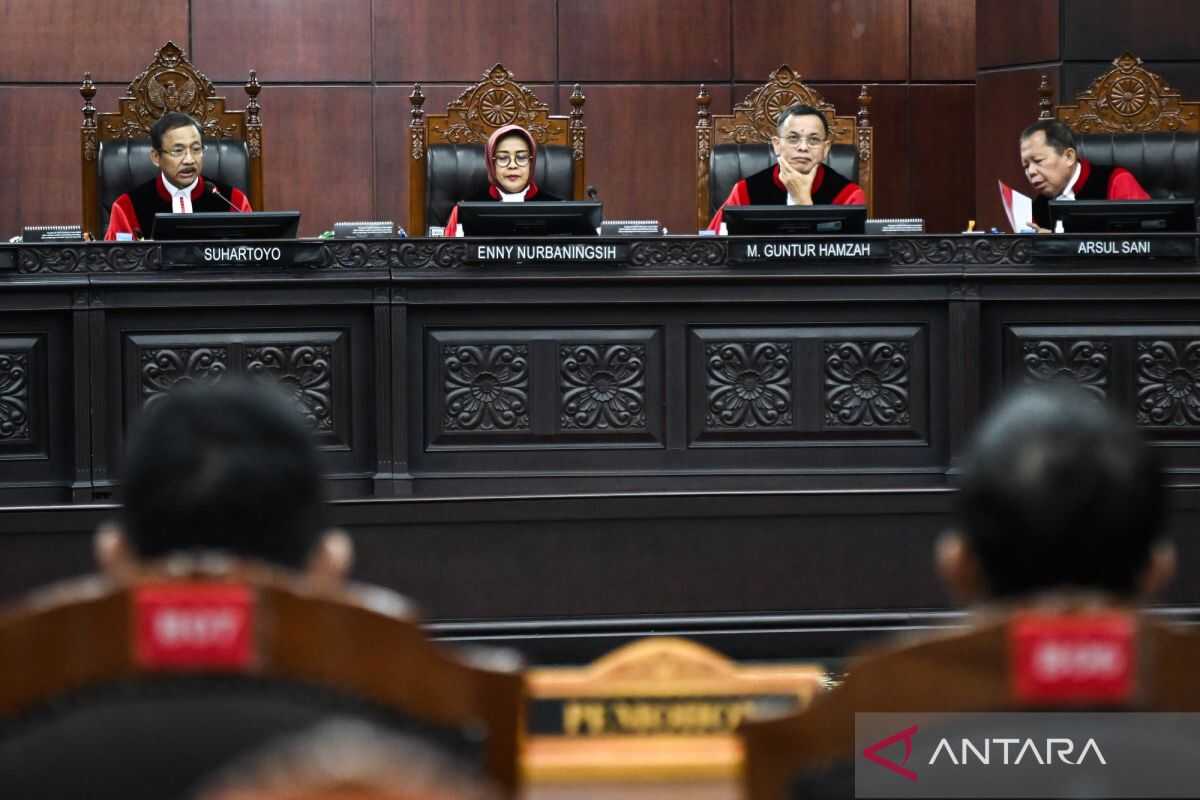
“We grant the petitioner’s request in part,” said Constitutional Court chairman Suhartoyo announcing the ruling on the petition filed by advocate Hermawanto in the MK’s Plenary Session Hall in Jakarta on Monday.
Such conduct—including disinformation, social pressure, or use of intermediaries whose assessment is made subjectively by law enforcement officials—potentially creates issues. When linked to the petitioner’s profession, advocates’ activities publishing through media or conducting public discussions and seminars to defend clients would potentially be categorised as indirect obstruction of justice.
The same potential, according to the court, can also occur with journalistic investigations into ongoing cases intended to provide information to the public.